Book Review: TACTICS by Greg Koukl

image

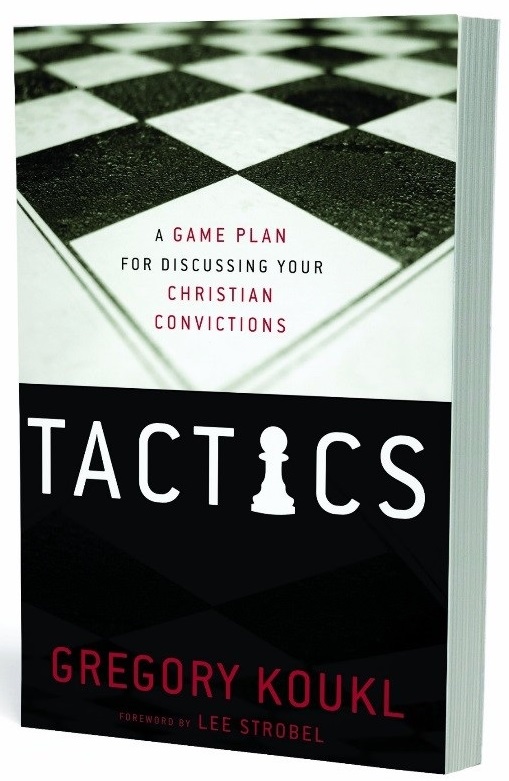
Author: Gregory Koukl
Publisher: Zondervan, 2009
ISBN: 978-0-310-57476-7

Have you ever gotten yourself in a tangle while trying to answer a skeptic’s awkward questions about your Christian faith? Or is your preferred style to simply avoid these sorts of discussions, because you think it’s not right for Christians to engage in “lengthy disputations”?
In his book, Tactics, acclaimed Christian apologist Greg Koukl lays out some of his favourite systematic and practical approaches to dealing with the apparent verbal missiles fired at our professed faith by unbelievers. And he does so in an engaging way. He recounts several examples situations in which he used these tactics to address seemingly knotty issues and problematic themes concerning Christian beliefs and non Christian perceptions of it. Greg employs military terminology in describing the ways by which objections to core tenets of the Christian faith can be deconstructed and answered.
You might get the impression that Tactics is simply “formula peddling” dressed up in the finely spun apparel of well written literature. But the author actually reminds us that our role as witnesses or apologists is not to argue people into the kingdom of God, but to eliminate the excuses they give for not surrendering to Jesus- and let God work in their hearts to bring them to salvation. The ‘skill’ of finding the flaws in arguments against Christianity and exposing them for what they are should be honed so that we become more effective in witnessing for our Lord. But it is not in our hands to change the lost from the inside. Only God can do that. The persuasiveness of our arguments, on its own, cannot.
The contentious matter of debates and Christian virtue is discussed in the book, but not extensively. Greg graciously but uncompromisingly asserts that “argument is a virtue” (when performed within the boundary of decent conduct and on issues that are pertinent, of course). According to him, reason (demonstrated in argumentation, for example) and love are means God uses to bring people to Himself because “both are consistent with His nature” (page 41). He considers the popularly held belief that 2Timothy 2:14 and 23 forbid Christians from engaging in intellectual debates as erroneous, and notes at least one biblical instance of the apostle Paul successfully “persuading” people to believe the gospel (Acts 17: 2-4)- a suggestion that “persuasion” here involved some sort of argument.
The need addressed by this book is an ever present one. Because tackling the objections of non-Christians to the faith can be a tough thing to do without an understanding of what these objections hint at, Tactics should be considered important enough to be included in any intending apologist’s library and the book collection of Christians in general.
Book Review: AND THE SHOFAR BLEW- By Francine Rivers

image

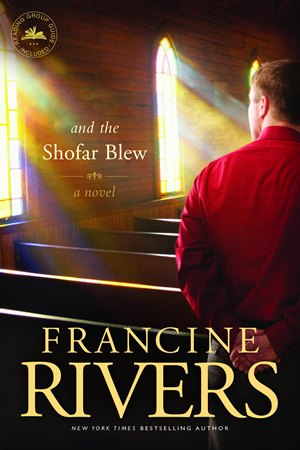
Title: And the Shofar Blew
Author: Francine Rivers
Publisher: Tyndale House Publishers, Inc.

Reviewer: Chinwendu Emenike

And The Shofar Blew is a work of fiction that teaches humility, patience, temperance and forgiveness. It centers on a church and the community in which it is situated.
We’ll sink our teeth into this review with a look at the book’s main characters:

Eunice Hudson: Wife of Paul Hudson, mother of Timmy. A prayerful, quiet and humble wife. She helps to appease members of the church that her husband had unknowingly angered. However she almost fell into sin with

Stephen Decker. But her tenacity is admirable. Her strength of character is borne out when she, confronted with the fact that her husband was cheating with Sheila Atherton, is able to forgive him.

Paul Hudson: Pastor of Centerville Christian Church. Dedicated firebrand who loves the work of God; a good husband and father- until he is called to pastor Centerville Christian Church. He does well initially, but his pride and pursuit of material things gets the better of him. His fall comes as a result of his trying to measure up to the perceived success of his televangelist-father. His involvement in some unsavory things is portrayed as resulting from this.

Samuel Mason:  One of the first three elders of the church, he brought Paul in to pastor the church. He’s a careful man, wise, prayerful, patient, and loves his wife Abby very much. He brings to light what “old-age romance” feels like. Also a persistent intercessor.

Stephen Decker: Mason, architect, carpenter, Jack-of-all-trades, rehabilitating alcoholic, a divorcee with a runaway daughter. Gives his life to Christ while listening to one of Paul’s preachings from his early pastoral years. Falls in love with

Eunice Judson. He fights the lustful temptation, gets close to Samuel Mason, who helps him grow in the Christian faith. Falls out with Paul because of Paul’s changing values. Leaves Centerville and relocates to another town. Reunites with his daughter. Starts up a bible study, and eventually, a church.

This book has helped me understand how important it is to talk to God, and wait patiently for his still, small voice. I’ve also gotten, through this book, some good strategies of how to curb some of my excessive appetites. Like when Stephen was faced with the urge to drink, he took a jog, sang, or prayed, just to distract his mind. He also rightly acknowledged that only Jesus could save him from his addiction- strategy was a mere demonstration of a will to be free, not the solution to addiction.
Two characters in this book whose experience I would relate to are Stephen Decker and Paul Hudson. Stephen Decker, because of his ability to overcome his internal struggles, and Paul, because of his impatience and his ever present need to impress his father which he obviously did wrongly. The book’s description of Paul’s case rings out as a warning to the reader to not get caught up in pursuing so-called standards of accomplishment. What matters in the end is God’s opinion of us as individuals.
My favourite quote from the book is a statement made by Samuel to Stephen at a picnic: “Growth in numbers is a blessing as long as spiritual growth and maturity comes along with it”. Pertinent words which should inspire, but sadly indicts much of Christendom today.
This book speaks to a great number of people and the relevance of its themes makes it a good novel for church leaders, wives, mothers, fathers and people struggling with addiction, to read and learn from.

LIVING FOR DEADLINES

image

Today happens to me
The singing birds, blasts about here, twinkling trinkets and a twenty storey tall thing
More things to fling aside, files to flush down procastination’s swift sweet sink
Seductively thrashing priced pieces, fixing feet simply as crossed
Arms akimbo, loosened collars and buckles, bland collection of framed truce
Activity trounced, ability bounced out of life’s arena
Staying the day’s nagging throb, curling to turn up undone
By time catching you napping

Race to the line, dazed, crazed frantic cry and shabby shifts
To make up for gone time, ignoring existential web’s continuous reconstructions
As once valid connections evaporate into picture-captured past
As lines of a story turn with the pages of a metamorphosing being
And the bus leaves behind late folks, sobbing and wailing and spitting and cursing

Deadlines
Set, written, rattling, scramble stirring
Dead lines
Hearts set on nothing but now-mores, mere norms, immediate loves
Temporal joys
For such fleeting trims of fate-doomed creatures, careless misfortune excitedly devours
Hope beyond here and now fires up a life to press past the deadline
To meet it before it comes, to take it captive, to liberate the task from time’s chains
Into purpose permeating every fibre, stretching into forever.

Book Review: MOUNTAIN MOVING FAITH- By Kenneth E. Hagin

image

Reviewed by: Philipa Oraegbu

Author: Kenneth Erwin Hagin
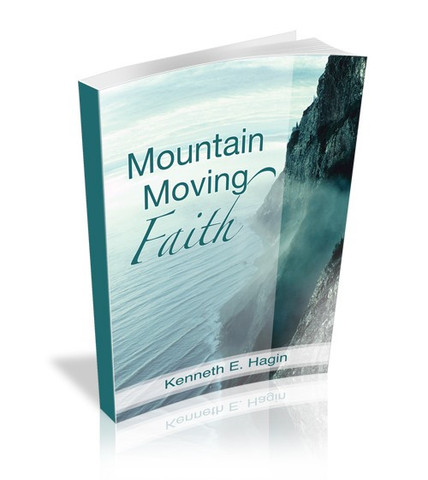
Book: Mountain Moving Faith
Publishers: Faith Library Publications
Pages: 174pp

Kenneth Hagin (1917 – 2003), a man who at an early age was diagnosed as having a deformed heart and an incurable blood disease, got miraculously healed; following this, he began the “word of faith movement”, ministering round the world and teaching believers about the effectiveness of faith.

In his book, Mountain Moving Faith, Hagin tells the story of his healing. Using as a basis the study of Mark 21:22-26, he ascertains that a believer doesn’t need to pray for faith- every (true) believer already has the God-inspired kind of faith. He reveals the importance of faith in the Christian walk with God, and why every believer ought to ‘exercise’ their faith. Faith, he explains, is measurable, and ought not to remain stagnant but rather increase. He further teaches about having faith for finances and for the meeting of the need of others. Mountain moving faith teaches believers to use and grow their faith. 

The author’s use of life experiences to convey his message establishing every scripture he quotes with many more biblical references helps the believer to get an extensive understanding of the biblical concept of faith. Hagin also emphasizes that hoping isn’t merely believing, but is proved in its being acted upon.
Faith is the foundation of the Christian life. Without it, there is really no Christian life to speak of. All we will ever need is available for the taking. God has promised this. And this book simply makes this crystal clear.

TERROR ATTACKS AND SOLIDARITY: MY REFLECTIONS

image

This was written shortly after the November 2015 mass terror attacks in Paris

Following the recent attacks in Paris, France, in which at least 129 people are believed to have lost their lives, I’ve been forced to reflect upon a number of things. As is usually the case, certain themes are brought to the fore when such tragic things happen: why certain people have become “so evil” that they have given themselves to destructive causes like terrorism; what the proper response should be to such attacks; what the role of government is in safeguarding lives and property; and a myriad of other pertinent issues.
But the one which I’d like to look at here, is the nature of the emotions that are expressed following these events. Specifically sympathy and solidarity. I’ll try to probe into these outpourings, and examine them from the Christian perspective.
I sympathize with the friends and families of the victims involved in these attacks; whether they be in Paris, New York, London, Madrid, Beirut, Baghdad, Kabul, Maiduguri, or elsewhere in the world which has seen terror rear its devilish head. I’m moved by the accounts I hear of these events, by the shaking voices of people whose loved ones have been lost, recounting the times they shared together. Sometimes, I’ve had to fight back tears. Its only natural, it seems, that we should react sympathetically, giving support and “stand together united, determined to preserve our freedoms, saying no to the enemy of our collective peace”.
But I fear that we all too often get carried away by these floods of general “collectivism”. I ask a simple question here: what is the basis for this solidarity, this togetherness that crosses divisions, brings us all together, regardless of race or creed? Let me put it this way: are there such things as “values we all hold dear and cherish, regardless of faith”? Maybe there are; But are we really suggesting that there can be peace and safety in this world for all (even if only in theory),understanding and togetherness, which even conquers that which divides us (including the faith of those of us who are Christians; we’re “the called out ones”, aren’t we?) What are these values?
There are two things that bother me here:
1. There is a “uniting” of wills and of resolve, the basis of which is undefined. While we say we must stand together against terror, what is it really that unites us? Hatred for man-made pain? If that is the case, I think I can do what is considered sufficient in Christ likeness- the love and charity in action -without joining in on activism that is not based upon Christ.
2.  Following from the above, there is the danger that we get sucked into the whole ‘this-worldly’ view of  life’s events and themes. And this view doesn’t always rhyme with the view of Christ. In fact, I daresay that it rarely does.
It is this second point that I want to emphasize. For every worldview, there is an underlying presupposition. For every belief system, there is a foundational idea or set of ideas; and sometimes those who hold them are aware of what they are. But more often than not, they’re not. And that’s the dangerous part of it all. I do not see any possibility that we honestly arrive at a sweeping agreement about what the “universal human ideals” are with people who have a view of what man’s existence is all about which is worlds apart from ours. There might be apparent agreement on a few points, but to what extent must we all agree, and also, agree to disagree? and on what?
I also reject the implicit argument from “secular ideals” being offered up even by some Christians. Do secular ideals determine our response to issues? Shouldn’t it be Christ? Is Christ a secularist?
Forget the vague “values that unite us”. Forget the slippery slope which may eventually trap us in the cage of rampaging secularism, that wants cowardly, cow-towing faith for all (that is, if atheism or agnosticism is considered unaffordable), just so that we can unite. Surely, we can love, be sympathetic, help out, save, and share in others’ suffering- because Christ did. Not because some vague sense of “collective will to defend human rights” which has an obscure basis, enjoins us to do so. Christ is our example. He did not seek solidarity from or with “other ways”, for he was, and still is, the way.

THE MUNDANE AND THE EXISTENTIAL

image

You sip tea
I gaze at stars
You talk Gucci and Versache
I dream of elliptical galaxies
You wonder about the broken CD plates
While I contemplate purpose and the universe
You’re bored with video games
I’m lost in the nothingness of a black hole

That dish is delicious!
And thundering waterfalls inspire awe
That bush track’s filled with soldier ants!
What if  asteroids destroy our planet?
Mary says she’s in love
What is the meaning of life?
And here, we converge

We’re worlds apart
In one world
You’re all over the place, and minding them all
I’m all tucked into mental space, minding it all
We’re looking for it
In different ways

If you race away, slow down to reflect
If you’re stasis-afflicted, dare to take the believing leap
If you are scattered between these, thoughtfully gird your loins
Then fly
Believe, then proceed
Receive, and live, as God’s spirit leads
Striving questions may weaken, may drive to hysterically empty preoccupations
The eternal answer is enough
To calm a raging sea, a stormy soul.

Book Review: WALK WITH ME- by Annie Wald

image

Reviewed by PHILIPA ORAEGBU

Author: Annie Wald
Book: Walk With Me
Publishers: Moody publishers
Publication year: 2012

If you have enjoyed watching the movie or reading the book Pilgrims Progress, then you might be delighted to have another allegorical work to read (and ponder) through. Using John Bunyan’s Pilgrim’s Progress as a model, Annie Wald, a writer of anthologies and short stories, writes about the pilgrimage of two lovers who set out to walk together in marriage as they tread the path to the Kings city.
The story sees Celeste, a lonely traveller from Slouching city, set out on a journey to see the city she had read so much about- the Kings city. As she journeys, she comes upon a gathering hut; she meets Peter, another lonely traveller who had lived all his life in the Upright village, but is also going to the Kings city. Peter, who takes great delight and interest in Celeste, desires to walk together with her. He asks Celeste if he could be the partner she will forever walk with; her response lets them begin the journey of two becoming one. They set out as a couple for the Kings city, trailing the paths set out for them. In the course of their journey, they soon discover how difficult it is as they go through several testing episodes; they have to choose between pressing on together or severing the cords that unify them. Walk With Me paints a comprehensible picture of what it means to go through life as a married couple, and its Christian perspective is borne out by the description of the main characters’ points of departure, and certainly by their destination: God’s eternal city. The book however doesn’t tell us that they make it. I presume it would have made the dénouement so predictable. And this is just one of those spices to a great book- suspense. You’re left suspended. Perhaps its a fitting way to leave the story: if you’re alive, you’re still on that road to the King’s city. Or, I hope you’re on it.
Walk With Me makes a good read for anyone who enjoys finding symbols and matching story descriptions with life experiences, as allegories usually (appear to) require. It has a lot in it for singles on the road to marriage, and the married on the road to the King’s city.

MOVE

image

Time ticks off, falls flat to crimson curvature with space’s sunset
I look into you to feel free, lay down now at night’s short rest
Wishing it would last forever
So I’m mired in sleep-walking living free frigid spree, spin-spiralled skull
Schooled in conservative cram and crumple, effortless troublesomeness
Life for passer-by, five fingers stuck in cupped-pocket, cut-off chains
Self-made dungeon
Living?

To breathe is, for you, brief misery, soured serenade, multiple invariance
Shriek sharply, shrink shamefacedly, stop to turn away
But I’m calling out still: I love you, please stop staring from that distance…
Freshness breezes in with the relinquishing of safe-stand-style
Dare, and find fairness within, without, above and around
Let love flow freely, let your fear of it fall off, let the thaw be of it, not your heart’s

Love is a move, and the humblest play best
Love is life, everything brings a shade of this truth
Even evenings darkened by bin-spinning dins, singing fateful dirge-like sounds
The absence tells of it, quietly, loudly
The presence is uplifting, gifting enrapturing, enlivening
So let the feet steal the march on fear
The crafter of the galaxies stands less than a breath away
He wants to fly through you
Give you to Him, watch love win, see trembling die, know courage
Live life strong, if calmly, steer home to forever
From a priceless touchdown moment
Now.