HOPE AND THE LONGING

image

I love you, but I can’t tell you so
I’m too proud of my castle, my stick-to-it place
I burn here in summer’s heat, freeze in winter’s chill
But I can’t tell you that I love you
I’m too afraid of love
I’m too afraid I’ll be disappointed
I’m scared it’ll fail

So we are separated
You’ve made me offers, I’ve looked hard at them
They seem sweet at times, tortuous moments later
You are a wonder and a strict blunt plainness
You are beautiful beyond measure
Too beautiful; I cringe and hide from your face, cos its too fair

You make demands I can’t fulfill
You tell me you’re for me, but I must give up first
I have nothing apart from my little castle, my heart’s small corner
Life’s ravages have stolen all else
My disappointments have eaten away at every other field
How can I finally die, just to come alive?

You are my longing, though my mind seldom recognizes this
This fight must end, this weary heart must find rest
So I give in to you nevertheless
If you’ve been this patient, you must truly care as you say
I’ve wanted not to hope
But hoping in you is the only chance I have
To stay alive.

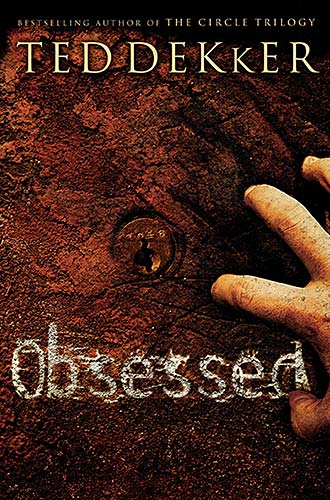
Book Review: OBSESSED- By Ted Dekker

image

Book Reviewer: ANI, BEATRICE

Obsessed, a novel by Ted Dekker, was published in the year 2005 by WestBow publishing company. The novel centres on events that took place at the time of the Jewish Holocaust. Themes such as courage, determination, sacrificial love, and of course Obsession, were covered. Dekker presents this story by switching between 1973 and 1944 to project both past and unfolding events in the characters’ life. The storyline goes thus: Stephen, later referred to as David, is a young real estate agent based in the United States with his foster Father, Chaim (also called Rabbi by Stephen). He later finds out about the death of his biological mother Rachael (real name Martha), a survivor of the Holocaust and also one of the richest Jewish women in the United States at that time. Her death sets off the exposure of several things to Stephen including events that occurred during the Holocaust and the story about his birth. The familiar but depressing era of Nazi Germany and the second World war forms the backdrop: the Jews are being rounded up by the Nazis; Many of the Jewish men are executed immediately while the women are sent to death camps. One of such camps has in it a bloodthirsty German commandant called Gerhard, whose cruelty is horrifyingly mindless and grotesque.  His little son, Roth Braun is a steady visitor of the camp, also partaking in his father’s blood drinking ritual. In that same camp are two women, Ruth and Martha (also known as Rachael), who arrive the camp already pregnant. Other women in the camp are terrified for these women’s lives; most pregnant women were sentenced to instant death. But against the norm, Ruth and Martha are allowed to live by Gerhard on the condition that their babies will be left with him after the war. A few days after Ruth is delivered of her baby girl Esther, Gerhard’s red scarf, a symbol of death, is seen on Martha’s bed- Martha and her unborn child are condemned to die. However, Ruth decides to hand her baby over to Martha while taking the scarf from her. This sacrifice is driven by Ruth’s belief that their children are the true “Stones of David” and saviours of the Jews. This act makes little Braun (Roth) see his father as a weakling and promises to restore his father’s power by killing Martha, her son, and little Esther in future. Martha on the other hand who gives birth to a boy named David, becomes a personal servant to the commandant because of Ruth’s sacrifice, and is separated from her son because men are not allowed in the camp. After the war ends, Martha runs away from the camp with Braun’s loot and precious stones of David (the stones were assumed to be the ones selected by David to slay Goliath). This makes her the most wanted person on Gerhard and Roth’s list. She relocates to the United States but changes her name to Rachael for security reasons. She never contacts her son, just to keep him safe from their predators, Gerhard and Roth, until her death. 
The author likens Gerhard and Roth to Lucifer, the god of this world, while Ruth represents the sacrificial love of God. He also portrays obsession as a virtue that is easily exhibited by God and man: God’s obsession with man; Lucifer’s obsession with Himself; Humankind’s obsession with God on the one hand and with themselves on the other hand. Most of the characters exhibit this too. Gerhard was obsessed with power and wealth, Chaim was obsessed with his faith and in getting Stephen (David) a good Jewish wife, Ruth and Martha were obsessed with keeping their babies, David and Esther and making sure they get married in future. Stephen (David) was first of all obsessed with knowing his background; when he discovered his mother, he became obsessed with her existence, her wealth, and later, with the stones of David and finally with his betrothed Esther.
The climax of the novel occurred when Roth Braun succeeded in capturing Stephen (David), Esther, Ruth and his father. He hung them, killed his father first, got prepared to kill the three Jews because he wanted to harvest their souls in their anguish. Instead, they were hopeful of a glorious end and were never angry or scared of dying. On page 372, we see the event unfold:

“Roth!”
the sound of his name cut through his heavy head. “Roth, oh, Roth, you have a problem.”
It was the Jew. Stephen. What was he saying? Roth turned around and stared at them blankly.  “You’re drunk on your father’s blood, so you may not realize it yet, but you have a very significant problem,” Stephen said boldly. Too boldly. “Your plan to harvest souls in anguish has failed.” Roth’s mind started to clear. The Jew was trying to sabotage this glorious evening! “You have not killed our hope, you can’t”…this couldn’t be! He couldn’t hang them while they were in this frame of mind. It will undermine his whole plan. Anguish! He had to return them to a state of anguish.
This could be likened to the devil’s plan for us, to be sorrowful in our travails. However, God’s word for us is to be strong, cheerful and to have faith in him because He has overcome the world. Dekker’s final note was culled from Matthew 13 Vs. 44- 46: Again, the kingdom of heaven is like unto treasure hid in a field; the which when a man hath found, he hideth, and for joy thereof goeth and selleth all that he hath, and buyeth that field.  Again, the kingdom of heaven is like unto a merchant man, seeking goodly pearls: Who, when he had found one pearl of great price, went and sold all that he had, and bought it.  
“Unless you too, obsess after God’s Kingdom, like this man did over his treasure, you will not find it. Knock and keep on knocking, seek and keep on seeking. When they send you away again and again, come back and seek still. Then you will find the treasure that you seek.”
Dekker’s diction was precise but somewhat challenging for average readers. Nevertheless, this novel is a good one, especially because it gives us a perspective on the Gospel that is quite easy to grasp. Maybe this has something to do with the fact that, being a means of conveying the message of truth, it follows the “parable tradition”. Somewhat.


Book Review: THE CONFIDENT WOMAN -by Joyce Meyer

image

Reviewed by PHILIPPA ORAEGBU

Title: The Confident Woman.
Author: Joyce Meyer
Publisher: Zondervan Publishing House
Date of Publication: September, 2006.
If you are conversant with christian literature, you must have come across Joyce’s books. She’s a well-known writer and best selling author of many inspirational books. Many of her books (which include Battlefield of the Mind, and How to Hear From God) have greatly impacted many lives.
We may assume that Joyce has a lot to say here; her going through and coming out of a period of abuse and disappointment gives her a kind of perspective on life issues that may be considered helpful. Here, she deals with  vital material: confidence.
“A woman has to be twice as good as a man to go half as far”- so says Fannie Hurst. This doesn’t imply that a woman is no good, without abilities and significance. It simply encapsulates the environment of a world in which women are faced with great hurdles and challenges; In such a world, there’s definitely a need for courage.  Joyce shares her experience of shattered confidence as a result of all she’s been through while growing up. Having been  reformed by God’s restorative power, she offers her understanding of Gods view of women (“God never intended for women to be less than men in anyone’s estimation”), portraying their significance in the ministry. She offers her interpretation of the ever controversial statement made by Apostle Paul in 1Cor. 14 and 1Tim. 2. She describes the Proverbs 31 woman, highlighting ten steps to being a confident woman and further giving ten examples of women who surmounted limitations, doing so courageously. The later chapters of the book also exposes the enemy of confidence – fear-  and how a woman can beat back its hold-seizing advance upon her life. Joyce says that “courage is not the absence of fear but action in the presence of fear”- and encourages the reader to “get the job done” even when in a fear-inspiring situation (reminiscent of an advice she gives in her Battlefield of the Mind).
The book relays an important message to every woman who has been under the bushel of fear, abuse or other difficult situations: to let the fire be a refiner, a thing that makes tough, instead of a paralyzing agent.
However, the use of examples and stories to emphasize and drive home certain points appears excessive, and may bore certain readers. Another point of criticism (a more serious point of contention, I think) is the focus upon building up the self. But while it is true that a self-centered gospel is not biblical, I believe this book gives a different kind of exhortation. It calls for courage, and courage is a very Christian virtue.
To every woman out there: this is a book you should lay your hands on. Its worth the read, even if you’re not a big fan of Joyce’s books. After all, courage is, like I said, a very Christian virtue.

LIFE IS COMING

image

Shriveled scene scribbled upon canvass is fading
My old model dumped in dustbin died for up-springing of new flowers
The silhouette stuns, stings, drips tears, then raises fears
Atop absorbed focus on the coming sunrise
Life is coming, is coming to roost
Am I ready for the raid of new revolution?

I put away the stained days I spent wailing for your coming
There is spirit in this fizzy feisty fight put up to live, to put death to flight
I once Idled, let cobwebs sweep through those rims
Now, I’m aiming to  scrape dark patches off final dirt stands
I refuse placid existence, tacit collusion with fate, take courage
The collage college is, I accept, not perfection
The pastiche of Purity’s prefecture is ever presently metamorphosing
But now that I’m living, I’ll never let Death come back
Never! Never! Never!

The material as centre is atrophy in the making
Give your all to toys, things and themes, and try time, for fruits
See the project tail off into disappointing void
But I’m alive now, won’t take stop-start for norm
My hope is born again, is brand new, glitters in sunshine, getting brighter

You, Lord, have planted desire where dead sooth chambers once were
Once fearful of living, now becoming fearless of death
The track is thin, but you made me fit in
Put springs in my steps, helped me fight the fight of faith in joy…
Thank you so much!

Today I look through the window, and see hope
The dust covered roofs, rain will wash clean
So I look out, and see clean roofs instead
And smile
Gratefully.

THE PRACTICE OF THE PRESENCE OF GOD- By Brother Lawrence

image

This seventeenth century book is so outstanding and timeless, that it is still one of the most popular Christian books around. And the words contained in it are not those of a great bishop or an eloquent theologian. They are those of a simple monk referred to as “brother Lawrence” (born Nicholas Herman), who served as cobbler and cook at a monastery. However, its topic, and especially, the simplicity and truth in the treatment of it, makes it a greatly loved book.
The Practice of the Presence of God shows, in two sections called “conversations” and “letters”, how we as Christians can remain in constant fellowship with our God, and focused upon Him, even through the hustle and bustle of the day, and in various moments of trouble and trial.
The conversations are notes made by a reporter, of brother Lawrence’s thoughts on the matter of being close to God at all times. The general thought which runs through all four conversations, is of the need for, and the great fruits of “practising the presence of God”; in other words, conversing with Him, thinking of Him, and meditating upon His words through the day. Just getting immersed in thoughts of Him, for Him. It is “a shameful thing to quit [this] conversation, to think of trifles and fooleries” (page 8). And if God is truly the love of our lives, why wouldn’t thoughts of Him predominate in our minds, occupy our hearts?
It is true, says brother Lawrence, that being aware of God’s presence through each moment requires practice, a persistence that eventually becomes a habit. But as it becomes a part of us, we will “find his love excite us to do it without difficulty” (page 10). He also makes the point that our being wholly given to God in this way can only be actualized and sustained by and in love. Mere works of “penance” or mortification are ineffective without love. They can remove no sin, can eliminate no self centered tendency. The reporter of the conversation says that brother Lawrence’s words were significant without a doubt. But his conduct was, for him, “stronger inducement than any argument can propose” (page 17).
The letters (fifteen of them in total) deal with roughly the same themes as the conversations, but in greater detail. The striking thing for me about the letters is the expression of a desire by Lawrence, to “suffer for [God’s] sake with joy and courage” (page 35). This attitude is motivates by nothing other than love for God, which is cultivated by abiding in His presence, and consciously giving ourselves over to His will. He has “no pain or difficulty because [he] has no will but that of God” (page 19). This makes such an impression upon this reviewer because it shows the extent to which the brother has committed himself to God’s will, to please Him above all, in every situation and at all times.
Though his work was boring, he found peace and joy in doing it for the Lord. This is an example for those of us who see our work as drudgery, as a difficult necessity. Things will certainly be lighter and brighter when we approach them with a mindset of doing all for God, from the “little” things to the “great” ones. For God “regards not the greatness of the work, but the love with which it is performed”.

BEYOND CATHEDRALS

image

Style comes to play when these edifices we seek to raise
Romanesque, Gothic, architectural sprawl and splendour resplendent
From foundations rise then, things we’ve dreamed and seen as befitting
Sitting on acres, thinking, holding things and frames
Marble and glass and a sea of colour-spawn accounts, from start to apocalypse
Our own stories should fit in here too, I think

So sounds choirs create as chant and psalmody verbalized resound, sonic perfection sung
Wrung from fronds like palms laid before our king
Many words said, many names proclaimed, one vision appealed to
Apparently
I look to the vessels and see golden glitter, look to the pews and hear tired ‘phews’
Gracefully garmented choir tries to charm with sonorous rhythms
But a chasm is widened as they retreat to seats, to regular routine
Like the rest of us church folk, church bunch seeking charm, finding only sham
And more- shame
Lame, destroyed by fear of our own wrongs done, those deeds done that shut us down
We may cheerlead for our people’s fine voices, but who’s won the adulation?
God’s not fooled

So we’re trim and clean cut for Sunday’s same serenade
Nicely dressed up and reeved up for what talks and faces we’ll have and see
Business deals sealed and partners to seek out, a time to hang out
But is it love or self seeking service that drive these engagements, I ask
Are our meetings only taking forward traditions, social settings devoid of Christ’s full presence
Are our hymns and confessions heart felt or head read
Are we truly free, not hiding behind smiles and breeding death beneath
Are not our wells deeply poisoned, isn’t our salt stale, worn of taste?
What’s our worth, what has the world seen of us?
Where is the fear and offence in the eye of the sinner and the vile
Why is the world so at home with our profession, why are we so cozied up to its style?
Why is life mild and dull, where’s the daring stare of the saint, the defiance of our timeless army?
Decimated horde, ours, I think…
May God decimate that tendency!

Come now, beloved, let us desire His fire
Let the flame of love be real in us, let us be dried of starving moist
Let our hearts be earnest, be daring, be at unrest
Wrestle down dire cowardice, give Him every stained gown
Give up fighting truth, die to come alive, slay deathly slime, rot
Disperse the dark
And let our God, Lord of the light, make us His Church again.

BEAUTY IN LIFE’S PIECES

image

Utter beauty
Purple sunset paints a faint portrait but still, its heart-snatching
Roaring, thundering to crash, smashing awe into stunned eart, waves to ears
Blossoming flowers, lush dainty things, delicate, love-recollecting
Terrible heights, mountains staring down monstrously upon little me
Rugged descents, steep sharp, trapping, enrapturing, as hawks soar
We gawk, even stand still, in rolling green pastures, sheep feed, dew thick downed, drenched grass slades
Sparkling landscape glittering gold as sun reflects extra-terrestrial splendour
I shut my eyes, breathe in, breathe out, sigh out a sign of deep seated gratitude
Someone gives us the life in which to behold these

My heart softens as children cheer and laugh and play joyfully in the streets
Simple innocence, reminiscent of perfect rest God affords us forever
This forever reflected now, from our soul’s deepest wells, to vast skies’ span, unscaled
When love grows slowly, then bursts forth in confession, lover to beloved, declared, revealed
ike surging waves furiously advancing our way, these spectacles unwrap
The indescribable feeling of being held by overwhelming, comforting, uplifting hands
No world would truly recount to our dim sensation; He, artist per-excellence,does
Makes our perceptions come alive to His rivetingly wondrous works
Makes us see, even through cracks from the dungeon of fallen man’s flesh, brilliant light
Helps us make sense of strips scattered abroad, splintered pieces from a once perfect world
We see these best when we’re there, here with Him
When God smiles upon us.

Book Review: PROVOCATIONS: Spiritual Writings of Kierkegaard- Edited by C.E. Moore

image

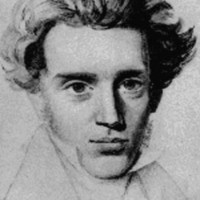
Soren Kierkegaard 1813-1855

If you are into books on Christian thought and theology -even philosophy- then you must have come across this name a lot: Soren Kierkegaard. And he was such an outstanding writer on life and devotion to God (and what these mean) that he has come to be regarded a philosopher, though I’m quite convinced that he would have frowned upon being referred to in this way. However, his writings have been described as difficult and complex (heard that said a lot about theologians and philosophers!); so a compiled paraphrase of his major works on the Christian faith certainly lends a great deal of help.
Charles Moore’s compilation was first published in 1999 by Plough publishing house, Farmington. This editor does a great job of putting these works under five headings representing various themes. Typical Kierkegaard themes, one might say. He also has a section in it for quotes from this remarkable 19th century Danish writer.
The first set of works relate to the need for clarity and decisiveness in living the Christlike life. Kierkegaard speaks spitefully (as he always does) of vain religiosity and mere intellectual Christianity. What is required is “to will one thing”: to draw nigh unto God, with all that we are. In though, words, and living, regardless of the prevailing atmosphere. Nothing else will do.
Provocations contains writings on the individual, subjective nature of faith- subjective in the sense that the person must believe for himself, and live this faith vigorously. In fact, the vigour Kierkegaard speaks of ‘almost’ comes through to the reader from the pages of the book. Such is his lucid descriptions of what it is to live an uncompromising life of devoted faith, that you might get shaken out of the “going through the motions” sort of Christianity.
There is serious talk too, about love being about sacrifice and surrender, God being the ultimate actor. But we must remember: love is shown in actions.
Soren Kierkegaard has a knack for being blunt about suffering as being part of the Christian’s experience. He describes it as a refining instrument, something which has the potential of bringing us close to God. Because we are not of the world, we will encounter frictions with the world, and we will be bruised. But we will also be shaped and sharpened. Collision with the world is inevitable. He condemns comfort-seeking, as well as cultural Christianity and ‘Christiandom’, for peddling a brand of Christianity which is weary of the fire, and too steeped in worldly concerns to be fixated on the true faith; the faith which is a provocation and an offence to the uncommitted, and the unbelieving.
For this man whose writings call for a radical faith in spite of the horde’s definitions says: “the crowd is untruth”. The need for decision is always with us; the urgency of our faith’s commitments require wholesale abandonment of lethargy and its replacement by the fire of passion for our God and His ways.
Although Kierkegaard’s language may sometimes be caustic and biting, the essence of his desire is clear. And I do not agree with everything he says (for example, I believe that there is some need for an intellectual study of God’s word; it yields great benefits to the Christian and enriches his understanding of various dimensions of the faith). But it is true that a conscious life of undivided attention to the absolute truth of the “mere” gospel, is not substitutable.
I urge you to read this book. You will be challenged by it, without a doubt. And hopefully, moved to live fearlessly the authentic Christian life.