The book Deeper Christian Life is one which deals with the need for Christians to go further into their devotion to God, and not settle for less. There is more to be found: our faith in God is a sort of opening unto an inexhaustible treasure trove, which we should gladly seek. Sadly, most believers in Christ do not press on to partake in this glorious gift. They’re content with the status quo, or think such heights of communion with God either unattainable, or for some select few. Murray wrote this book to address this crucial concern.
While it is true that this book is quite an old one (first published in 1895 by the Fleming H. Revell company), its subject matter is relevant to every age. And it is a simple little book to read too. But its worth returning to for some encouragement and admonition.
In seven chapters Murray effectively tackles this matter. Chapter one is aptly titled “Daily Fellowship With God”, and takes the reader through practical steps which should ensure that he or she is truly in tune with God, and has the correct perspective of their place before Him: God’s greatness, man’s unworthiness, and God’s amazing grace which He, in spite of our failings, has poured out upon us. This should inspire us to come before Him with confidence- not in ourselves, but in Him, in His love.
Murray dives straight into the “big one” in chapter two, as he notes that while there is such a beautiful life of intimacy with God awaiting the believer (a blessed life in every true sense of the word), most Christians fall far short of it. He attributes this principally, to unbelief. For it is unbelief that keeps them from asking this life of God our Father, and holds us down from going forward in faith to live this life. The remedy? confess and turn from this sin (he likens it to the attitude of the elder son in Jesus’ parable of the prodigal son), to live the life of faith; ask God for the grace, and believe He has granted it. Then walk in it.
The great difference between the carnal life and the spirit-led life is the subject of the next chapter. Peter the apostle is used by the author as an example of where self-trust can lead us: failure, fractured friendship with our Lord, and separation from Him. His life after his denial of Christ was a changed one: he found that his trust in his own word and fleshly devotion to Christ was useless. He sorrowfully turned himself over to the will of God and followed Jesus in love. And he became a fearless servant of Christ.
In chapter four, Murray makes it clear that it is one thing to have declared for Jesus and pitch one’s tent with Him (“going out of Egypt”); but it is quite another to go further in growth, getting into a deeper relationship with God (“getting into Canaan”). Chapter five emphasizes the presence of the Holy Spirit in the believer as crucial to a deeper, faithful engagement to God. And His spirit indwells those who desire Him, ask for Him, and believe that He has been given. The next chapter tells us that the key to the victorious Christian life is fixing our eyes on Jesus. Again, he takes the imagery of Peter struggling to stay upon the stormy sea of Galilee as Jesus calls him hither to himself. Only by faith in the word of our Lord and the sufficiency of his promise shall we walk as he did.
“A Word to Workers” is the seventh chapter of this book. It seeks to remind the “workers” in the field of evangelization and the encouragement of the brethren, that in order to effectively deliver a life-changing message on the beauty of the deeper christian life and the living of it, they (the ministers of this gospel) must have seen it come true in their own lives. This, for the observer, is vital in ascertaining the viability of the life preached about. The book ends fittingly, with a call to consecration: the giving of all we are to God, who has given this to us. Only in doing this will we find the joy and satisfaction of being so into God, and God being so into us.
This is a wonderful book, good for practically all Christians, whether they be new in the faith and wanting to grow, or for the older fellows who need some rejuvenation. I heartily recommend it to you, my dear reader.
Author: Ikenna Nwachukwu
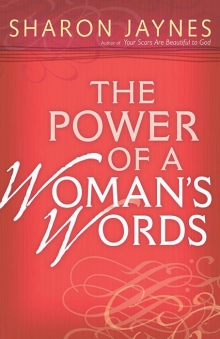
Book Review- THE POWER OF A WOMAN’S WORDS- By Sharon Jaynes
Reviewer: Ebisike, Amarachi Angela
Date of Publication: 2007.
Publisher: Harvest House Publishers, Eugene, Oregon.
“Tongues….. Most animals have one. Some snakes have forked tongues. Lizards smell with their tongues. Frogs and toads have tongues that whip out at incredible speeds to catch flies and other insects. Even though a human tongue cannot smell out dinner, reel in the catch of the day or reach to the tops of trees to pick fruit, it can do something even more amazing. The human tongue can create words. Words are an incredible gift, and as we have seen, they have the potential for good or evil. ” Sharon says.
The Power of a Woman’s Words is a challenging, thought-provoking and character – correcting book. Even though it has a feminine title, the male folk will find it incredibly relevant. The book talks about the damages and triumphs caused by the words we speak.
Sharon wisely divided the contents of her book into three sections. They are;
1. The Power We Posses
2. The People We impact
3. The Potential to Change
The first section talks about the awesome gift of words given to us by God. Bound in one small group of muscles called the tongue lies an instrument with huge potential for good or evil, to build up or to tear down, to empower or devour, to heal or to kill. It all depends on how and when the joining together and the splitting apart takes place. We would never carelessly fling a match out of a car window while passing a national forest, and yet, many times we carelessly toss fiery words about as we pass through life, without caring about its destructive effects. Sharon explains that the desperate need for the human soul are words of encouragement and fellowship. People miss the bars when they become Christians. They don’t miss the alcohol. They miss the fellowship. The fellowship where no one would judge, condemn, nag, discourage or tear them down. Sharon further explains that the Hebrew word for mouth is peh. And it is translated as ‘edge’. Like a knife, the tongue has a sharp, powerful edge that can either be used to heal or destroy. She used a couple of true life stories and biblical teachings to show that we all have the power to turn the course of peoples’ lives around with our words.
The second section of the book discusses the power of impact that a woman’s words has over her husband, children, friends, and fellow believers. This section is packed with so many life-changing stories and testimonies. Above all, you will discover that the future of your children and the overall well being of your spouse and loved ones depend mostly on the words that you say to them.
“It’s a terrible thing to be a part of a family where the only things that are noticed are mistakes. The pain from constant critics and correction can become a chronic source of insecurity long after the child has become an adult.”Sharon says.
Our words are lingering echoes that will either urge our loved ones to accomplish great dreams or become losers in life. The writer also warns against being stingy with good words or holding back a compliment or praise. In her exact words, she says, “scatter compliments! Plant affirmations! Sow courage! Water with kindness! Fertilize with prayers!” (Page 58).
We have the choice to either become chief cheerleaders or chief critic to the people we meet everyday. Notwithstanding, we have to be specific in our praise or compliment. Being specific moves encouraging words from good to great. For example, “you are terrific!” is a good pat on the back. But, you can be specific by saying, “I couldn’t believe how far you hit that baseball. Man, you’ve got an incredible swing.” Do you see the difference? Sharon also gave a list of words to avoid and words to speak to our loved ones. Some words to avoid are:
• ‘you can’t do anything right’
• Why can’t you make good grades like your sister/brother
• You will never learn, will you?
• You don’t appreciate me
• You are a liar. (instead, say ‘you told a lie’)
• You are a thief. (instead, say ‘ you stole something ‘)
Some words to use on a daily basis are:
• I love spending time with you
• I’m glad you are my son/daughter /friend/husband/wife
• I’m proud of you
• How can I pray for you today?
• I trust your decisions
• I will always love you
•Thank you
• I’m sorry.
The above is just a few of the words listed by the writer of this amazing book. I love this book because it’s very practical. If you put your mind to it, you can easily practice it. It is transformative.
Does it mean that we will never reprimand or correct our loved ones when they go wrong? Of course not! But, we must do it in love.
“There are times in any friendship when confrontation is necessary, but we must always make sure that the confrontation is wrapped in prayer and tied with the lovely bow of love. If we take any joy whatsoever in the process, then we must stop and check our motives and attitudes. ” Sharon. (page100)
Finally, the last section tells about the potential to change. It explains our potential to turn a new leaf. It also talks about the importance of silence and timing. Words must not proceed out of our mouth at all times. There is a time to keep quiet and practically place a palm over our mouths. According to Sharon, “Whether the subject is gossip or grumbling, silence is the Golden key that keeps the door to destructive words locked away. And sometimes, the most powerful words are no words at all, for silence can be an outward sign of inward strength.” (page 199).
Just because something is true doesn’t mean you should say it. If your comment is going to be derogatory, it’s better you keep quiet. Also, timing is very important even if the word is right.
Aside from spoken words, written words are also powerful instruments. “When words are penned down, they serve as a powerful tool to refresh the soul. On many occasions a timely note of encouragement has given me the push I needed to continue on.” Sharon says.
Men, women, boys and girls are seeing themselves in our words. Many are determining their worth, their potential, and even their destiny by what they hear from us. Will your words reflect the fact that each individual is ‘God’s masterpiece’? You have that potential, you know. It’s right under your nose.
Do you want to have the oratory skills that will affect your world positively?
Do you really want to change the way you talk?
Do you want to gear your loved ones and people you meet to greatness?
Do you want to have a healthy long lasting relationship?
Do you want your world to see the love of God through you?
Then, The Power of a Woman’s Words by Sharon Jaynes is a book that you must read, study, assimilate, practice and recommend to others.
And lest I forget, look beyond the title because it is a book for all.
Book Review: LOVE: THE WAY TO VICTORY- By Kenneth E. Hagin
Year of Publication- first published 1991.
Publisher- Faith Publications, USA.
Number of Pages- 220.
Reviewer– Adaobi Chiemelu.
A book on love like no other. Hagin, as usual, lays out based on the bible the God-kind-of-love. Most Christians have spent a fair share of their individual lives living with the dents made on their personalities by their relationships. Through eight chapters, he
communicates in comprehensible detail the whole matter of reaching the desired state of blessedness in life by committing ourselves to the “God kind” of love. Hagin’s book seeks to drive home
the point that God’s love which has been shed abroad our hearts
(Romans 5:5), when expressed through the series given in 1 Corinthians 13, has the power to do all things; in effect, perfect God’s will in
one’s life and fulfill purpose. The subject of Love is treated with sweet dedication. The love of God is, no doubt, the foundation of every kind of love. Examples of how it can turn things around are given in this book, with the hope that readers may identify with some of the situations. Even those involving enemies, and those
we would otherwise hate. Every required scripture is given, in line,
using the King James Version. Therefore, Hagin’s book endears us
Christians to go on the love walk; after all, the New Covenant says to
love the Lord your God with all your heart, all your mind and all your
strength. And to love your neighbour as you love yourself. Hagin writes as to say, Why not taste this irresistible punch for yourself and see it work.
And may the grace of our Lord Jesus Christ, rest and abide with us now and always.
TO BE A SIGN
Fries, grates, garnishing, fish, shrimp stews and steaks, stuffed stock of turkey n’ beef
Smells rise, scents to savour envelope, develop single sided soaps
I watch an opera repeated in whose honour? seated guests and merry-faced audience?
Noise in the city centre, beats bang and blast out of speakers, hit songs
Season’s excitement, feverish feel, energetic struggle through street’s crowds
Rowdy markets flooded by humans and their sorts
Morphs of many cares, party-minded concerns
Joy declared, the time is here
It’s a birthday; but where’s the celebrant?
The biggest bash ever, always, annual rave
Street parties brew putrid atmosphere, swirl in lewd swill: celebrating who?
Madman-like drive style stuns thousands, rests several “in peace”: celebrating who?
Moguls sift through streams of figures saying gains, rub rot-ridden palms in glee: celebrating who?
The buzz about the season flies about, on wings of unbelieving sails
“He never was” say they, but “cool thing, his party is”: you kidding me?
Kids unwrap strapped gifts, but the celebrant’s offered null
Hugs and kisses for friends and more, but none for the main man
Our reveling- his tears?
Our indulgence- his being left out?
Our great time- leaving outside indescribably joyful eternity?
The sign is the gift, the love is the clarion call
Mulling about the mall, materialist craze, debased jewel life lived otherwise is
The sign is a twinkling star in the sky so high, above earth so low, in need of being raised
Your other option is vagueness as
living, question mark on ultimate aim
The sign is the bubble on chubby cheeks of children, before Christmas gifts fade, innocence taken away
He came to bring back the peace, to bridge to the best side, the aside of present fallen-ness
The Day of the Lord is here, is coming
Embrace joy, lest it be disaster soon after
Let light not be embarrassment, but relief, the basis for death of base forts
Found your joy on faith in him, be freed from fate-driven celebrations
Rejoice, for the saving Celebrant has come
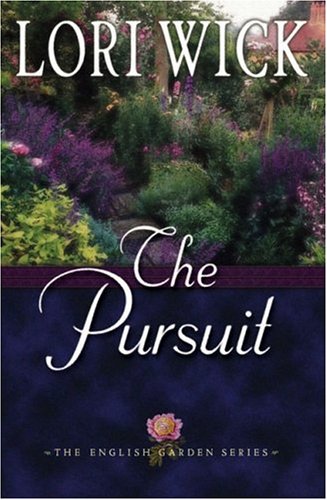
BOOK REVIEW: THE PURSUIT – by LORI WICK
Reviewer: Beatrice Ani
Lori Wick’s The Pursuit is a Christian Romance fiction published in the year 2003. It’s actually the fourth and the last of a series, the preceding titles being The Proposal, The Rescue and The Visitor. This particular novel captures man’s betrayal of man, the need to come to terms with the past (lest it continues to haunt), the need to learn (positively) from these experiences, and to trust God and His sovereignty in every moment of our lives.
The novel opens with Edward Steele, one of the major characters, writing a letter to his elder brother Henry, about his intention to join him and the rest of his siblings for Christmas. But he has no idea what was to result from his trip. He, Edward Steele, boards a ship and heads home. In the ship he meets a lady on the run disguised in a man’s attire and her (his) servant who happens to be Edward’s roommate. Meanwhile, nobody on board notices the lady’s disguise until Edward’s roommate becomes critically ill, fears he might die and asks Edward to protect him. Edward soon discovers that “Mr Osborne” the Boss is actually a woman. Despite this discovery, he still stands on his word to protect the two strangers. Circumstances seem to conspire to bring the three together; an undying attraction develops between Edward and the lady. His entrance into her life leads to her being converted to the Christian faith, as Edward’s christian life makes a great impression upon her. She learns to trust God, to be a better mother to her kids, to get over the betrayals she has experienced, and to surmount the fear she has for the mother of her late husband.
Although a sequel, it can be enjoyed by the reader, as its storyline is not inseparably intertwined with the preceding books in the series. The mystery surrounding the main female character makes the novel engaging. Though it is easy to read, one will not fail to notice that it does not stray from the normal romance plot line, and this makes the novel very predictable. The author’s use of scriptures to solve some basic challenges of the main character helps to properly highlight the sovereignty of God in varying situations.
This book however has its imperfections. I’ll note one- and that’s in its ending. Its “concluding” part was, for me, rather confusing, boring and overly extended. Nevertheless, it is on the whole a really good work. I recommend this novel especially to folks who are being driven away from a worthwhile and fulfilling life “by” their past. The devil keeps pursuing you until you turn to the cross and make a decision to face and deal with your past. And its also for all ye fans of the Romance genre: this is a clean Christian book for you.
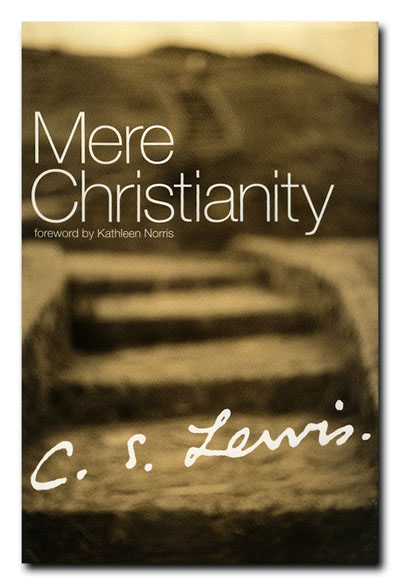
Book Review- MERE CHRISTIANITY by C.S. LEWIS
This book, published in the year 1952, was a compilation of talks delivered by the Christian academic and apologist Clive Staples Lewis, on the BBC between 1942 and 1944. It has since turned out to be one of the most widely read books on Christianity and Christian apologetics ever written.
The title, “Mere Christianity” may seem a bit unfitting for this work, because it has some seemingly unusual reasoning style for a Christian book. But that’s probably an ignorant assessment. It is indeed about “mere Christianity”; Christianity in the simplicity of its original and practical form. The title was in fact adopted from G.K. Chesterton, who influenced C.S. Lewis to some extent.
Lewis considered it necessary to begin an explanation of the Christian faith by establishing a basis for God, who all Christians believe in, and worship. In five chapters, he gradually builds his case. From initially pointing out in chapter one (“The Law of Human Nature”) that humans seem to have a sense of “right and wrong” by which they judge actions of theirs or of others, he proceeds to deal with objections to the idea of morality being universal; he agrees that cultural differences exist on this matter but points out that there are universally held moral principles nevertheless, which are core to the moral system of any culture. He suggests that the reason why there is a sense of morality where (in an otherwise purely materialist world) we could easily make ourselves happy by saying that there’s no such thing, is that it is innate. And what’s more, it isn’t really material. A Mind, which bestows morality (and meaning) must have put it there. A mind greater than man’s, greater than material. Lord over mind and material. So, Lewis says, we have cause to be uneasy. This is why: we agree to moral standards. We fail at keeping them. And a consciousness greater than us appears to be watching, and taking notes- judging our right and wrong. And yes, we’re failing.
Book two, titled “What Christians Believe”, begins where book one left off. Lewis presents rival conceptions of God, and rejects pantheism for its inability to account for his observations on morality; and dualism, for its apparent claim that evil, like good, has no beginning and no end, and are eternally at war. He wonders whether it would not then be up to the observer of this cosmic struggle to choose the one he thinks to be “right”- in which case, the question arises: by what standard then, is right or wrong being identified as so?
But he also criticizes the idea that God should have made Himself more obvious, by an “invasion”, instead of the humble coming (among other “concealed apparitions”) of Christ as man. He suggests that it suits man better. For if God were to truly turn up in all His power and majesty, it would be for one thing only: to judge. He will one day. But He has shown mercy by coming to us in the humble and accessible way. For this, we should be grateful.
In Book three, (Christian Behaviour), Lewis begins to deal with Christian morality. He approaches this matter by looking at the “Christian Virtues”- first, the Cardinal virtues: prudence, temperance, justice and fortitude. He explains these in a truly illuminating way, dispelling popular misconceptions about them. He goes on to talk about social morality, and the failure of psychoanalytic techniques to bring about a well rounded conception of morality by any individual. Then he defends the virtue of Chastity and rebuffs the claim that modernist craze for unhinged sexual liberalism is the result of being “sexually starved”. He says the growing interest in loose sexuality has only begotten more sex craze, not less. It has led to a proliferation, not a satisfaction or an appeasement. The Christian model for marriage is also extolled. It is not just about feeling that one is in love; it is also about justice being shown in your pledge to your better half to remain unseparated from him/her “till death do us part”. God, the children, and the human witnesses to this contract are also considered in this.
Forgiveness, Charity, Hope and Faith are treated too. But especially noteworthy is Lewis’ exposition on pride, which he (rightly) calls “the great sin”. He affirms that pride, which thrives upon and fosters self-centeredness, is a rebellion against God as the One, the LORD. It is widely spoken against, but seldom admitted. And it is perhaps the most common of all sins. In fact, it could be said that there is a trace of pride behind every sinful act of man.
The fourth (and final) book explains the “becoming” of Christianity, the making of a “new species”, not merely “nice people”. He drives his point home with a ringing truth which he states: that God calls us not to give Him the things we have. Not even all of them. He wants us. Our selves. And you search for “yourself”, you will find only emptiness and disappointment in the end. We will not be satisfied. We will only be in despair. But if you seek Christ, you will find him: the joy of sacrifice, love, peace beyond all understanding, satisfaction in devotion to God, and every other thing that comes with dying to ourselves and letting our lives be Christ’s and Christ’s alone.
While a few points in this book do not appear to the trained mind to have been clearly made or argued, such apparent deficiencies do not in any way diminish the great contribution that this book has made. It has changed many lives, helped a lot of people on the path to knowing God, and made clear numerous concepts in Christianity which many, including this reviewer, initially struggled to understand.
I recommend this book to those seeking to understand the Christian faith. And to those who are Christians, and want an even clearer understanding of what they believe.
WE ARE ONE
Northern rim
Rasmussen slides about, skating through snow, thinking of soon coming stars
Tonight, above us all, they’ll bubble brightly, billions of ’em
He’ll dream of us, let his eyes widen in wonder of a mass unseen, scattered abroad
In the States, Shawn shaves grass off its parked blockade, frees wind-stuck track of trash
Tomorrow, he’ll pack a block-buster sermon in Church, deliver punches on Christ’s redeeming crunch moment
He’ll look around, see faces, and stay dead-in-stare, stirring slowly for a wider world
Walls can’t keep Khalid’s speedy stream of serene thought, transfixed as He is, reflecting
He’s in the mid-east, but peace, though scarce without, rests within
He’s already been let out, his mind criss-crossing sand dunes to fine sheep-grazed plains far off
He, together with us, feeds off freely given gift, gives up self-ensconced cockpitting
One thoughtful spark from his heart leaps up and away, beating sea spans to find another
Connecting to Bilkisu’s, grating chilli, warming up by fire in chilly condition
Before now, she’s been lone ranger in a universe of mediocre exuberance
This minute , she thinks this thing betwixt and about her bent pounding position, more
A presence warming up, spicing it all up, making sweet dish of a dire shift
As she suddenly joyfully bursts out in brand new songs, praising, somewhere in West Africa
An awakening, this army of faithful followers bear witness to, a telling no distance ever contains
Wang dials Ajeh; they are held in divinely designed triad, fired up beyond Mandarin and Hindi
Katerina cries “Christ is Risen”, as bells clang, clock strike time to converge
From Valparaiso, with love
So together, all of us see the stars above, are awed by life designed by Divine Mind
Signs seen through space, regardless of time zones
Night or day, our praises rise like resurgent waves, our unity a praise
Thousands of miles apart, closer than a linking of hands
We are a life, a voice, a flame to illuminate
Let us, in oneness shine as saints, to show the world
Let them know that Christ is greater than creed, greed, boundary stones or skin tones
Christ is for us, all; Christ makes us his, makes us one.
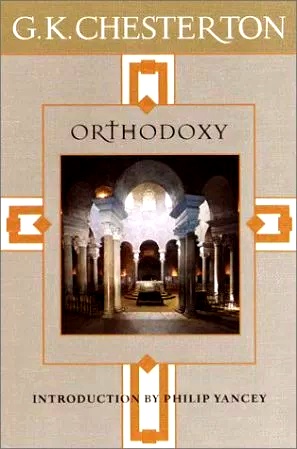
Book Review: ORTHODOXY – by Gilbert Keith Chesterton
Orthodoxy was written in 1908, by the British journalist and biographer Gilbert Keith Chesterton. It is presented by him as a sort of summary of a personal journey towards an acceptance of the Christian faith as sufficient and perfectly satisfying the ultimate yearnings of man. It is, in this sense, a voyage; but in actual fact, merely describing it as this alone, would be a grave understatement. It is a slender book which deserves to be read and digested not too hastily. More than just a survey, it speaks of Christian Orthodoxy as the orthodox, the only one (truly fitting) for man, the truth paradoxical yet consistent, the obvious truth.
The book consists of nine chapters. The first, which is an introduction titled “In Defense of Everything Else”, Chesterton employs the symbol of a quest for some previously unfound land, a journey. He had embarked upon a voyage, seeking something new, perhaps some satisfying understanding of reality and of life. What he finds, he first thinks to be a novel discovery.
but then he realizes that it was already found by many before. It was, and is, the ancient, always relevant truth, the Orthodoxy that is Christianity.
In Chapter 2 (The Maniac), he examines the alternatives to the Christian view of the world and of existence. He compares secular humanism and the eastern religions (which were, and are, among the most adhered to ‘alternatives’ to the Christian faith) to lunacy. The emphasis in this Chapter is that there is something terribly wrong with these systems: the confidence in the ability of man’s (finite) mind to explain everything ends up producing an obscure and uncertain picture of everything. His argument here, is this: that those who are more likely to be found in the mental asylum are those who express an excessive self-belief; perhaps to the point of appearing delusional. Likewise, the men who employ the so-called power of reason to explain existence and ‘demystify’ it are deluded. The point of similarity between these is the lack of a real basis for their rationalizing- just as one suffering from delusions of grandeur thinks himself reasonable, but is in fact living in a false reality based on weird presuppositions. He also dismisses eastern religions as “centripetal” , tending to lead to self-preoccupation and selfishness.
The next Chapter, (the Suicide of Thought) is an attack upon various strands of ideas which have questioned the need for rules and boundaries (which the Church does recognize). He criticizes free thinkers for doing away with what is in essence, a basic constituent of meaning, or of defining. He rejects “pacifist” philosophy which emphasizes the morality of peace; and the worship of will, which is the opposite (one which exalts the “survival of the fittest”, the rule of self-centeredness). Instead, he extols a combination of radical passion and radical tenderness and care, as seen in Joan of Arc, and ultimately, in Jesus Christ.
In the “Ethics of Elfland”, Chesterton speaks of democracy and of his love for it. Then he makes a positive comparison to Christianity, which does not exclude, but calls out; and which also speaks of the mystical, something which man’s culture widely (‘democratically’ if you will) attests to. The pure and unfettered appeal to human logic which shuts out the unfathomable, the irreconcilable contrasts, and the apparent signs of the divine, is in fact aristocratic. It is held by a minority who would want to impose this view upon all else. He also continues to intensify the point he has made about the difference between those who believe (those who dwell in elfland of the fairy tales) and the logicians who seek to explain (away) everything. Their so-called laws of nature are not laws at all. They are only uniformities which, in reality, rarely (if ever) exist in these exact representation. To this extent, to be a ‘elflander’ is to be plain and honest about existence as it appears to us: mysterious and exciting. But the pure logician is the one who actually believes in fairy tales- such as the fairy tale of the “laws of nature”.
Then in chapter five, he speaks more about radical opposites which Christianity shows forth, in its approach to the state of the world. For him, the intriguing thing that makes this faith fit into the world’s keyhole is that in it, we hate the state of the world around us enough to absolutely detest it, yet love it (that is, the people and their society) enough to be moved to improve upon it. We, in hatred for its present state, seek to dismantle it. We, in love for it as God’s creation, want to build it up better and purer.
After speaking some more about the paradoxes of the Christian faith in chapter six, he goes on in chapter seven to describe Christianity as instigating an eternal revolution. While the rebels of Chesterton’s day frequently spoke of the constant need to do away with the old (including traditional Christianity), Chesterton points out that it is actually Christianity which is to be considered as eternally revolutionary. It strives continuously for perfection and wholeness. The so-called revolutionaries of modern thought however bring about more of the same. Their “change” is always going to grow old, and their introduced novelty will in time be the archaic “enemy of progress”. But old as the Christian faith is, it never ceases to call us to something better, never ceases to intimidate the status quo, never ends its drive against all worldly wisdom considered in as being in vogue or passing. It is truly the revolution.
Chapter eight, titled “The Romance of Orthodoxy”, the writer makes a case against “liberalizing” influences, and speaks in favour of traditional Christianity, along with its affirmation of faith in the incredible (e.g. miracles)- something the liberals would rather remove from Christian faith. He makes the point that a reconstruction of Christianity with regards to its firm belief in the mystical and awe-inspiring, the rule and the divinity, would negatively affect western civilization, since it is precisely these which have formed the basis for Europe’s thriving culture. The influence of eastern mysticism, with its emphasis on the self and a detached approach to the world does not bode well for western civilization. Orthodoxy, which is far more radical and rule bound (passionate and definite) sets us on a clear path to a certain destination.
“Authority and the Adventurer”, which is the last chapter of the book, is a conclusion. The question is raised: even if Christianity contains these truths that have been mentioned, why not take the truths and leave Christianity behind? And underlying this question is the belief that Christianity is flawed in some way. He addresses some of the arguments underlying this belief one after another, saying that they were things which formed the basis of many people’s unbelief; and they were false. At the end, he tackles the question of an alleged lack of joy in Christianity. He claims that the pagans only find joy in the little things- the material things of this world. But as they view things on a larger, cosmic scale, that joy is increasingly replaced by despair and resignation, as they stare at what would appear to them to be a cold universe in which fate ultimately means death. For the agnostic/atheist, it seems that its worse: emptiness and meaninglessness. But as the Christian looks upon existence, he may be dissatisfied with the little things in the imperfect world. But as he perceives everything in its wholeness, his joy grows. It is not fate that decides; there is a sense of peace and joy, of gratitude which is seen only in Christianity. And it is this need of man for certainty and rest, of passion and definition, of mystery and revelation, that drew the writer unto his discovery of novel, yet ancient panacea- Christian Orthodoxy.
Chesterton’s wit is breathtaking. Every other line is, literally speaking, a punchline. This book has been hailed as one of the great works on Christian apologetics (although the writer claims to have scarcely read such works). And rightly so. Its a challenging book to read, but it is also rewarding. And yes, thought provoking too.