Book Review: HOUSE by Frank Peretti and Ted Dekker

image

Authors: Frank Peretti and Ted Dekker
Publisher: WestBow Press
Year of Publication: 2006
Pages: 192
Reviewer: Beatrice Ani

It’s a House, abandoned in a deserted environment. Empty physically, but not truly empty, it’s demon infested, holds mysteries, presence, memories and dilemmas. In a single word, it’s haunted. Ted and Frank centre this fiction on events that occur before the crucifixion of Christ; his betrayal/denial, the fierce battle we encounter daily in our hearts/minds, the purpose of Christ’s death, His resurrection and the Devil’s defeat afterwards .

The novel begins with White, also known as tin Mask- the devil himself -analysing the aforementioned “House”, his next venue for murder. White’s basic agenda is to lure people into deserted buildings, manipulate them to play his game (mind game) to his satisfaction and then kill them by dawn. Just as every game has a rule, his are as follows:
House rules: 1. God came to my house and I killed him. 2. I will kill anyone who comes to my house as I killed God. 3. Give me one dead body, and I might let rule two slide.

Despite White’s zeal and power to kill every living Human, there are still specific kinds of humans he couldn’t kill- the sinless/innocent. His victims must be sinners. And He strongly believes that all humans are guilty (sinners), until he meets Susan, An innocent young girl who finds herself in the building. White can’t kill her because of her innocence and her great knowledge. He keeps her hostage for three days, lures other victims, four to be precise, and begins to manipulate them. He asks them to kill just one person (His third rule) in order to make the second rule slide. His chosen candidate is Susan the innocent one. When the others don’t kill the girl, White decides to do so himself; then he realises his mistake, just as the devil did after crucifying Christ. Her death actually sets the other captives free.

Two major characters in the novel, Jack and Stephanie Singleton, are led into White’s trap while on their way to a marriage counselling session. Their marriage, though troubled by differences they have been unable to deal with, is restored as they emerge from the grave dangers of the house. They are saved from White’s deadly game by Susan, whose self sacrifice gives them a new chance to live.

The novel’s allusions to the ministry of Christ and the salvation that he wrought is hard to miss. It has an interesting and attention gripping plot, and more importantly, a message of redemption that shines through it, especially at its end.

Book Review: REDEEMING LOVE by Francine Rivers

image

Author: Francine Rivers
Publisher: Multnomah
ISBN: 978-0-553-29368-5
Reviewer: Ifejesu Adewunmi

I read this novel- Redeeming Love. I really loved it!
The book retells the Biblical story of Hosea and Gomer, as a romantic saga which plays out in the United States in the mid 19th century.

Here’s a summary: Angel, a strikingly beautiful woman, is the product of a broken home. She had a father that loathed her and had another family. She lost her mum at a very tender age. As a result of that, she was forced into prostitution. She sold her body for a place to sleep and food to eat. Michael Hosea was a man who had committed his life to serving God. God tells him to marry Angel.

At first, Angel dismisses him as one of the numerous men who were smitten by her beauty (or driven by lust) and would say anything to have her. But Hosea keeps coming back. He doesn’t give up in spite of all the negativity because he heard God. Angel  is unable to comprehend what anyone would want to do with her – a wretched sinner like her. She feels unworthy. She doesn’t believe that the pure and holy God would even know she exists. She keeps running away from God’s love. God’s unconditional, redeeming love, God’s love that never fails, His irreversible, irrevocable love.

When I read Redeeming Love, it got me thinking. I was like just like Angel. I feel I have to earn God’s love. I have to actually work for it so the equation will be balanced.
The journey of Angel to accepting God’s love really helped me realize that God’s love doesn’t depend on me.

You really should get the book. Not one second I spent on the book was wasted.

Book Review: THE RESURRECTION OF THE SON OF GOD By N.T. Wright

image

Author: Nicholas Thomas Wright
Publisher: Fortress Press, 2003
ISBN: 0-8006-2681-8
Reviewer: Ikenna Nwachukwu

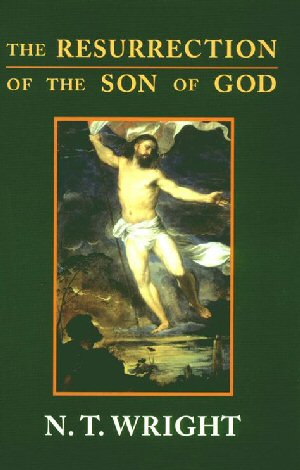
Our faith as Christians is founded upon the historical fact of the death and resurrection of Jesus Christ, the son of God. Paul famously pointed out that if Christ wasn’t raised from the dead, “we believe in vain”. But while we affirm that Christ did resurrect, skeptics seize upon perceived inconsistencies in the Biblical account of his return from the dead, and declare that it is difficult for any thinking person to accept the story. They say, in essence, that we ought not to believe in the resurrection, let alone build our lives upon it. As far as they are concerned, when people die, they stay dead. The story of the resurrection of Jesus is for them a wild myth, or even a fraud.

In The Resurrection of the Son of God, Nicholas Wright takes up the challenge of answering the unbeliever’s questions about the resurrection. Wright, who is regarded as one of the finest theologians (if not the finest) alive sets forth his argument in favour of the reasonableness and believability of the resurrection accounts in this scholarly work that has a quality that is hard to match. He systematically charts a course (gulping over 800 pages) that aims to point out that the conclusion reached by the ancient Christians about what happened to Jesus in the days following his crucifixion was the most reasonable of the alternative interpretations of the events, in view of the available evidence.

The book begins with a survey of the beliefs about death (and the possibility of resurrection) in ancient Judaism and paganism. Wright ploughs through the myths and traditions from the world before and in the days of Jesus’ earthly ministry, and shows that the perception of a bodily resurrection in practical, real life terms by the cultures of the time would not have differed markedly from ours- they would have regarded reports of a resurrection with skepticism, even scorn. It was in that setting that the Biblical story played out, the one in which the disciples, going against the grain of popular commonsense, declared that their master had come back from the dead.

After reconstructing the cultural background of the resurrection story, Wright goes on to the detail of the actual event. He examines clues of the gospel account’s genuineness, addresses objections to the event’s historicity, and deals with doubts raised about the witnesses’ state of mind. The result of this exercise is more than just a rebuttal of old and new challenges to traditional Christian beliefs about the living Christ; it is a powerful restatement of our faith in him as the Son of the Living God.

The Resurrection of the Son of God is a brilliant book. However, it doesn’t lend itself to everyone- because not everyone is a fan of dense volumes that contain more than a handful of references to Greek myths and ancient Jewish traditions. But if you want more than just the regular diet about Jesus’ death and resurrection you get from Sunday school classes and Church sermons, this book is for you.

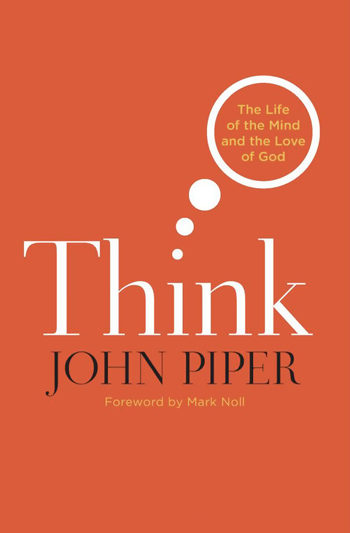
Book Review: THINK by John Piper

image

Author: John Piper
Publisher: Crossway,
Year of Publication:  2010
Pages: 226
Reviewer: Ikenna Nwachukwu

John Piper feels that much of modern Christianity, especially the evangelical movement, has developed a rather frosty relationship with thought. The church emphasizes sense experience and emotionally charged encounters with the Divine, and encourages the faithful to seek the Lord who reveals Himself through a still small voice, in acts of provision and protection, and yes, through scriptures. But there always seems to be a warning attached, a warning not to approach the word with the philosopher’s mind, with the haughty style of the intellectual who tries to question the Almighty’s sovereignty and wisdom. We are to read the Bible with reverence, bow humbly before its contents, and get on with the job of being obedient doers of the word.

But Piper thinks this way of dealing with the Bible’s message, and the whole way of life it reflects and produces, doesn’t do much good for Christians. His point is that Christians should have a healthy thought life, one that brings glory to God through its robustness. Not thinking through what the Bible is actually saying to us, is dangerous. A lazy, emotional approach to the word results in flawed interpretations of it, false doctrines, and outright heresy- things which plague Christianity today. Christians who do not engage God’s word and the culture that surrounds them by examining them with the tools of systematic thought end up being unable to speak confidently about, and in defense of their faith when confronted by skeptics. Sometimes, even the simplest question about what they believe throws them off balance.

Think begins autobiographically. Piper shows us how thinking for him has been a practice of devotion to God, and how his intellectual pursuits have yielded some of the most profound moments of worship in his life. He turned to full time ministry when his academic project covering the book of Romans ignited a passion in him for the truth of the gospel. 
In the next few chapters, Piper points out that reading literature (including the Bible) involves thinking- trying to make connections between symbols, words, sentences, ideas and themes. Thinking also plays a great part in the process of coming to believe in Jesus (potential converts have to weigh the options before taking the “step of faith”).

The extremes of thought are dealt with within the book as well. There’s an examination of the dangers of anti-intellectualism, and the problems it brings about for modern Christianity; there’s also a warning about approaching God’s word cynically and spitefully. The author’s submission at the end is that thinking to glorify God is not only possible, but a command. It doesn’t apply to meditating on Bible text alone; it embraces “all learning, all education, all schooling, formal or informal, simple or sophisticated”.       
Think is a call to Christians to become more aware of what they believe, and how they believe. It is an appeal to the believer to use the mind God has given them as a tool, not only to properly divide the word, but also to love and worship their maker. Thinking is worship- when it is done to the glory of the Creator. As Piper says, God has given us our minds, so that “we might seek out and find all the reasons for treasuring Him in all things and above all things” (Page 15). There is real joy to be experienced in doing this.

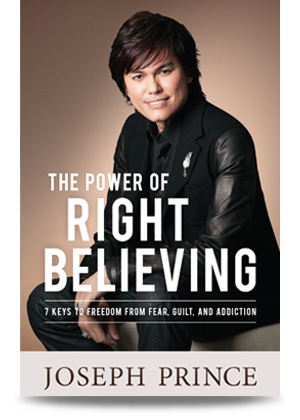
Book Review: The POWER OF RIGHT BELIEVING By Joseph Prince

image

Published By: Faith words, Hachette Book Group, New York,
Publication Date: October 2013
ISBN: 978-1-4555-5314-3.
Reviewer: Adeleye Olaoye

Are you drowning in a pool of your fears? Does guilt and addiction limit you from walking in the path God has destined for you? Look no further because they answer lies in a book inked by Joseph Prince, titled The Power of Right Believing.

What’s the book about? Its aimed at liberating  the mind on fear, guilt and addiction using seven main keys. These seven main keys  are:
1. Believe in God’s Love for you
2. Learn to see what God’s sees
3. Receive God’s complete forgiveness
4. Win the battle for your mind
5. Be free from self- occupation
6. Have a confident expectation of good
7. Find rest in the Father’s love

This book which its foundation are built on God’s love and right believing will change your beliefs on “so-called” standards set by the church- rules which suggest that once you sin, God can’t and won’t listen to you or won’t want to be around you. This book sets fire to such beliefs, and programs new belief codes into your system- if you’ll let it.

Why do you need to have a copy of this book? It’s interesting, practical, written in easy and simple English, has practical biblical stories with verses to back his theory up, key highlights of phrases to drive his point home and diagrams to make it a little bit colourful.

If you don’t like reading books like me because they bore you and make you sleep, I urge you to just take a glance at this book for thirty minutes and let the book do the rest. But if you are a nerd and love to read books (especially ones from Joseph prince), then I need not explain further. The Power Of Right Believing is  divided into seven parts and 21 chapters, and contains 348 pages only. Anyone can read it, regardless of their gender, class, age or denomination (disclaimer: THIS BOOK IS NOT A RELIGIOUS BOOK). And you don’t really need to make a hole in your pocket to get one.

In conclusion, if your power of limiting factor for years has been fear,guilt and addiction, then this book is for you. So, what are you waiting for? Grab your copy now!!! (in the voice of the typical Nollywood movie trailer).

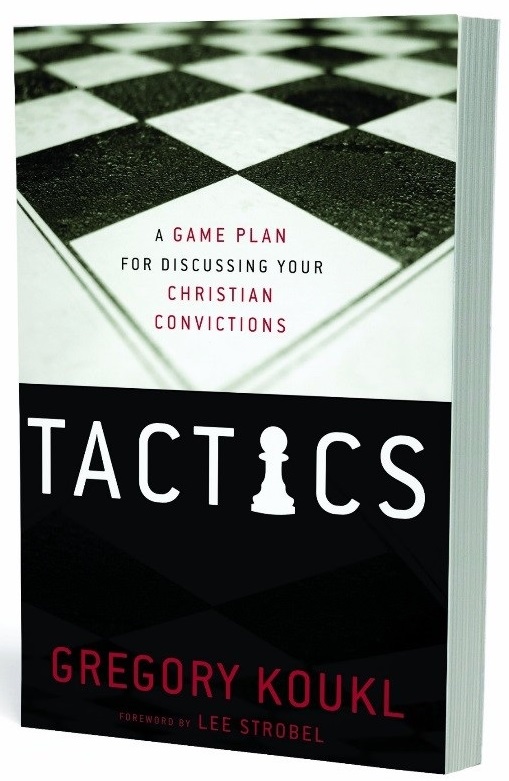
Book Review: TACTICS by Greg Koukl

image

Author: Gregory Koukl
Publisher: Zondervan, 2009
ISBN: 978-0-310-57476-7

Have you ever gotten yourself in a tangle while trying to answer a skeptic’s awkward questions about your Christian faith? Or is your preferred style to simply avoid these sorts of discussions, because you think it’s not right for Christians to engage in “lengthy disputations”?
In his book, Tactics, acclaimed Christian apologist Greg Koukl lays out some of his favourite systematic and practical approaches to dealing with the apparent verbal missiles fired at our professed faith by unbelievers. And he does so in an engaging way. He recounts several examples situations in which he used these tactics to address seemingly knotty issues and problematic themes concerning Christian beliefs and non Christian perceptions of it. Greg employs military terminology in describing the ways by which objections to core tenets of the Christian faith can be deconstructed and answered.
You might get the impression that Tactics is simply “formula peddling” dressed up in the finely spun apparel of well written literature. But the author actually reminds us that our role as witnesses or apologists is not to argue people into the kingdom of God, but to eliminate the excuses they give for not surrendering to Jesus- and let God work in their hearts to bring them to salvation. The ‘skill’ of finding the flaws in arguments against Christianity and exposing them for what they are should be honed so that we become more effective in witnessing for our Lord. But it is not in our hands to change the lost from the inside. Only God can do that. The persuasiveness of our arguments, on its own, cannot.
The contentious matter of debates and Christian virtue is discussed in the book, but not extensively. Greg graciously but uncompromisingly asserts that “argument is a virtue” (when performed within the boundary of decent conduct and on issues that are pertinent, of course). According to him, reason (demonstrated in argumentation, for example) and love are means God uses to bring people to Himself because “both are consistent with His nature” (page 41). He considers the popularly held belief that 2Timothy 2:14 and 23 forbid Christians from engaging in intellectual debates as erroneous, and notes at least one biblical instance of the apostle Paul successfully “persuading” people to believe the gospel (Acts 17: 2-4)- a suggestion that “persuasion” here involved some sort of argument.
The need addressed by this book is an ever present one. Because tackling the objections of non-Christians to the faith can be a tough thing to do without an understanding of what these objections hint at, Tactics should be considered important enough to be included in any intending apologist’s library and the book collection of Christians in general.

THE BELIEVER’S AUTHORITY: THE REVIEW

image

Book Title : The Believer’s Authority
Book Author: Kenneth E. Hagin
Publisher  Name : Faith Library publications
Year of Publishing: 1986
Number of Pages : 94
Reviewer’s Name : Adaobi Chiemelu

The Believer’s authority is a Hagin book where he goes straight to the point in revealing results from his study on what the average believer has not discovered about his authority over the devil as part of the body of Christ. And like is usual for him, he first exposes us to scriptures that get us keen on learning about the authority that belongs to the believer, which he does not use at all or he does not use expediently.

On seeing the title of the book, one could question the subject, its roots, range and limits. When you open the book, you won’t be disappointed for Hagin dutifully does not just answer these questions, he goes on to expose his source and his experience in the period of his study. As he does so, he reminds us of who we became when we believed in Christ. Our position as opposed to the devil depends on Christ’s position as opposed to the enemy. After we are assured of existing authority that we may not have been wielding judging from our approaches to a lot of turns in our lives, he does not leave us there. He reveals to us using not just scripture, but a vision  he had the way to express our right and the boundaries to it.

Exercising authority could as well be regarded as prayer, the right prayer for any believer. Or better still, it is  done in the place of prayer. It is a right way to pray. The first step to using one’s authority as one granted victory over the devil is having an awareness; this is the truth knowledge that sets us free at the instant our spirits would have absorbed the rhema (word). In eight chapters the subject is investigated, carefully dividing scripture at each step. We would see even with natural examples how valid and even earthly useful our authority as believers is, against popular belief. Many believers are trapped in an awkward position where they spend more time trying to avoid temptation than they do familiarizing themselves with who they have become in Christ. This book has been written to these believers. The interpretation of Greek translations and Hagin’s visions as shared in the book may not go down well with some Christians though, who may look on such hints rather  suspiciously and consider them not to be trusted.

However I struggled between the urge to keep reading and the urge to flip back and re-read. Hagin seemed to plan for this by using repetition so that the reader is still in touch with everything said from the first chapter. The chapters are even sub-divided to make it easier for the reader to mentally group each principle as they apply to each specific sub-topic. Very simply written work in simple language. Being a 70 page book (excluding the preliminary pages), an 8 page notes space left at the back of the book adds a hand book feel to it.

You can easily have this book at a regular price in your nearest bookstore. And mind you, you couldn’t have read this book if you have only read a variant of it from another author. It is Hagin’s live illustrations that make this book yet another exceptional faith book!

Book Review: AND THE SHOFAR BLEW- By Francine Rivers

image

Title: And the Shofar Blew
Author: Francine Rivers
Publisher: Tyndale House Publishers, Inc.

Reviewer: Chinwendu Emenike

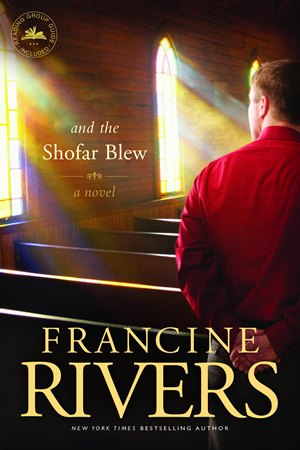
And The Shofar Blew is a work of fiction that teaches humility, patience, temperance and forgiveness. It centers on a church and the community in which it is situated.
We’ll sink our teeth into this review with a look at the book’s main characters:

Eunice Hudson: Wife of Paul Hudson, mother of Timmy. A prayerful, quiet and humble wife. She helps to appease members of the church that her husband had unknowingly angered. However she almost fell into sin with

Stephen Decker. But her tenacity is admirable. Her strength of character is borne out when she, confronted with the fact that her husband was cheating with Sheila Atherton, is able to forgive him.

Paul Hudson: Pastor of Centerville Christian Church. Dedicated firebrand who loves the work of God; a good husband and father- until he is called to pastor Centerville Christian Church. He does well initially, but his pride and pursuit of material things gets the better of him. His fall comes as a result of his trying to measure up to the perceived success of his televangelist-father. His involvement in some unsavory things is portrayed as resulting from this.

Samuel Mason:  One of the first three elders of the church, he brought Paul in to pastor the church. He’s a careful man, wise, prayerful, patient, and loves his wife Abby very much. He brings to light what “old-age romance” feels like. Also a persistent intercessor.

Stephen Decker: Mason, architect, carpenter, Jack-of-all-trades, rehabilitating alcoholic, a divorcee with a runaway daughter. Gives his life to Christ while listening to one of Paul’s preachings from his early pastoral years. Falls in love with

Eunice Judson. He fights the lustful temptation, gets close to Samuel Mason, who helps him grow in the Christian faith. Falls out with Paul because of Paul’s changing values. Leaves Centerville and relocates to another town. Reunites with his daughter. Starts up a bible study, and eventually, a church.

This book has helped me understand how important it is to talk to God, and wait patiently for his still, small voice. I’ve also gotten, through this book, some good strategies of how to curb some of my excessive appetites. Like when Stephen was faced with the urge to drink, he took a jog, sang, or prayed, just to distract his mind. He also rightly acknowledged that only Jesus could save him from his addiction- strategy was a mere demonstration of a will to be free, not the solution to addiction.
Two characters in this book whose experience I would relate to are Stephen Decker and Paul Hudson. Stephen Decker, because of his ability to overcome his internal struggles, and Paul, because of his impatience and his ever present need to impress his father which he obviously did wrongly. The book’s description of Paul’s case rings out as a warning to the reader to not get caught up in pursuing so-called standards of accomplishment. What matters in the end is God’s opinion of us as individuals.
My favourite quote from the book is a statement made by Samuel to Stephen at a picnic: “Growth in numbers is a blessing as long as spiritual growth and maturity comes along with it”. Pertinent words which should inspire, but sadly indicts much of Christendom today.
This book speaks to a great number of people and the relevance of its themes makes it a good novel for church leaders, wives, mothers, fathers and people struggling with addiction, to read and learn from.