
Love is a fabric which never fades, no matter how often it is washed in water of advertising and grief
– Anonymous
#love
Love is a fabric which never fades, no matter how often it is washed in water of advertising and grief
– Anonymous
#love
What is life?
Is life merely about the strife?
Existing to be seen?
To be seen growing?
And too keen on the hour death will appear?
Is life about the days?
The rays of a life time?
Breathing to make a regular cycle?
To be born in the flame of time?
To grow and be tamed?
To be schooled and screwed?
To be a worker then end as a walker?
To get retired and keep on being ‘real tired’?
And to die?
What is life?
It is about,
Living to the full,
Without being ruled by the society,
And without anxiety.
To reckon Christ,
For us to rise,
Beyond all price,
To make a mark that the world can track,
For the everlasting serenity,
Without any inadequacy.
And life is about,
The amazing call
From the “viral” (sin) to the era of which, grace is seen,
About the journey to the world of light,
To stay firmed and affirmed by His word.
And life is about,
The hope we give for the world to cope,
The love we show for the world to stay above,
The peace we find for the world to get.
“Life is exploring the gift within
And not waiting.
Author note:
Life is never about being right, but letting righteousness find its way in us”.
The alchemist…
© 21 days ago, Tolulope Amao

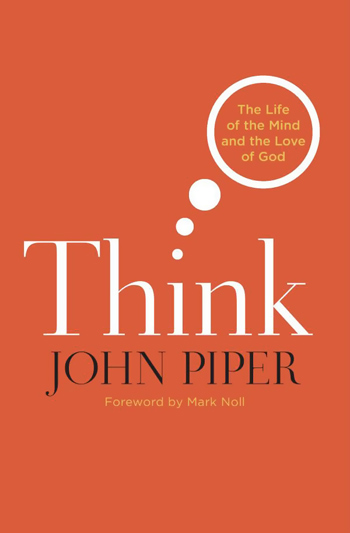
Author: John Piper
Publisher: Crossway,
Year of Publication: 2010
Pages: 226
Reviewer: Ikenna Nwachukwu
John Piper feels that much of modern Christianity, especially the evangelical movement, has developed a rather frosty relationship with thought. The church emphasizes sense experience and emotionally charged encounters with the Divine, and encourages the faithful to seek the Lord who reveals Himself through a still small voice, in acts of provision and protection, and yes, through scriptures. But there always seems to be a warning attached, a warning not to approach the word with the philosopher’s mind, with the haughty style of the intellectual who tries to question the Almighty’s sovereignty and wisdom. We are to read the Bible with reverence, bow humbly before its contents, and get on with the job of being obedient doers of the word.
But Piper thinks this way of dealing with the Bible’s message, and the whole way of life it reflects and produces, doesn’t do much good for Christians. His point is that Christians should have a healthy thought life, one that brings glory to God through its robustness. Not thinking through what the Bible is actually saying to us, is dangerous. A lazy, emotional approach to the word results in flawed interpretations of it, false doctrines, and outright heresy- things which plague Christianity today. Christians who do not engage God’s word and the culture that surrounds them by examining them with the tools of systematic thought end up being unable to speak confidently about, and in defense of their faith when confronted by skeptics. Sometimes, even the simplest question about what they believe throws them off balance.
Think begins autobiographically. Piper shows us how thinking for him has been a practice of devotion to God, and how his intellectual pursuits have yielded some of the most profound moments of worship in his life. He turned to full time ministry when his academic project covering the book of Romans ignited a passion in him for the truth of the gospel.
In the next few chapters, Piper points out that reading literature (including the Bible) involves thinking- trying to make connections between symbols, words, sentences, ideas and themes. Thinking also plays a great part in the process of coming to believe in Jesus (potential converts have to weigh the options before taking the “step of faith”).
The extremes of thought are dealt with within the book as well. There’s an examination of the dangers of anti-intellectualism, and the problems it brings about for modern Christianity; there’s also a warning about approaching God’s word cynically and spitefully. The author’s submission at the end is that thinking to glorify God is not only possible, but a command. It doesn’t apply to meditating on Bible text alone; it embraces “all learning, all education, all schooling, formal or informal, simple or sophisticated”.
Think is a call to Christians to become more aware of what they believe, and how they believe. It is an appeal to the believer to use the mind God has given them as a tool, not only to properly divide the word, but also to love and worship their maker. Thinking is worship- when it is done to the glory of the Creator. As Piper says, God has given us our minds, so that “we might seek out and find all the reasons for treasuring Him in all things and above all things” (Page 15). There is real joy to be experienced in doing this.
Where there is love, there is life.
-Mother Teresa
#love

Let’s study a bit
Take what we have known and put them in perspective of the whole bible and see what we find…
Let’s start from the beginning.
And when I say ‘beginning’ I mean Genesis.
Let’s start from ‘Moses’
There are thoughts which should have come to your mind if you read the bible and if they haven’t, let me bring them.
Moses was born in Exodus 2.
But he wrote the book of Genesis?
You would be careful in reading the things that he wrote happened before Abraham and especially before NOAH.
Then we think most of the things he wrote were by inspiration and he wrote to his understanding… We believe Moses wrote Genesis to Deuteronomy but I saw Deuteronomy 34:5-6
5 …Moses the servant of the Lord died there in the land of Moab, according to the word of the Lord.
Was that by inspiration too?
The only explanation is that someone else wrote that Book. But then, studies in the Old Testament show us that other parts of the Torah or Pentateuch are stylistically inconsistent. For example, have you noticed that there are two creation accounts? And they are not like the accounts of the gospels. The gospels as you know, even with differences, often say the same thing. So while in Mark, Jesus could do no mighty works in a certain place, in Matthew Jesus could also do no mighty works in the same place.
But in Genesis, we see God makes male and female in Chapter 1 but makes a male alone at first in Chapter 2 before a woman. Jesus even quotes this passage Matthew 19 and Mark 10. If Moses was operating under inspiration, would the inspirer contradict himself or would Moses, writing, not notice his own inconsistencies?
Yet for me the most compelling proof against the authorship of Moses is the fact that the Pentateuch is written in Third person. Why would I refer to myself in third person when writing about myself?
Other examples can be found in Amos, Hosea and Isaiah (amongst others) of prophets whose ministry was documented by other people. It doesn’t reduce the authenticity or audacity of the books or the prophets. Ezekiel is the only Major Prophet that wrote by himself, and it can be seen in his style. He writes in first person perspective. It’s very simple.
Now, a lot of Christians believe the curse at the end of Revelation will apply to them if they dare think through scripture like this. So they’d rather let some pastor take the blame while they blindly follow him. It’s OK…
However, the curse in Revelation can only apply to the book of Revelation since the Bible was not compiled by then. With knowledge like this, we can better understand the anachronisms and variations in the Pentateuch.
In Mark 5, Jesus says Moses was talking about him; that is to say, Moses is reported as saying things which actually were about him, Jesus.
Study for yourself… Dig into the Old Testament… Because EVERDAYJESUS is our clarity too.
Review by Daniel, Achikanu (December, 2016).
If love grows within you, beauty grows for love is the beauty of the soul.
-St Augustine
#love

