Book Review: LOVE: THE WAY TO VICTORY- By Kenneth E. Hagin

image

Year of Publication- first published 1991.
Publisher- Faith Publications, USA.
Number of Pages- 220.
ReviewerAdaobi Chiemelu.

A book on love like no other. Hagin, as usual, lays out based on the bible the God-kind-of-love. Most Christians have spent a fair share of their individual lives living with the dents made on their personalities by their relationships. Through eight chapters, he
communicates in comprehensible detail the whole matter of reaching the desired state of blessedness in life by committing ourselves to the “God kind” of love. Hagin’s book seeks to drive home
the point that God’s love which has been shed abroad our hearts
(Romans 5:5), when expressed through the series given in 1 Corinthians 13, has the power to do all things; in effect, perfect God’s will in
one’s life and fulfill purpose. The  subject of Love is treated with sweet dedication. The love of God is, no doubt, the foundation of every kind of love. Examples of how it can turn things around are given in this book, with the hope that readers may identify with some of the situations. Even those involving enemies, and those
we would otherwise hate. Every required scripture is given, in line,
using the King James Version. Therefore, Hagin’s book endears us
Christians to go on the love walk; after all, the New Covenant says to
love the Lord your God with all your heart, all your mind and all your
strength. And to love your neighbour as you love yourself. Hagin writes as to say, Why not taste this irresistible punch for yourself and see it work.
And may the grace of our Lord Jesus Christ, rest and abide with us now and always.

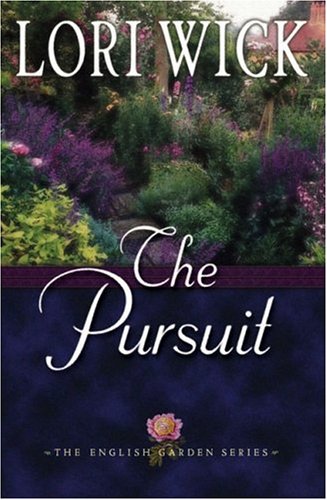
BOOK REVIEW: THE PURSUIT – by LORI WICK

Reviewer: Beatrice Ani

image

Lori Wick’s The Pursuit is a Christian Romance fiction published in the year 2003. It’s actually the fourth and the last of a series, the preceding titles being The Proposal, The Rescue and The Visitor. This particular novel captures man’s betrayal of man, the need to come to terms with the past (lest it continues to haunt), the need to learn (positively) from these experiences, and to trust God and His sovereignty in every moment of our lives.
The novel opens with Edward Steele, one of the major characters, writing a letter to his elder brother Henry, about his intention to join him and the rest of his siblings for Christmas. But he has no idea what was to result from his trip. He, Edward Steele, boards a ship and heads home. In the ship he meets a lady on the run disguised in a man’s attire and her (his) servant who happens to be Edward’s roommate. Meanwhile, nobody on board notices the lady’s disguise until Edward’s roommate becomes critically ill, fears he might die and asks Edward to protect him. Edward soon discovers that “Mr Osborne” the Boss is actually a woman. Despite this discovery, he still stands on his word to protect the two strangers. Circumstances seem to conspire to bring the three together; an undying attraction develops between Edward and the lady. His entrance into her life leads to her being converted to the Christian faith, as Edward’s christian life makes a great impression upon her. She learns to trust God, to be a better mother to her kids, to get over the  betrayals she has experienced, and  to surmount the fear she has for the mother of her late husband.
  Although a sequel, it can be enjoyed by the reader, as its storyline is not inseparably intertwined with the preceding books in the series. The mystery surrounding the main female character makes the novel engaging. Though it is easy to read, one will not fail to notice that it does not stray from the normal romance plot line, and this makes the novel very predictable. The author’s use of scriptures to solve some basic challenges of the main character helps to properly highlight the sovereignty of God in varying situations.
   This book however has its imperfections.  I’ll note one- and that’s in its ending. Its “concluding” part was, for me, rather confusing, boring and overly extended. Nevertheless, it is on the whole a really good work. I  recommend this novel especially to folks who are being driven away from a worthwhile and fulfilling life “by” their past. The devil keeps pursuing you until you turn to the cross and make a decision to face and deal with your past. And its also for all ye fans of the Romance genre: this is a clean Christian book for you.

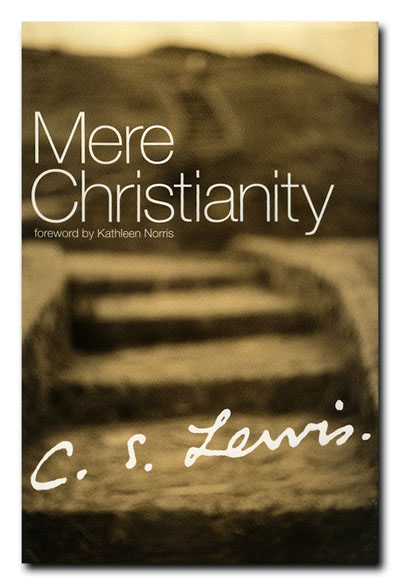
Book Review- MERE CHRISTIANITY by C.S. LEWIS

image

This book, published in the year 1952, was a compilation of talks delivered by the Christian academic and apologist Clive Staples Lewis, on the BBC between 1942 and 1944. It has since turned out to be one of the most widely read books on Christianity and Christian apologetics ever written.
The title, “Mere Christianity” may seem a bit unfitting for this work, because it has some seemingly unusual reasoning style for a Christian book. But that’s probably an ignorant assessment. It is indeed about “mere Christianity”; Christianity in the simplicity of its original and practical form. The title was in fact adopted from G.K. Chesterton, who influenced C.S. Lewis to some extent.
Lewis considered it necessary to begin an explanation of the Christian faith by establishing a basis for God, who all Christians believe in, and worship. In five chapters, he gradually builds his case. From initially pointing out in chapter one (“The Law of Human Nature”) that humans seem to have a sense of “right and wrong” by which they judge actions of theirs or of others, he proceeds to deal with objections to the idea of morality being universal; he agrees that cultural differences exist on this matter but points out that there are universally held moral principles nevertheless, which are core to the moral system of any culture. He suggests that the reason why there is a sense of morality where (in an otherwise purely materialist world) we could easily make ourselves happy by saying that there’s no such thing, is that it is innate. And what’s more, it isn’t really material. A Mind, which bestows morality (and meaning) must have put it there. A mind greater than man’s, greater than material. Lord over mind and material. So, Lewis says, we have cause to be uneasy. This is why: we agree to moral standards. We fail at keeping them. And a consciousness greater than us appears to be watching, and taking notes- judging our right and wrong. And yes, we’re failing.
Book two, titled “What Christians Believe”, begins where book one left off. Lewis presents rival conceptions of God, and rejects pantheism for its inability to account for his observations on morality; and dualism, for its apparent claim that evil, like good, has no beginning and no end, and are eternally at war. He wonders whether it would not then be up to the observer of this cosmic struggle to choose the one he thinks to be “right”- in which case, the question arises: by what standard then, is right or wrong being identified as so?
But he also criticizes the idea that God should have made Himself more obvious, by an “invasion”, instead of the humble coming (among other “concealed apparitions”) of Christ as man. He suggests that it suits man better. For if God were to truly turn up in all His power and majesty, it would be for one thing only: to judge. He will one day. But He has shown mercy by coming to us in the humble and accessible way. For this, we should be grateful.
In Book three, (Christian Behaviour), Lewis begins to deal with Christian morality. He approaches this matter by looking at the “Christian Virtues”- first, the Cardinal virtues: prudence, temperance, justice and fortitude. He explains these in a truly illuminating way, dispelling popular misconceptions about them. He goes on to talk about social morality, and the failure of psychoanalytic techniques to bring about a well rounded conception of morality by any individual. Then he defends the virtue of Chastity and rebuffs the claim that modernist craze for unhinged sexual liberalism is the result of being “sexually starved”. He says the growing interest in loose sexuality has only begotten more sex craze, not less. It has led to a proliferation, not a satisfaction or an appeasement. The Christian model for marriage is also extolled. It is not just about feeling that one is in love; it is also about justice being shown in your pledge to your better half to remain unseparated from him/her “till death do us part”. God, the children, and the human witnesses to this contract are also considered in this.
Forgiveness, Charity, Hope and Faith are treated too. But especially noteworthy is Lewis’ exposition on pride, which he (rightly) calls “the great sin”. He affirms that pride, which thrives upon and fosters self-centeredness, is a rebellion against God as the One, the LORD. It is widely spoken against, but seldom admitted. And it is perhaps the most common of all sins. In fact, it could be said that there is a trace of pride behind every sinful act of man.
The fourth (and final) book explains the “becoming” of Christianity, the making of a “new species”, not merely “nice people”. He drives his point home with a ringing truth which he states: that God calls us not to give Him the things we have. Not even all of them. He wants us. Our selves. And you search for “yourself”, you will find only emptiness and disappointment in the end. We will not be satisfied. We will only be in despair. But if you seek Christ, you will find him: the joy of sacrifice, love, peace beyond all understanding, satisfaction in devotion to God, and every other thing that comes with dying to ourselves and letting our lives be Christ’s and Christ’s alone.
While a few points in this book do not appear to the trained mind to have been clearly made or argued, such apparent deficiencies do not in any way diminish the great contribution that this book has made. It has changed many lives, helped a lot of people on the path to knowing God, and made clear numerous concepts in Christianity which many, including this reviewer, initially struggled to understand.
I recommend this book to those seeking to understand the Christian faith. And to those who are Christians, and want an even clearer understanding of what they believe.

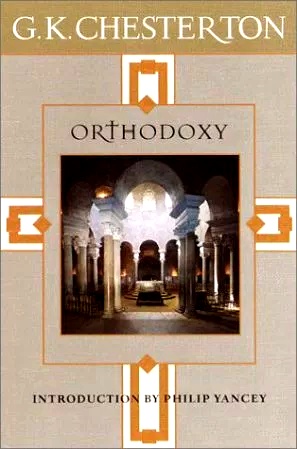
Book Review: ORTHODOXY – by Gilbert Keith Chesterton

image

Orthodoxy was written in 1908, by the British journalist and biographer Gilbert Keith Chesterton. It is presented by him as a sort of summary of a personal journey towards an acceptance of the Christian faith as sufficient and perfectly satisfying the ultimate yearnings of man. It is, in this sense, a voyage; but in actual fact, merely describing it as this alone, would be a grave understatement. It is a slender book which deserves to be read and digested not too hastily. More than just a survey, it speaks of Christian Orthodoxy as the orthodox, the only one (truly fitting) for man, the truth paradoxical yet consistent, the obvious truth.
The book consists of nine chapters. The first, which is an introduction titled “In Defense of Everything Else”, Chesterton employs the symbol of a quest for some previously unfound land, a journey. He had embarked upon a voyage, seeking something new, perhaps some satisfying understanding of reality and of life. What he finds, he first thinks to be a novel discovery.
but then he realizes that it was already found by many before. It was, and is, the ancient, always relevant truth, the Orthodoxy that is Christianity.
In Chapter 2 (The Maniac), he examines the alternatives to the Christian view of the world and of existence. He compares secular humanism and the eastern religions (which were, and are, among the most adhered to ‘alternatives’ to the Christian faith) to lunacy. The emphasis in this Chapter is that there is something terribly wrong with these systems: the confidence in the ability of man’s (finite) mind to explain everything ends up producing an obscure and uncertain picture of everything. His argument here, is this: that those who are more likely to be found in the mental asylum are those who express an excessive self-belief; perhaps to the point of appearing delusional. Likewise, the men who employ the so-called power of reason to explain existence and ‘demystify’ it are deluded. The point of similarity between these is the lack of a real basis for their rationalizing- just as one suffering from delusions of grandeur thinks himself reasonable, but is in fact living in a false reality based on weird presuppositions. He also dismisses eastern religions as “centripetal” , tending to lead to self-preoccupation and selfishness.
The next Chapter, (the Suicide of Thought) is an attack upon various strands of ideas which have questioned the need for rules and boundaries (which the Church does recognize). He criticizes free thinkers for doing away with what is in essence, a basic constituent of meaning, or of defining. He rejects “pacifist” philosophy which emphasizes the morality of peace; and the worship of will, which is the opposite (one which exalts the “survival of the fittest”, the rule of self-centeredness). Instead, he extols a combination of radical passion and radical tenderness and care, as seen in Joan of Arc, and ultimately, in Jesus Christ.
In the “Ethics of Elfland”, Chesterton speaks of democracy and of his love for it. Then he makes a positive comparison to Christianity, which does not exclude, but calls out; and which also speaks of the mystical, something which man’s culture widely (‘democratically’ if you will) attests to. The pure and unfettered appeal to human logic which shuts out the unfathomable, the irreconcilable contrasts, and the apparent signs of the divine, is in fact aristocratic. It is held by a minority who would want to impose this view upon all else. He also continues to intensify the point he has made about the  difference between those who believe (those who dwell in elfland of the fairy tales) and the logicians who seek to explain (away) everything. Their so-called laws of nature are not laws at all. They are only uniformities which, in reality, rarely (if ever) exist in these exact representation. To this extent, to be a ‘elflander’ is to be plain and honest about existence as it appears to us: mysterious and exciting. But the pure logician is the one who actually believes in fairy tales- such as the fairy tale of  the “laws of nature”.
Then in chapter five, he speaks more about radical opposites which Christianity shows forth, in its approach to the state of the world. For him, the intriguing thing that makes this faith fit into the world’s keyhole is that in it, we hate the state of the world around us enough to absolutely detest it, yet love it (that is, the people and their society) enough to be moved to improve upon it. We, in hatred for its present state, seek to dismantle it. We, in love for it as God’s creation, want to build it up better and purer.
After speaking some more about the paradoxes of the Christian faith in chapter six, he goes on in chapter seven to describe Christianity as instigating an eternal revolution. While the rebels of Chesterton’s day frequently spoke of the constant need to do away with the old (including traditional Christianity), Chesterton points out that it is actually Christianity which is to be considered as eternally revolutionary. It strives continuously for perfection and wholeness. The so-called revolutionaries of modern thought however bring about more of the same. Their “change” is always going to grow old, and their introduced novelty will in time be the archaic “enemy of progress”. But old as the Christian faith is, it never ceases to call us to something better, never ceases to intimidate the status quo, never ends its drive against all worldly wisdom considered in as being in vogue or passing. It is truly the revolution.
Chapter eight, titled “The Romance of Orthodoxy”, the writer makes a case against “liberalizing” influences, and speaks in favour of traditional Christianity, along with its affirmation of faith in the incredible (e.g. miracles)- something the liberals would rather remove from Christian faith. He makes the point that a reconstruction of Christianity with regards to its firm belief in the mystical and awe-inspiring, the rule and the divinity, would negatively affect western civilization, since it is precisely these which have formed the basis for Europe’s thriving culture. The influence of eastern mysticism, with its emphasis on the self and a detached approach to the world does not bode well for western civilization. Orthodoxy, which is far more radical and rule bound (passionate and definite) sets us on a clear path to a certain destination.
“Authority and the Adventurer”, which is the last chapter of the book, is a conclusion. The question is raised: even if Christianity contains these truths that have been mentioned, why not take the truths and leave Christianity behind? And underlying this question is the belief that Christianity is flawed in some way. He addresses some of the arguments underlying this belief one after another, saying that they were things which formed the basis of many people’s unbelief; and they were false. At the end, he tackles the question of an alleged lack of joy in Christianity. He claims that the pagans only find joy in the little things- the material things of this world. But as they view things on a larger, cosmic scale, that joy is increasingly replaced by despair and resignation, as they stare at what would appear to them to be a cold universe in which fate ultimately means death. For the agnostic/atheist, it seems that its worse: emptiness and meaninglessness. But as the Christian looks upon existence, he may be dissatisfied with the little things in the imperfect world. But as he perceives everything in its wholeness, his joy grows. It is not fate that decides; there is a sense of peace and joy, of gratitude which is seen only in Christianity. And it is this need of man for certainty and rest, of passion and definition, of mystery and revelation, that drew the writer unto his discovery of novel, yet ancient panacea- Christian Orthodoxy.

Chesterton’s wit is breathtaking. Every other line is, literally speaking, a punchline. This book has been hailed as one of the great works on Christian apologetics (although the writer claims to have scarcely read such works). And rightly so. Its a challenging book to read, but it is also rewarding. And yes, thought provoking too.

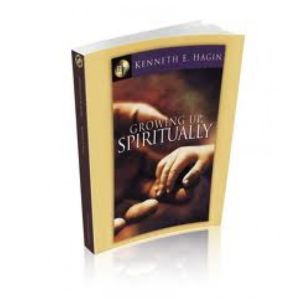
GROWING UP, SPIRITUALLY: The Review

Title: Growing Up, Spiritually
Author: Kenneth E. Hagin
Place of Publication: Faith Library Publications, USA
Date of Publication:1976
Number of pages: 166
Reviewer: Adaobi Chiemelu

Anchored on the words of the apostle Peter at 1Peter 2:2, Hagin emphasizes the need for Christians to grow, and ingeniously compares this with their physical growth.
He gently explains further, with a good number of live illustrations, the process of growth in humans. The reader is also brought to a realization of what stage of spiritual growth he is.
Frequently asked questions about spirituality, the roles of the Father, the Son and the Holy Spirit are very skillfully addressed in this book. In simple language, the reader is led up the ladder of spiritual development.

The book is of superb quality, and the font unmistakably normal and bold making it adequate for reading. Written in very creative style, Hagin’s book no doubt squarely affects its target audience: the Christians.

Therefore, Hagin does not use boring details. There are also incerpts of his own experiences in the ministry; instances, some of which one can identify with. With a tinge of humour, you are welcome to discover with Hagin the true basis for a Christian’s spiritual maturity.

THE WOMAN QUESTION

BOOK REVIEW by Njoku Uchechi

TITLE: THE WOMAN QUESTION
AUTHOR: KENNETH E. HAGIN
YEAR OF PUBLICATION: 1983
NUMBER OF PAGES: 66
CHAPTERS: 7

In the church and even in the world at large, we have been faced with so many questions about certain seemingly unclear principles in the scriptures that have adversely affected our churches and our perspectives in judging some issues. Questions like….
Is the man the head of the woman?
Must wives always obey their husbands?
Must women keep silent in churches?
Must women have their heads covered? Etc
In whole Christian denominations, women have been forbidden to teach, preach, or even to testify or offer audible prayer in church, based on these Scriptures. Many conservative denominations allow the women to take only a small role.

In this book, Kenneth E. Hagin deals with the questions bothering women and their faith. it will surely answer most of your questions about head coverings, women in ministry, marital relationships and female dressing. Also, he outlined that a man can only be the head of one woman- his wife, not all women.

I would advice that you get this book because it would get your heart right, help your ministry and get you more focused with God. One other advice is for you to leave it if you do not have the sweet Holy Spirit dwelling right inside of you, because it would actually do you more harm than good. In other words, get Jesus, and then get this book, God bless you.

CASTING YOUR CARES UPON THE LORD by Kenneth E. Hagin

BOOK REVIEW by Njoku Uchechi
TITLE: CASTING YOUR CARES UPON THE LORD
AUTHOR: KENNETH E. HAGIN
YEAR OF PUBLICATION: 1981
NUMBER OF PAGES: 28
CHAPTERS: 5
The inevitability of facing situations in this life is something we cannot just get up and walk away from, like someone playing who wants to be a millionaire; I mean it is neither a lifeline nor a way out, so when you have asked the audience, called your friends and even eliminated some logical alternatives, have You made the right choice?
But we do have an option, the way we respond to every single situation we are faced with in life, if your spouse is cheating on you, how do you respond, if your academics is not working, how do you respond, what kind of prayers do you pray? How do you go about it? Do you just chicken out and bank on suicide?
If you are a Christian or even an unbeliever that has ever been faced with a challenge that seems to weigh you down, or are you presently facing one now? Then you should get to this place… CASTING YOUR CARES UPON THE LORD by Kenneth E. Hagin. It would help you understand God’s principles in the face of dangers, directly from the bible. The prayers to pray for that situation and how to hold on to God till you get out of it. Do not miss this opportunity.

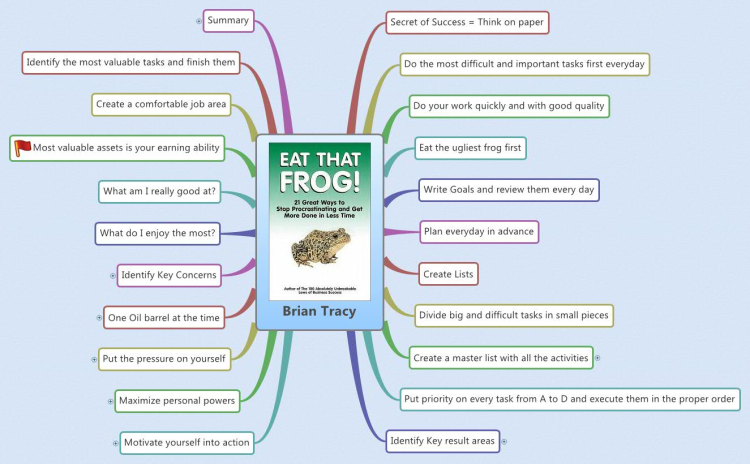
EAT THAT FROG by Brian Tracy

BOOK REVIEW by Ezeonyeka Godswill
TITLE: EAT THAT FROG
AUTHOR: BRIAN TRACY
PUBLISHERS: BERRETT-KOEHLER PUBLISHERS
YEAR OF PUBLICATION: 2001
NUMBER OF PAGES: 129
CHAPTERS: 21
“ It has been said for many years that if the first thing you do each morning is to eat a live frog, you can go through the day with the satisfaction of knowing that that is probably the worst thing that is going to happen to you all day long” (p.2)
Doesn’t it just annoy how you always have this big invisible and visible amount of work load you want to do and is expected of you, but somehow there’s never enough time? How you could plan and plan but somehow every task takes longer time to accomplish? Lemme guess you’ve even considered praying for extra hours included into our 24 hour per day routine. For starters, you’re not strange or even lazy as most people seem to call you! I know this cos I was once in those same shoes but good thing is I was never comfy in them neither did I settle for less so I fought on till I met my ‘frog-book’. Lols
The author, one of America’s leading authorities on the development of human potential and personal effectiveness, takes a critical look as to the cause and solution of procrastination, low effectiveness and other symptoms characteristic of people in them shoes I spoke about earlier.
With reference to the title, Tracy defines your “frog” as your most important task, the one you’re most likely to procrastinate on if you don’t do something about it now. It is also the one task that can have the greatest positive impact on your life and your results at the moment. (p. 2) The principle the author seeks to teach is that if you discipline yourself to begin immediately and persist until your biggest and most important task is complete before you go on to something else you can live at the height of productivity hence building your self esteem and ruling out all effects procrastination may have had on you!
“Successful, effective people are those who launch directly into their major tasks and then discipline themselves to work steadily and single mindedly until those asks are complete”(p.3)
Tracy’s unique style of writing is reflected in this masterpiece and on a lighter note I think it was written in a way procrastinators could finish it and do so quickly. So he craftily avoids over emphasis and long chapters and to incite interest he place a unique quote before a very chapter. That I think is genius! So before I rewrite his book do get one and remain blessed!