

Author: A. W. Tozer
Pages: Typically 128-144 pages
Reviewer: ChyD

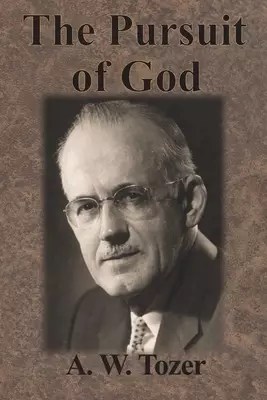
Religious and motivational books usually bore the hell out of me, mostly because they lack creativity and engaging use of language. They are either verbose or mundane. This is not the case with ‘The Pursuit of God’.
This book, written by A. W Tozer in 1948, is powerfully stacked with words that birth yearning in the passive Christian. I had to get that out before I returned to my appreciation of his metaphorical style of writing. It’s undeniable that good writing makes books easier to read, especially for book-snobs like me. For this book, it’s not just poetic writing; it’s also the power contained in mere pages. The exactitude of his words pierces the heart and leaves the reader with heightened and repentant emotions all at the same time.
I started reading this book during a period where I was actively strategising for myself, how best to pursue the Lord and court him. The book was meant to be a self-help book to that effect. I suspect that made the book even more endearing to me. It was an FAQ to my exact questions, and even to the ones I didn’t know I had. It opened my eyes to the possibilities of intimacy.
Chapter 1: Following Hard after God
‘To have found God and still to pursue Him is the soul’s paradox of love, scorned indeed by the too easily satisfied religionist, but justified in happy experience by the children of the burning heart’.
This chapter expounded Paul’s relationship with God in Philippians 3: 8-10. He wanted to know Christ (although he knew him enough to be the spiritual father of many of the early churches) and experience the power that raised him from the dead. He wanted to suffer with him, sharing in his death.
We’re in a time where, at the ushering of a new year, it is popular to make trendy statements asking God to exclude us from his list of strong soldiers- a statement that inadvertently asks for exemption from pruning, discipline, and correction. These trendy statements betray our lukewarmness and complacency in striving to know the lord. While we are opting out of suffering, Paul said he wanted to suffer with him, sharing in his death. This level of craving is the sweet core of the Christian life. The Igbos of Nigeria would call it Mmimi– the sweet fluid trapped in bones.
Chapter 2: The Blessedness of Possessing Nothing
“It’s all right, Abraham. I never intended that you should actually slay the lad. I only wanted to remove him from the temple of your heart that I might reign unchallenged there. I wanted to correct the perversion that existed in your love’’
This chapter tore open my heart and exposed it before the Lord. No, it brought to my remembrance that the Lord sees even the lies I tell myself.
I said to the Lord, “There is no need to lie to myself in hopes that if I believe it, you’ll believe it. You know parts of me that I’m yet to know and parts I will probably never know”.
For Abraham, it was perverted love for Isaac that he had to give up. For me, it is the need for success and addiction to pain. Tozer narrated how God would tolerate nothing having power over us the way he should. That sacred place in our hearts is His and His alone.
“So now that the cards are on the table, Lord, you have my permission to tear these idols out of my heart, though I bleed”.
Chapter 3: Removing the Veil
‘Ignoble contentment takes the place of burning zeal. We are satisfied to rest in our judicial possessions and, for the most part, we bother ourselves very little about the absence of personal experience’
I realized the difference between being experientially in the presence of God in theory and being experientially in the presence of God actually when I began to be in the presence of God actually. And even now, I know I am scratching just the surface. Tozer wrote about how the presence should be experiential and ever-present. He argues that only doctrinal knowledge cannot spark the depth of worship that experience affords. His list of things weaved into the veil that keeps us complacent made me self-reflect: self-righteousness, self-pity, self-confidence, self-sufficiency, self-admiration, self-love, and a host of others like them.
Unsurprisingly, these are some of the things the world advocates for overall well-being. He concludes with the admission that these qualities are in our nature and we cannot do away with them ourselves. We must present our ‘self-life’ to God and let Him do the work.
Chapter 4: Apprehending God
“We apprehend the physical world by exercising the faculties given us for that purpose, and we possess spiritual faculties by means of which we can know God and the spiritual world if we will obey the Spirit’s urge and begin to use them’’.
Tozer, in this chapter, emphasized how abstract God and the spiritual realm are to most Christians. We believe in God, but when the intricacy of this belief is dissected, it is found that it has no potency. He is merely an ideal or principle we must live by. Tozer says God is a person and can be known experientially, not just in theory. Our spiritual senses are as real as our physical senses, but because of how abstract the unseen world is to us, we have failed to develop our spiritual senses. I think of it as exercise. The more we work out, the more our muscles are toned and built. That takes time, tenacity, and pain. So, I guess the question is, how greatly do we yearn to know God and develop our spiritual senses?
Chapter 5: The Universal Presence
‘Men do not know that God is here. What a difference it would make if they knew. The Presence and the manifestation of the Presence are not the same. There can be the one without the other. God is here when we are wholly unaware of it. He is manifest only when and as we are aware of His presence’.
Tozer hits us with the accusation that although the normal Christian doctrine says that God is everywhere, we believe it, but it is not actively in our consciousness. If it is, then instead of an ordinary Christian life, we would be living a glorious and radiant Christian life. The ever-present presence of God can best be thought of as us being in him and he in us.
In Tozer’s words, He’s closer than our own souls, closer than our most secret thoughts. God doesn’t have select people that sees the manifestation of His presence. He has made Himself available to all and sundry. It is we who should turn to Him and accept His proposal, backing it up by opening ourselves to His nudges, His ways, and His guidance.
Chapter 6: The Speaking Voice
‘Every one of us has had experiences which we have not been able to explain—a sudden sense of loneliness, or a feeling of wonder or awe in the face of the universal vastness. Or we have had a fleeting visitation of light like an illumination from some other sun, giving us in a quick flash an assurance that we are from another world, that our origins are divine’.
Most of us yearn to hear from God, and we can. We do. It’s not a superpower. He wants to be heard. He reaches out to us always. We’re either too cynical and wave off too many things as coincidences or too busy to notice even significant occurrences that are unexplainable. In one of my most recent experiences, I felt an indescribable shadow of joy cast over me at a time and a situation where the most reasonable thing to feel was sorrow. I knew it was God’s presence hovering over me.
Going further, Tozer argued that all ‘beautiful’ inventions of man were inspired by God. He left us, however, with the choice to question that, so my question would be, what about evil inventions? Were they also God-inspired? This isn’t a smart way to put holes in his claims. It’s me plainly musing.
Tozer said something profound. He said, ‘a word of God once spoken continues to be spoken’. He said this in reference to how we think that the Bible was spoken before God stopped speaking. God didn’t stop speaking, even in our time. He still speaks, and even the words in the Bible are still speaking to us.
Chapter 7: The Gaze of the Soul
‘While we are looking at God we do not see ourselves—blessed riddance. The man who has struggled to purify himself and has had nothing but repeated failures will experience real relief when he stops tinkering with his soul and looks away to the perfect One. While he looks at Christ, the very things he has so long been trying to do will be getting done within him. It will be God working in him to will and to do’.
I chuckled reading the first line. You can tell Tozer is an exciting impressionist. He doesn’t think we should spend our lives defining faith because much of the Bible shows faith in practice more than in definition, except for Hebrews 11:1. Once our hearts have formed the habit, through fellowship, of looking unto Jesus, we have begun to practice faith.
Chapter 8: Restoring the Creator-Creature Relation
‘In our desire after God let us keep always in mind that God also has desire, and His desire is toward the sons of men, and more particularly toward those sons of men who will make the once-for-all decision to exalt Him over all. Such as these are precious to God above all treasures of earth or sea. In them God finds a theater where He can display His exceeding kindness toward us in Christ Jesus. With them God can walk unhindered; toward them He can act like the God He is’.
It’s settling to know that we’re not alone in the pursuit of God, isn’t it? But of course, we are not. God extended the first olive branch. He gave His one and only Son. This makes me sure that I’m not pursuing someone who doesn’t want to be caught. In fact, He’s been wanting us, and it has been us skedaddling away. Our resolution to accept Him fully as our Lord and King is all that is needed for Him to shed His love and lordship over our lives.
Chapter 9: Meekness and Rest
‘There is no release from our burden apart from the meekness of Christ. Good, keen reasoning may help slightly, but so strong is the vice that if we push it down one place, it will come up somewhere else’.
I never understood the ‘yoke of God’ until I read this chapter. Tozer explained how being human is the very heavy yoke that was referred to in Matthew 11:29-30. Being human comes with emotions we have passed off as normal but eats into us deeper than any disease human nature has ever experienced.
He delineated how the widely preached self-love is an enormous burden. Self-love makes us care about ourselves so much that the world’s view of us rattles us to the point of immobility. We fold up and lose every sense of identity when we are not chosen or when we are looked down on. We’re afraid of presenting ourselves exactly the way we are in an effort at self-preservation. It’s great that he highlighted that we could take account of these things and try to manually change them, but when we push it down, it comes up from somewhere else. This is not a message of doom. In fact, it is a message of deliverance because it’s God who takes this burden of humanness from us and gives us His light burden of self-forgetfulness.
Chapter 10: The Sacrament of Living
‘Paul’s exhortation to “do all to the glory of God” is more than pious idealism. It is an integral part of the sacred revelation and is to be accepted as the very Word of Truth’.
Tozer underscored the guilt of the dual lives Christians live- the separation between spiritual activities and ordinary activities of our everyday life. But if Paul said that whether you are eating or drinking, do it to the glory of God, it means that even the mundane things of our everyday life should be considered glorious.
It makes me think of times when I have craved food for a while, and then the feasting moment comes, and I’m usually wrapped in deep and sincere thankfulness to God for creating food. That’s worship. That’s holiness.
He used our perfect example, Jesus, as an example of living in the flesh and doing human activities, and yet doing everything to the glory of God. Jesus ate, drank, and worked as a carpenter. Yet the Bible recorded that he lived a blameless life, and his life was to the glory of God. This should give rest to the need to demarcate our lives. Everything we do is holy from the moment we dedicate our lives to Christ, be ye eating or preaching. God accepts both with equal pleasure.
If, after reading this review, you don’t want to read the actual book, it’s either that I didn’t do a good job portraying the endless depth of the book, or you are not ‘there’ yet. If it is the former, I apologize for my shortcomings. You may just have to take my word for it and read it. If it is the latter, no need to stress. The Lord will get you there when he gets you there.
Lord, whatever height or depth I can attain in my knowledge of you is not worked out by me and it’s such a relief. I only have to depend on you, but it turns out that even the dependence can also only be achieved through you. It’s apparent that without you, I can do nothing. It’s a sweet relief, and I have come to you with as much surrender as I can manage, and I ask you that you unbutton any part of me that has unconsciously refused to lose itself in your presence. Take me and do with me as you want. I desire to know you more, feel you more, touch you more, and taste you more. I rest in the confidence that you’ll reveal yourself to me more and more because you want to. Keep me here in your presence for all the revelations in Jesus’ name. Amen!
 Christ a poet