Book Review: The Pursuit of God

Author: A. W. Tozer
Pages: Typically 128-144 pages
Reviewer: ChyD
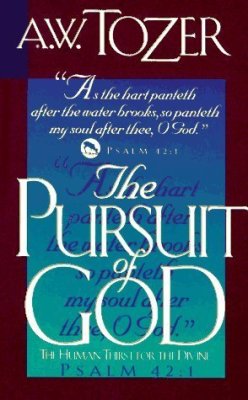
Religious and motivational books usually bore the hell out of me, mostly because they lack creativity and engaging use of language. They are either verbose or mundane. This is not the case with ‘The Pursuit of God’.

This book, written by A. W Tozer in 1948, is powerfully stacked with words that birth yearning in the passive Christian. I had to get that out before I returned to my appreciation of his metaphorical style of writing. It’s undeniable that good writing makes books easier to read, especially for book-snobs like me. For this book, it’s not just poetic writing; it’s also the power contained in mere pages. The exactitude of his words pierces the heart and leaves the reader with heightened and repentant emotions all at the same time.

I started reading this book during a period where I was actively strategising for myself, how best to pursue the Lord and court him. The book was meant to be a self-help book to that effect. I suspect that made the book even more endearing to me. It was an FAQ to my exact questions, and even to the ones I didn’t know I had. It opened my eyes to the possibilities of intimacy.

Chapter 1: Following Hard after God 

‘To have found God and still to pursue Him is the soul’s paradox of love, scorned indeed by the too easily satisfied religionist, but justified in happy experience by the children of the burning heart’. 

This chapter expounded Paul’s relationship with God in Philippians 3: 8-10. He wanted to know Christ (although he knew him enough to be the spiritual father of many of the early churches) and experience the power that raised him from the dead. He wanted to suffer with him, sharing in his death. 

We’re in a time where, at the ushering of a new year, it is popular to make trendy statements asking God to exclude us from his list of strong soldiers- a statement that inadvertently asks for exemption from pruning, discipline, and correction. These trendy statements betray our lukewarmness and complacency in striving to know the lord. While we are opting out of suffering, Paul said he wanted to suffer with him, sharing in his death. This level of craving is the sweet core of the Christian life. The Igbos of Nigeria would call it Mmimi– the sweet fluid trapped in bones. 

Chapter 2: The Blessedness of Possessing Nothing 

“It’s all right, Abraham. I never intended that you should actually slay the lad. I only wanted to remove him from the temple of your heart that I might reign unchallenged there. I wanted to correct the perversion that existed in your love’’ 

This chapter tore open my heart and exposed it before the Lord. No, it brought to my remembrance that the Lord sees even the lies I tell myself. 

I said to the Lord, “There is no need to lie to myself in hopes that if I believe it, you’ll believe it. You know parts of me that I’m yet to know and parts I will probably never know”. 

For Abraham, it was perverted love for Isaac that he had to give up. For me, it is the need for success and addiction to pain. Tozer narrated how God would tolerate nothing having power over us the way he should. That sacred place in our hearts is His and His alone. 

“So now that the cards are on the table, Lord, you have my permission to tear these idols out of my heart, though I bleed”. 

Chapter 3: Removing the Veil 

‘Ignoble contentment takes the place of burning zeal. We are satisfied to rest in our judicial possessions and, for the most part, we bother ourselves very little about the absence of personal experience 

I realized the difference between being experientially in the presence of God in theory and being experientially in the presence of God actually when I began to be in the presence of God actually. And even now, I know I am scratching just the surface. Tozer wrote about how the presence should be experiential and ever-present. He argues that only doctrinal knowledge cannot spark the depth of worship that experience affords. His list of things weaved into the veil that keeps us complacent made me self-reflect: self-righteousness, self-pity, self-confidence, self-sufficiency, self-admiration, self-love, and a host of others like them. 

Unsurprisingly, these are some of the things the world advocates for overall well-being. He concludes with the admission that these qualities are in our nature and we cannot do away with them ourselves. We must present our ‘self-life’ to God and let Him do the work. 

Chapter 4: Apprehending God 

“We apprehend the physical world by exercising the faculties given us for that purpose, and we possess spiritual faculties by means of which we can know God and the spiritual world if we will obey the Spirit’s urge and begin to use them’’. 

Tozer, in this chapter, emphasized how abstract God and the spiritual realm are to most Christians. We believe in God, but when the intricacy of this belief is dissected, it is found that it has no potency. He is merely an ideal or principle we must live by. Tozer says God is a person and can be known experientially, not just in theory. Our spiritual senses are as real as our physical senses, but because of how abstract the unseen world is to us, we have failed to develop our spiritual senses. I think of it as exercise. The more we work out, the more our muscles are toned and built. That takes time, tenacity, and pain. So, I guess the question is, how greatly do we yearn to know God and develop our spiritual senses? 

Chapter 5: The Universal Presence 

‘Men do not know that God is here. What a difference it would make if they knew. The Presence and the manifestation of the Presence are not the same. There can be the one without the other. God is here when we are wholly unaware of it. He is manifest only when and as we are aware of His presence’. 

Tozer hits us with the accusation that although the normal Christian doctrine says that God is everywhere, we believe it, but it is not actively in our consciousness. If it is, then instead of an ordinary Christian life, we would be living a glorious and radiant Christian life. The ever-present presence of God can best be thought of as us being in him and he in us. 

In Tozer’s words, He’s closer than our own souls, closer than our most secret thoughts. God doesn’t have select people that sees the manifestation of His presence. He has made Himself available to all and sundry. It is we who should turn to Him and accept His proposal, backing it up by opening ourselves to His nudges, His ways, and His guidance. 

Chapter 6: The Speaking Voice 

‘Every one of us has had experiences which we have not been able to explain—a sudden sense of loneliness, or a feeling of wonder or awe in the face of the universal vastness. Or we have had a fleeting visitation of light like an illumination from some other sun, giving us in a quick flash an assurance that we are from another world, that our origins are divine’. 

Most of us yearn to hear from God, and we can. We do. It’s not a superpower. He wants to be heard. He reaches out to us always. We’re either too cynical and wave off too many things as coincidences or too busy to notice even significant occurrences that are unexplainable. In one of my most recent experiences, I felt an indescribable shadow of joy cast over me at a time and a situation where the most reasonable thing to feel was sorrow. I knew it was God’s presence hovering over me. 

Going further, Tozer argued that all ‘beautiful’ inventions of man were inspired by God. He left us, however, with the choice to question that, so my question would be, what about evil inventions? Were they also God-inspired? This isn’t a smart way to put holes in his claims. It’s me plainly musing. 

Tozer said something profound. He said, ‘a word of God once spoken continues to be spoken’. He said this in reference to how we think that the Bible was spoken before God stopped speaking. God didn’t stop speaking, even in our time. He still speaks, and even the words in the Bible are still speaking to us. 

Chapter 7: The Gaze of the Soul 

‘While we are looking at God we do not see ourselves—blessed riddance. The man who has struggled to purify himself and has had nothing but repeated failures will experience real relief when he stops tinkering with his soul and looks away to the perfect One. While he looks at Christ, the very things he has so long been trying to do will be getting done within him. It will be God working in him to will and to do’. 

I chuckled reading the first line. You can tell Tozer is an exciting impressionist. He doesn’t think we should spend our lives defining faith because much of the Bible shows faith in practice more than in definition, except for Hebrews 11:1. Once our hearts have formed the habit, through fellowship, of looking unto Jesus, we have begun to practice faith. 

Chapter 8: Restoring the Creator-Creature Relation 

‘In our desire after God let us keep always in mind that God also has desire, and His desire is toward the sons of men, and more particularly toward those sons of men who will make the once-for-all decision to exalt Him over all. Such as these are precious to God above all treasures of earth or sea. In them God finds a theater where He can display His exceeding kindness toward us in Christ Jesus. With them God can walk unhindered; toward them He can act like the God He is’. 

It’s settling to know that we’re not alone in the pursuit of God, isn’t it? But of course, we are not. God extended the first olive branch. He gave His one and only Son. This makes me sure that I’m not pursuing someone who doesn’t want to be caught. In fact, He’s been wanting us, and it has been us skedaddling away. Our resolution to accept Him fully as our Lord and King is all that is needed for Him to shed His love and lordship over our lives. 

Chapter 9: Meekness and Rest

‘There is no release from our burden apart from the meekness of Christ. Good, keen reasoning may help slightly, but so strong is the vice that if we push it down one place, it will come up somewhere else’. 

I never understood the ‘yoke of God’ until I read this chapter. Tozer explained how being human is the very heavy yoke that was referred to in Matthew 11:29-30. Being human comes with emotions we have passed off as normal but eats into us deeper than any disease human nature has ever experienced. 

He delineated how the widely preached self-love is an enormous burden. Self-love makes us care about ourselves so much that the world’s view of us rattles us to the point of immobility. We fold up and lose every sense of identity when we are not chosen or when we are looked down on. We’re afraid of presenting ourselves exactly the way we are in an effort at self-preservation. It’s great that he highlighted that we could take account of these things and try to manually change them, but when we push it down, it comes up from somewhere else. This is not a message of doom. In fact, it is a message of deliverance because it’s God who takes this burden of humanness from us and gives us His light burden of self-forgetfulness. 

Chapter 10: The Sacrament of Living

‘Paul’s exhortation to “do all to the glory of God” is more than pious idealism. It is an integral part of the sacred revelation and is to be accepted as the very Word of Truth’. 

Tozer underscored the guilt of the dual lives Christians live- the separation between spiritual activities and ordinary activities of our everyday life. But if Paul said that whether you are eating or drinking, do it to the glory of God, it means that even the mundane things of our everyday life should be considered glorious. 

It makes me think of times when I have craved food for a while, and then the feasting moment comes, and I’m usually wrapped in deep and sincere thankfulness to God for creating food. That’s worship. That’s holiness. 

He used our perfect example, Jesus, as an example of living in the flesh and doing human activities, and yet doing everything to the glory of God. Jesus ate, drank, and worked as a carpenter. Yet the Bible recorded that he lived a blameless life, and his life was to the glory of God. This should give rest to the need to demarcate our lives. Everything we do is holy from the moment we dedicate our lives to Christ, be ye eating or preaching. God accepts both with equal pleasure. 

If, after reading this review, you don’t want to read the actual book, it’s either that I didn’t do a good job portraying the endless depth of the book, or you are not ‘there’ yet. If it is the former, I apologize for my shortcomings. You may just have to take my word for it and read it. If it is the latter, no need to stress. The Lord will get you there when he gets you there. 

Lord, whatever height or depth I can attain in my knowledge of you is not worked out by me and it’s such a relief. I only have to depend on you, but it turns out that even the dependence can also only be achieved through you. It’s apparent that without you, I can do nothing. It’s a sweet relief, and I have come to you with as much surrender as I can manage, and I ask you that you unbutton any part of me that has unconsciously refused to lose itself in your presence. Take me and do with me as you want. I desire to know you more, feel you more, touch you more, and taste you more. I rest in the confidence that you’ll reveal yourself to me more and more because you want to. Keep me here in your presence for all the revelations in Jesus’ name. Amen!
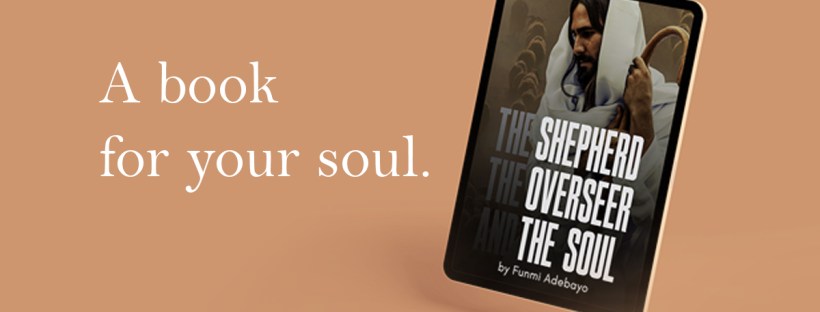
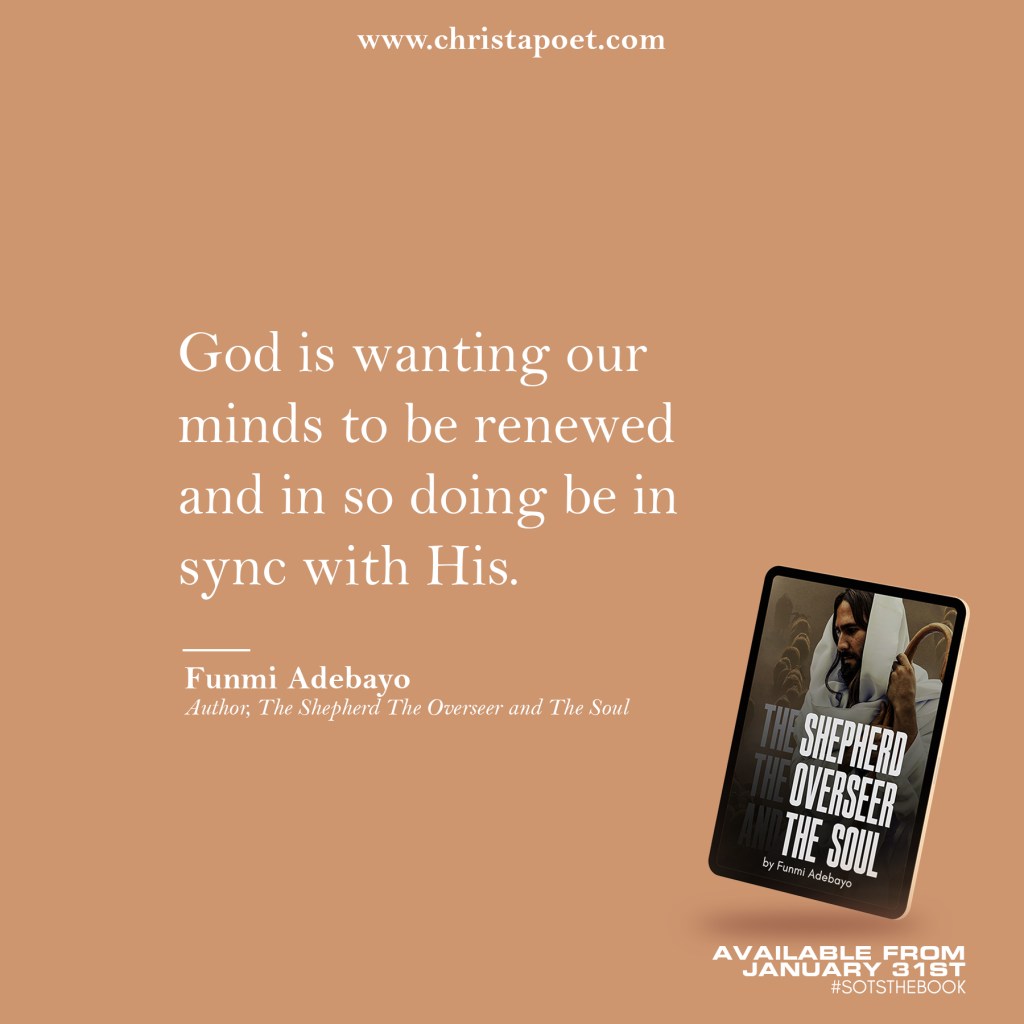
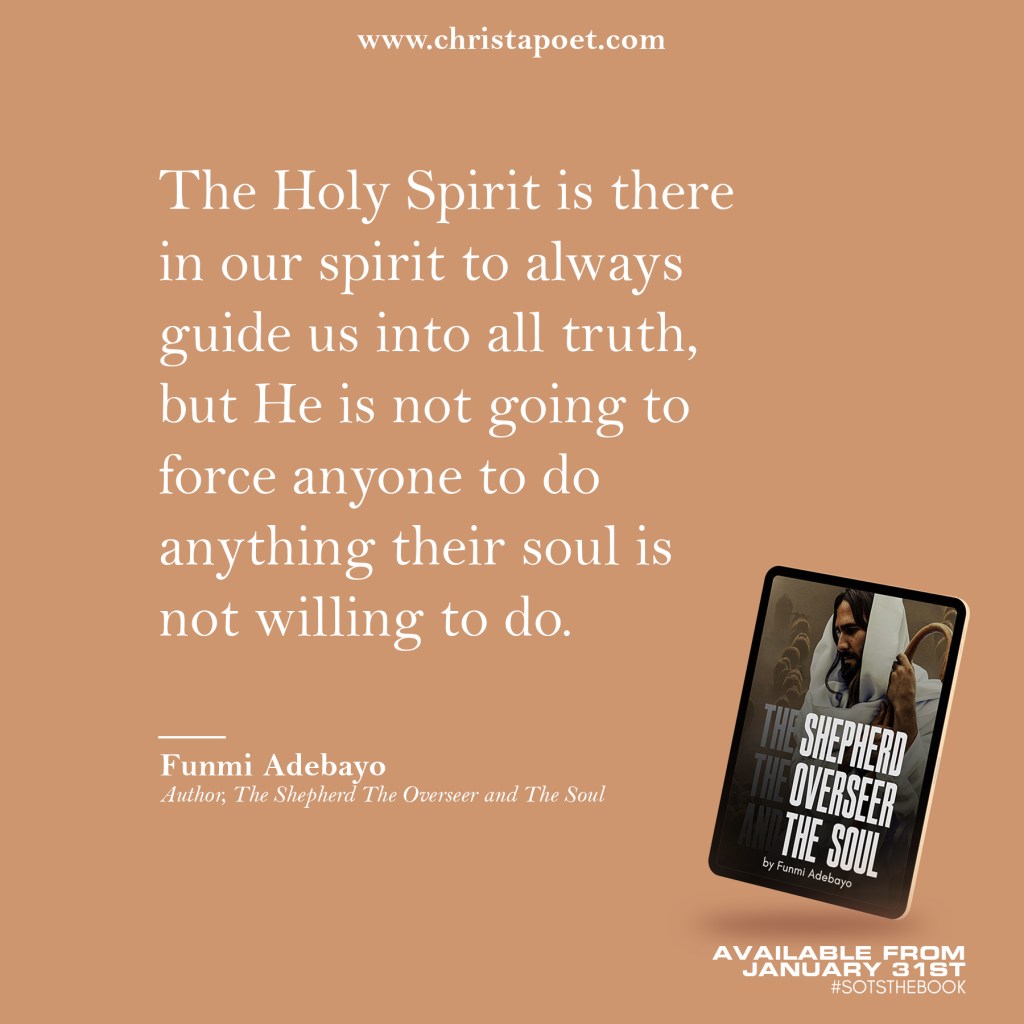
Book Review: The Shepherd, The Overseer, and The Soul

Author: Funmi Adebayo
Pages: 150
Publisher: The Christ A Poet Concepts, Nigeria.
Reviewer: Adeleye Olaoye, Ubamara Ezenobi, Zoe Ziva, Ebubechi, Clement Victor

Funmi Adebayo, the author of this book, gives us this gem of a book through the light of the Spirit of God penetrating into 1 Peter 2:25 and Ezekiel 18:4. The Shepherd, Overseer and the Soul is a book aimed at building foundational knowledge on the role that the soul of a man plays in the life of a believer. The Author has broken this book down into 7 Chapters to help relate his message.

The author started by making clear that the human soul is eternal. It cannot be dissolved by death, unlike the human physical body. The soul is the representation of a man in the spirit realm. Therefore, what becomes of the soul of man is the reality of that man

He then further compared the mind as a signal analyzer. An example of a signal analyzer is an Oscilloscope,  it’s a device that analyzes signals of different forms and has a wide application in different fields and professions today. From the author’s analysis, the mind acts as the signal analyzer while the heart takes the final decision.

If man wasn’t already dead spiritually then God wouldn’t have bothered about giving him a new spirit and a new heart.

Funmi presents a compelling argument by clearly stating that it is not enough to just claim you believe in Jesus Christ. You must also prove that by obediently following Him. If you truly believe in Him, you will hear Him and do His sayings. God’s desire for His children to be tamable and coachable just like the sheep because hardly deviate from the path channeled by the shepherd and are much sensitive of intruders or strangers.

We are not of the world. Yet at the same, that does not mean we are not meant to be in charge. This is quite a salient point made in the book reminding us that we are the light of the world and while we remain here we are to be in charge by and for our Lord Jesus Christ and make known the manifold wisdom of God to the principalities and powers among the celestial ones.

Talking about God as Shepherd, Funmi posits that God is completely charismatic in his leadership; strong communicator, empathetic and relatable, confident, motivational. This in return gives us joy, loveliness and makes resources available. His final words were “As we have returned to the Shepherd of our soul, let us trust Him for the best in life. Remember He is the good Shepherd, Who gave His life, His soul, for us His sheep. (John 10:11.)”

BOOK REVIEW: REVERSED

Author: The Christ A Poet Team
Publisher: Christ A Poet Concepts
Reviewer: Olufunke Ajegbomogun

When I began the review of this book, I made a decision to use a few days to go through the poems but as I started reading, I was gripped and couldn’t let go of this anthology. That is exactly the experience you are likely to get when you open Reversed to read!


Reversed is a collection of poems that takes us on a journey reminiscent of the times of Jesus and other biblical characters. The messages are woven around biblical stories which help us relate to scriptures in the most simplified way we could ever imagine. We see the experiences of ordinary men like us play out right before us as if we were there. Even animals and inanimate objects echo their stories, leaving them entrenched in our minds.


Through the pages of Reversed, we see Jesus Christ, and Him crucified. Most of the poems are short and freestyled although some use traditional rhyme schemes and poetic sound effects. Each poem’s unique style plays a role in relaying its message. Some poems also contain graphic images that paint a picture in the reader’s mind. “Cock Coo Roo Coo” reminds us of how God can use an animal to remind us that none of His words that come forth from His mouth dies without fulfilling its purpose. The poet alludes to the experience of Peter to remind us of the importance of having a voice even if it’s that of an animal to caution us when we derail from the path of life.


We also see beyond the agony and pain that took place on the cross when Christ died as we read “I Saw Evil”. This poem helps us to see that there is more to the death of a sinless man by revealing to us what took place on the cross that had otherwise been invisible to the eyes of an ordinary man. “Evil died when Jesus was crucified! That line is explosive. Time and space will not permit me to talk about the other poems’ deep and inspiring messages that words alone may not be able to capture.


If you are the kind of person who reads scriptures with a sense of detachment, get hold of Reversed and see how you’ll get a new perspective from reading scriptures.


So, let me leave you with this: Reversed is an anthology you got to read yourself, let no man tell you the stories, go get a copy and be part of the journey.

You can download a free copy of Reversed here.

CAP MONTHLY E-MAGAZINE // JUNE 2020 (FREE DOWNLOAD)

In this edition of Christ A Poet’s Monthly E-Magazine we talk about The Righteous Man. Our special guest Ugochukwu Eluchie, shares a bit of her journey with us and her idea of being righteous conscious. As you download and read we pray you take a conscious step to study God’s Word with an open mind to discover who you truly are in Christ, and all you’ve been freely given.

You can get your free download here and also share with your friends. Be sure to share with us your questions, concerns, and what you look forward to in next month’s publication.

Book Review: The Alchemist

Author: Paulo Coelho

Pages: 241

Reviewers: Beatrice Ani and Imani Dokubo

The Alchemist tells the story of a young shepherd named Santiago who finds out from a king about his treasure lying in the basement of the faraway Egyptian pyramids. Along the way, he learns to listen to his heart and more importantly realizes that his dreams/Personal Legend are not just his but part of the Soul of the Universe. The novel is both entertaining and educational.

The author’s portrayal of real-life principles in simple terms that are easy to recognize and connect with is a highlight.

Just like the young shepherd, most of us are on a journey to find our ‘personal legend’, some of us have, and some are already depositing our unique legend to the world.

Where ever you are on your journey, the lessons from this book are beneficial to you.

Some notable eye-opening lessons the book captures are:

The power of courage: Fear is a bigger obstacle than the obstacle itself

“Tell your heart that the fear of suffering is worse than the suffering itself and that no heart has ever suffered when it goes in search of its dreams, because every second of the search is an encounter with God and the universe.”

The power of truth: “Truth cannot be veiled by smoke and mirrors — it will always stand firm. When you’re searching for the ‘right’ decision, it will be the one that withstands the tests of time and the weight of scrutiny”

The power of gratitude: “Gratitude is the practice of finding the good in each day. Life can easily become stagnant, mundane, and monotonous, but that changes depending on what we choose to see. There’s always a silver lining if you look for it.”

The power of decision: “When someone makes a decision, he is really diving into a strong current that will carry him to places he never dreamed of when he first made the decision.”

The power of focus: “It’s easy to be influenced by others, but you’ll be miserable if you end up living someone else’s life. There’s nothing wrong with taking advice and learning from others, but make sure it aligns with your desires and passions.”

The power of action: “There is only one way to learn. It’s through action.”

(You can study, read, and listen until you turn blue in the face, but the full experience is when you take action and let the rubber meet the road… Once you’re done aiming, pull the trigger.)

Here’s what the book suggests: when you seek to create something, things will eventually fall in place to enable you to bring it to life.

Of course, there are exceptions to this rule. It’s just crucial that we undertake the journey to making the most of the life that God gives us. Or, as Jesus’s parable says, to use our talents to the fullest.

What phase of life’s journey are you on?

We recommend this book to everyone in search of a formula for reaching their goals, discover, and realize their potential.


BOOK REVIEW: NORTH

Author: Busayo Kehinde

Pages: 76

Reviewer: Ubamara Ezenobi

Life happens to everyone. It’s inevitable. The things that you never imagine would ever happen to you could take place in the blink of an eye. You could become a person you never imagined you would be in the space of a few days. In these times we are thrown off balance, left to decide who or what to hold onto as anchor. In this book, North, Busayo Kehinde tells us in the best way possible, the best direction to follow.

North is the story of a young woman, Laura, who goes through much distress in life despite her love for God. First, she loses her younger brother to leukaemia. Next is her dad who walks out on them. And then, as though she has not lost enough, she loses her fiancé who loved God so much, to a lifestyle of drugs and women. Eventually, he dies. These tragedies turn her south, and she decides she doesn’t believe in God anymore.

Busola helps us realize that it’s not really about the many challenges you face, but about what you choose at the end of the day: life, or not. By placing special characters like little Ire who battles with sickle cell anaemia yet has unwavering faith in God, and other people who constantly remind her of God’s love, especially for her, the author shows us that God knows us inside out, and knows how best to proceed with healing us, and blessing us beyond our wildest dreams.

For Busola Kehinde, North is the direction that leads us above, and to choose north, is to choose life. In the epilogue, she shares from her personal experience how she has had to choose north at different points in her life, just like her key character. She enjoins us to choose life, to keep choosing life no matter what, and to never lose trust in God.

North is a book to read now. No matter where you are, it’s going to meet you right there and bless you tremendously.

Click HERE to Get the book

© Ubamara Ezenobi, 2019

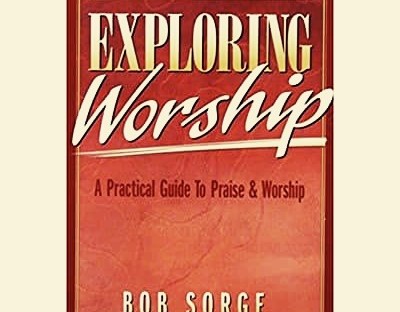
BOOK REVIEW: EXPLORING WORSHIP, by Bob Sorge

Author: Bob Sorge 

Pages: 262

Edition: 22nd

Publisher: GCEE BRUNO CONCEPT LIMITED, Lagos, Nigeria. 

Reviewer: PHILIPA ORAEGBU


God seeketh worshipers not worship. Why then do I need to worship if he seeks it not?
 
Bob Sorge, an ardent writer of thought provoking practical books, ignites hearts yet again with this piece, Exploring Worship: A Practical Guide to Worship . Bob, a former music director, expresses his belief and desire to see leaders and worshipers equipped in the spiritual and practical aspects of worship. His writing is not just theoretical; it retells real life experiences and contains bible references. With these, he is able to show the importance of spiritual sensitivity in the art and act of worship emphasizing the place of the Holy spirit and a worshiper’s ability to discern.
 
“Worship”, though a common term in the faith and commonly regarded as just the act of singing slow songs, is beautifully exposited in this book. Exploring Worship clarifies the diverse misconceptions of the term while expounding its simplicity, essence and exclusivity. 
 
The book is divided into two sections: The Heart of Praise and Worship, and The Leading of Praise and Worship. The first section of the book comprises 7 chapters and dwells on worship and praise as expressions unto God, while the latter has 3 chapters and relates the practical aspect of worship. 
 
The first chapter discusses praise and its distinctive extroverted nature. Its essence, and how it’s perfunctory on will and not emotion. Bob proceeds to explain when, where and how one should praise. Praise, being extroverted expression, is done in varying ways. Some of these are common; others are not very widely practised. 
 
The second chapter addresses our approach to God’s presence: an individual approach and congregational approach. Worship as a Christian communal experience is described as an excercise which requires both on the worship leader and worshippers to bring to life. The author makes it clear that there are sacrifices to be made by all involved, in order to actualize worship. 
 
Chapter three emphasizes the use of praise as a weapon of spiritual warfare. The scriptural basis of its use is not without explanation, likewise the exposition on the use of the forms of expression of praise as spiritual weaponry.
 
Chapter four explores the term ‘worship’, its distinction from praise, its essence, and how the Holy Spirit is an integral part of worship. Worship as revealed is not bound by time or place but rather is dependent on “spirit” and truth. 
 
Who really are worshipers? How does one become a worshiper? What does it mean to worship without guilt and what are the attitudes that could hinder an acceptable worship? These questions are answered in detail in the fifth chapter of the book. 
 
Worship has three aspects to itself as written by Bob, the vertical aspect where the worshipes communicates with the Lord; the horizontal aspect, in which the worshiper communicates with the congregation; and the inward aspect of worshiper’s internal communication. All of these are found in chapter six. 
 
Chapter seven talks about the link between prophecy and music, the difference between psalms, hymns and spiritual songs, and how they should be incorporated into today’s congregational worship. There’s also some discussion about walking in prophetic worship by faith. 
 
Chapter eight delves into the art of leading worship. The author wants us to understand that proper worship leadership is learned. Worship leaders don’t just spring up; they grow by learning. Further explained are the qualifications a leader should possess: musical expertise which is of great necessity; the leaders preparation both musically and spiritually; and the leaders leading– and not controlling -worship. 
 
Chapter nine exposits the importance of a worship leading team in a church, the role of the pastor and worship leader in congregational worship, the various members of the worship leading team and their place in the church. 
 
And finally, chapter ten makes known the need for planning worship services, the need for sensitivity, preparation and balance as regards worship services, creativity in providing good variety in worship services, and practical steps to writing songs and teaching new songs.
 
If you are desiring insight into the world of worship, the art of worship and leading worship, you will find this book useful. It demonstrates, among other things, that worship is not about the subject (worshiper) but the object (God) . And this, in the end, is the key message we all need to internalize.

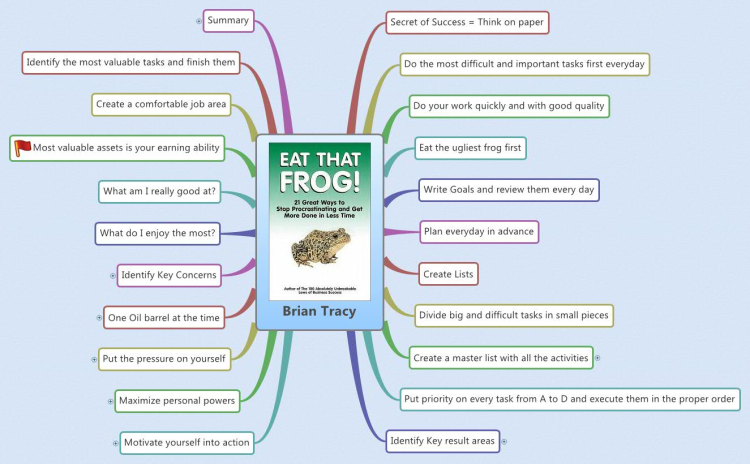
EAT THAT FROG by Brian Tracy

BOOK REVIEW by Ezeonyeka Godswill
TITLE: EAT THAT FROG
AUTHOR: BRIAN TRACY
PUBLISHERS: BERRETT-KOEHLER PUBLISHERS
YEAR OF PUBLICATION: 2001
NUMBER OF PAGES: 129
CHAPTERS: 21
“ It has been said for many years that if the first thing you do each morning is to eat a live frog, you can go through the day with the satisfaction of knowing that that is probably the worst thing that is going to happen to you all day long” (p.2)
Doesn’t it just annoy how you always have this big invisible and visible amount of work load you want to do and is expected of you, but somehow there’s never enough time? How you could plan and plan but somehow every task takes longer time to accomplish? Lemme guess you’ve even considered praying for extra hours included into our 24 hour per day routine. For starters, you’re not strange or even lazy as most people seem to call you! I know this cos I was once in those same shoes but good thing is I was never comfy in them neither did I settle for less so I fought on till I met my ‘frog-book’. Lols
The author, one of America’s leading authorities on the development of human potential and personal effectiveness, takes a critical look as to the cause and solution of procrastination, low effectiveness and other symptoms characteristic of people in them shoes I spoke about earlier.
With reference to the title, Tracy defines your “frog” as your most important task, the one you’re most likely to procrastinate on if you don’t do something about it now. It is also the one task that can have the greatest positive impact on your life and your results at the moment. (p. 2) The principle the author seeks to teach is that if you discipline yourself to begin immediately and persist until your biggest and most important task is complete before you go on to something else you can live at the height of productivity hence building your self esteem and ruling out all effects procrastination may have had on you!
“Successful, effective people are those who launch directly into their major tasks and then discipline themselves to work steadily and single mindedly until those asks are complete”(p.3)
Tracy’s unique style of writing is reflected in this masterpiece and on a lighter note I think it was written in a way procrastinators could finish it and do so quickly. So he craftily avoids over emphasis and long chapters and to incite interest he place a unique quote before a very chapter. That I think is genius! So before I rewrite his book do get one and remain blessed!