

#rhematown iss. 98
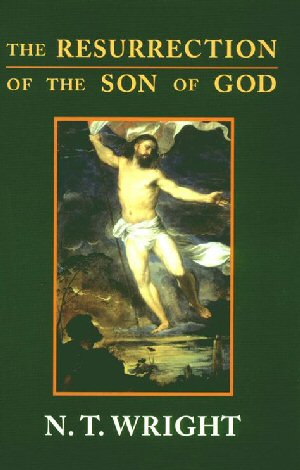
Author: Nicholas Thomas Wright
Publisher: Fortress Press, 2003
ISBN: 0-8006-2681-8
Reviewer: Ikenna Nwachukwu
Our faith as Christians is founded upon the historical fact of the death and resurrection of Jesus Christ, the son of God. Paul famously pointed out that if Christ wasn’t raised from the dead, “we believe in vain”. But while we affirm that Christ did resurrect, skeptics seize upon perceived inconsistencies in the Biblical account of his return from the dead, and declare that it is difficult for any thinking person to accept the story. They say, in essence, that we ought not to believe in the resurrection, let alone build our lives upon it. As far as they are concerned, when people die, they stay dead. The story of the resurrection of Jesus is for them a wild myth, or even a fraud.
In The Resurrection of the Son of God, Nicholas Wright takes up the challenge of answering the unbeliever’s questions about the resurrection. Wright, who is regarded as one of the finest theologians (if not the finest) alive sets forth his argument in favour of the reasonableness and believability of the resurrection accounts in this scholarly work that has a quality that is hard to match. He systematically charts a course (gulping over 800 pages) that aims to point out that the conclusion reached by the ancient Christians about what happened to Jesus in the days following his crucifixion was the most reasonable of the alternative interpretations of the events, in view of the available evidence.
The book begins with a survey of the beliefs about death (and the possibility of resurrection) in ancient Judaism and paganism. Wright ploughs through the myths and traditions from the world before and in the days of Jesus’ earthly ministry, and shows that the perception of a bodily resurrection in practical, real life terms by the cultures of the time would not have differed markedly from ours- they would have regarded reports of a resurrection with skepticism, even scorn. It was in that setting that the Biblical story played out, the one in which the disciples, going against the grain of popular commonsense, declared that their master had come back from the dead.
After reconstructing the cultural background of the resurrection story, Wright goes on to the detail of the actual event. He examines clues of the gospel account’s genuineness, addresses objections to the event’s historicity, and deals with doubts raised about the witnesses’ state of mind. The result of this exercise is more than just a rebuttal of old and new challenges to traditional Christian beliefs about the living Christ; it is a powerful restatement of our faith in him as the Son of the Living God.
The Resurrection of the Son of God is a brilliant book. However, it doesn’t lend itself to everyone- because not everyone is a fan of dense volumes that contain more than a handful of references to Greek myths and ancient Jewish traditions. But if you want more than just the regular diet about Jesus’ death and resurrection you get from Sunday school classes and Church sermons, this book is for you.
I think I am a really busy person, now and especially during my last lap at the University. ‘Busy’ with necessary business: I was a final year student in her last semester so that spelt STUDY and PROJECT! I was also a start-up entrepreneur; you may not find it necessary but for me, purpose and life needed funding – if you understand what I mean. I was and I am still committed to a local church because that is part of my responsibilities. I was and I am also human being therefore I needed to eat, sleep, launder for ‘me’ and also ensure that I don’t become an “I”(you know, it is easier for me to lose two pounds than it is for me to gain a pound, literally speaking). I was and am still also a girl who loves looking good so I needed some time for that every day. And oh, I had lectures to attend, and guess what, the lecturers swept the official time table under the carpet. Also I had found myself, so I have to always speak up – I WRITE! And ultimately, I am a Christian therefore my spirit needs Word grooming every day! That is what I survive on.
I had and I still have just 24 hours just like everyone else, therefore I had to plan every day, the day before and of course updating my to-do list every night. I made plans everyday but sometimes, some things wouldn’t just go as planned. The pressures of my great everyday busyness formed my every day cares. My project was really slow because my research samples were a bit funny – human breast milk! Getting them was really not a joke. I was not even done with the first chapter by the time I first wrote this whereas submission was for July. I had to complete and defend my project come mid-July- It was June 1, already. I also had to contribute my daily quota to the Kingdom by writing and living. Oh how I planned and worked at my daily schedule diligently but how things chose to move pretty slowly, my project for one. In fact that day, I had to re-adjust a letter I wrote to a hospital just after being delayed for three days by my department to get it endorsed. I mean I didn’t have all that time! Well, somehow I discovered that I was unruffled and unstressed by my many stresses. I was and am still rested. I had learned to rest on the Truth that He is IMMANUEL to me, the God that is ever with me. I also stayed and I still do stay on the truth that I have JESUS, the saving God. He didn’t just save my soul, He saves
my day every day. In fact His job description was and is still saving me! He is still saving situations for me daily. I was and I am still comforted by the truth that I am in His care. He loves me more than I love myself therefore He understood and He still understands the urgency of my needs and cares so much more than I think I do. I love the truth that He will never, ever leave me or abandon me in any mess. I don’t like to mess up but even if things go messy, He shows me mercy. Cleaning up my mess is not my business but His. I am His business. Yahweh has infinite methods of doing the same thing, this is what I like to call ‘OMNIPOTENT- SAVE- THE -DAY’. God never depends on our action or inaction to work things out, He depends on my trust for DADDY! He is Abba father, and daddy never lacks a plan so I think I am safe!
Cast all your anxieties upon the lord for He cares for you – 1 Peter 5: 7(NIV)
…and surely I am with you always, to the very end of the age.” – Matthew 28:20b (NIV)
By Favouromeje, 2016.
Kindness in words creates confidence, in thinking creates profoundness but in giving creates love.
– Lao
#giving

If you can’t feed a hundred people, then just feed one.
– Mother Teresa
#giving
A call came through my line. It had been a long while since I got any calls from unregistered numbers. I hesitated a little and went on talking to Ramat. The phone rang again and this time I felt like picking up. Just as my hand pressed the green button, the caller hung up. It was a flash. I looked at the number closely and realized it was totally strange. I felt a positive urge and so I dialed back. “Kator”, the voice called out. It sounded so familiar. It was a blend of nearly educated Tiv accent and an unpolished desire to sound British. ” Oh Kator”, the voice called again. ” Do you know who is speaking?” I paused a while, felt like dropping the call, but went on to respond. “Hello, I really don’t know who I’m speaking with.” This time an excited shrill spread through the…
View original post 1,502 more words
A call came through my line. It had been a long while since I got any calls from unregistered numbers. I hesitated a little and went on talking to Ramat. The phone rang again and this time I felt like picking up. Just as my hand pressed the green button, the caller hung up. It was a flash. I looked at the number closely and realized it was totally strange. I felt a positive urge and so I dialed back. “Kator”, the voice called out. It sounded so familiar. It was a blend of nearly educated Tiv accent and an unpolished desire to sound British. ” Oh Kator”, the voice called again. ” Do you know who is speaking?” I paused a while, felt like dropping the call, but went on to respond. “Hello, I really don’t know who I’m speaking with.” This time an excited shrill spread through the line. I heard an anxious reply, “it’s Fideris”. “Oh my God, Fidelis!”, I called out. The voice was now unmistakably matched.
I first came across Fidelis during one of my numerous journeys to the University Town of Nsukka. He had boarded the bus along me and other passengers. Unknowing to the rest of us, Fidelis for whatever reason had failed to come along with the complete transport fare and had arranged with the driver that he’d pay the rest on arrival. It was his unlucky day. I don’t know if he planned it or it happened inadvertently, but by the time we arrived Obollo, Fidelis’ phone was dead and whoever he had planned to receive money from was nowhere to be found. Of course, whoever it was would have gone after waiting because by the time we arrived, the evening breeze had given way to the cold and piercing winds of the night. Even the famous white skinned prostitutes who have given Obollo its fame were not so bold to stand in the open night. Rather they hid in thick clothings behind closed sheds. Even the Alhajis and pot bellied politicians remained in their cars while their drivers went to make the pick. It was the worst day to get toast. As the driver kept shouting and refusing to release Fidelis’ luggage, the rest of us had our attention drawn to the scene. It was night and even the sound of a dropping pin went far into the darkness. We wanted them to stop. But the driver would not. Fidelis owed him two thousand five hundred naira balance of the transport fare and an additional eight hundred naira for the luggage. Unlike the most of us who travelled with few belongings, Fidelis had packed a sack full of oranges, another full of yams and sweet potatoes , a live chicken and another sack full of over ripe and rotten mangoes. I let out a saddening laughter and returned to where my bag was. Some of the passengers who had arranged with their loved ones to come pick them up where already leaving. Some went along to board the busses to Nsukka. I was by an empty warehouse trying to put my things together when I felt a cold tap on my neck region. I turned sharply. It was him, Fidelis. He spoke with a heavy and thick Tiv accent. ” My broda, please find me small money make I give dat driver. De man don seize all my roads and lifuse to give me.” I didn’t know what to think. Why on earth did he choose to disturb me. There were at least four passengers still around. I looked at him again and again not sure of what to do or say. Those were not good old days when you could just help strangers. I had heard stories of how evil people disguised to be in need and when helped, turned around to cast evil spells on their good Samaritans. I would not fall a victim, not in my final year in school. Besides, I had left home with very little money barely enough to last me the first week. But even as these thoughts filled my mind, I knew the driver would not let him go till he had completed the fare. I asked him, ” how much do you need?”. He called without remorse the sum of three thousand and three hundred naira. Sluggishly and without knowing what I was doing, I counted three thousand naira and handed over to him. “Ah, God go bless you my broda.”, was the reply. “God go bless you well well”, he said again before going off to pay the driver. He returned again but this time, to kneel down and thank me. This was the time I became so emotional. “You don’t have to, come on stand up.” Stand up!” I kept saying these words as he prayed several blessings on me and my generations. When I realised he would not stop, I spoke to him in our native Tiv language. ” Okay, kuma higen. Mo ase sha angom.” This was the biggest mistake. Fidelis rattled something I never understood, stood up and started dancing. Then he said,”Wandaful……u ngu Tiv eee?, u ngu Tiv ve mfa ga ye? I began smiling. He went on, ” No Wanda, na only my broda fit do dis kind tin for me. No oda perhen go fit just give me money rike dat.” “Kai my broda, msugh. Msugh kpishi. Thank you very much. Then I asked him, ” what’s your name?” “Fideris, iti iyam ka Fideris” was the reply. “Okay, Fidelis, what’s your plan because I am headed for Nsukka and would love to join the bus now before it gets full.” I looked at my wristwatch. “It’s 11pm now and I am not sure there would be any other bus after that one there.” I said pointing in the direction of the bus. ” Okay, rets go nau….I dey go Nsukka also.” Was this not the young man whom I just gave three thousand naira to pay his outstanding fare? Where did he plan on getting three hundred and fifty naira to pay for Nsukka and with his luggage, maybe eight hundred naira? Well, I decided to keep my thoughts to myself. To avoid trouble, I didn’t offer to help him move his luggage to the other side of the road where the bus for Nsukka was packed. I went ahead. Fidelis effortlessly transferred his heavy sacks of yam and potatoes, mangoes and oranges, then the live chicken one after the other. I was seated in the front when he walked up to me and said, ” the driver say na one tauzend, five hunduled naila fa oooo. De man wan cheat me again ooo.” When he noticed I Said nothing, he went on, ” u wu… Orne…. an igboon wa afee dedoo.” Loosely translated, ” Really, the Igbo people are really cheats.” He kept hissing and hissing till the bus got full. I had no option again. I brought out a thousand naira note, went down from the car and bargained with the driver until he accepted to transport Fidelis and his luggage to Nsukka. He however said, ” make you tell your brother say if dat chicken wey him carry shit for buut, na him go pack am oooo. I no know why person go dey carry chicken travel for dis time wey no be Christmas.” As the journey progressed, I got less resented and grew more fond of Fidelis as he told me his story and what it was that brought him to Nsukka. When I got ready to drop, I handed him a five hundred naira note. He thanked me again and asked for my contact. That was the first and only time I gave him my contact and strangely enough, Fidelis has not lost it all these years. The following day when an unknown number gave me a missed call and I called back, I heard the receiver say, ” ka Fideris.”, and I knew at once who it was. I saved it as Fidelis Obollo. We had started talking at Obollo.
Fidelis kept calling to thank me over and over again. Sometimes he would not have airtime but flash me all the same and when I called back he would say, “I just say make I greet you.” Then he would go ahead to tell me how he was, what he was doing and how grateful he was to me. Later when he traveled back to Gboko, he called still. Over and over again I changed my phone and lost his contact but he’d call again and his accent would introduce him. Over and over again, I’d save his contact as Fidelis Obollo.
Today when he called, he didn’t just call to thank. Fidelis was asking when and how he’d pay back my kindness. This is over two years now but Fidelis still remembers me and my goodness to him. He insisted that he’d do anything possible to be good to me and kept asking how he could pay back. Well I told him, ” I am away from Benue now but will be coming back soon to join politics. You could make yourself available to rally around me when I begin to contest and campaign.” And as if that was what Fidelis was waiting for, he shouted so loud. “Wandaful, Orne….I am with you. You have my full support.” He went on to tell me he was now a student of Akperan Orshi College of Agriculture, Yandev. And how he really wants to see me again.
As I dropped the call, I kept thinking, how much a little act of kindness can do. I had only given out four thousand and five hundred naira to a stranger, and now in him I have a very powerful ally for my tomorrow. I have learned, showing a little kindness still pays.

 Christ a poet