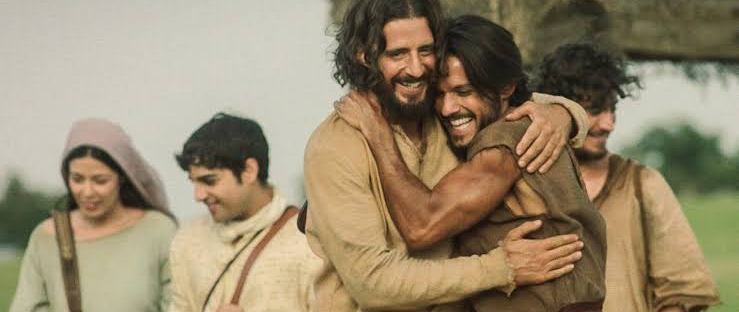
Prophet Suddenly 3 poster

PROPHET SUDDENLY 3 – The Music Minister – A REVIEW

EXECUTIVE PRODUCERS: Ohis Ojeikere, Anwuli Ojeikere
DIRECTOR: Ohis Ojeikere
MAJOR CAST: Ohis Ojeikere, Laurel Olu-Egbor, Lawrence Oyor, Apostle Arome Osayi, Bishop John C.W., Pastor Gideon Mba, Anwuli Ojeikere, Nwankwo Paul Chukwudi

LOCATION: Nigeria, Kenya, USA
YEAR: 2025

REVIEWER: IFIOKABASI OKOP

NB: This review contains spoilers.

This third installment in the Prophet Suddenly – The Music Minister series follows the rise and tragic spiral of a gospel music minister whose greed, lust, carelessness, and disobedience to God eventually lead to his downfall.

The film arrives amid recent conversations around gospel music ministers charging large sums to minister in churches. While some condemn the practice outright, others argue that these ministers serve in the temple and deserve their wages. Yet others believe that only God should determine whether a minister charges or not. 

Although Prophet Suddenly 3 was shot before these debates became widespread (especially with gospel artists now suing their record labels), it is a timely contribution to the conversation. Importantly, the movie does not answer the question: Should a gospel minister charge to minister at churches? Instead, it explores the deeper issue – the intent behind such decisions.

Minister James, played by Muyiwa Ohis Ojeikere, is undoubtedly anointed, but his fame feeds his greed. In his very first scene, he refuses to minister at a church simply because they hadn’t completed payment of his honorarium.

What an introduction!

He ditches that church with cold indifference and heads to a bigger church where the pastor gives him a huge honorarium. If gospel ministers act like this in real life (which I sincerely pray they don’t), the body of Christ has a serious crisis.

On the surface, Minister James’ story is a cautionary tale of what happens when a man of God drifts into carnality. But on a deeper level, it depicts the spiritual warfare that rages behind the scenes for the soul of every servant of God. You may be doing great exploits for the kingdom, but the devil is always strategising, and if you live in sin, you are already within his grasp.

There are many lessons to take from this film, but the most important one for me is this: BE ACCOUNTABLE TO YOUR SPIRITUAL MENTOR.

If Minister James had walked in obedience, humility, and transparency with his pastor, he would not have met his Waterloo. Yet, I appreciated that his path back to God was done the right way. Many live in sin and think that simply confessing to God is enough. NO! James 5: 13–15 explains the power of confessing your faults to a righteous man whose prayer is powerful and effective. Minister James did just that. Apostle Arome Osayi’s character prayed for him, and the bondage was broken. If he had not humbled himself, confessed, and sought prayer, he would still be in chains.

MUSINGS

What I Loved

The Soundtrack & Sound Design
For a film centered on a gospel music minister, Prophet Suddenly 3 did well. The original soundtrack and sound effects were immersive, pulling the viewer into the emotion of every scene.

The Locations
Normally, I roll my eyes when Nollywood movies span 3 to 4 countries because it feels unnecessary especially if it adds nothing to the story. But here, it worked. Minister James’s global trips reinforced his obsession with fame and money. He had to fly to Kenya to show the depth of his greed, and his collaboration with a U.S. label made his global ambition believable.

Lawrence Oyor’s Performance
He can act—no debate. I enjoyed watching him in the last season of Abattoir, and in Prophet Suddenly 3, he delivered again. His portrayal of an earnest fanboy was both hilarious and oddly heartbreaking.

The Acting
The cast size grew significantly in this installment, and everyone came prepared. Even the extras were performing like their rent was due. Comic timing, especially from Minister James’ manager (Nwankwo Paul Chukwudi), was impeccable. By the way, I indeed caught Damilola Mike-Bamiloye in a tiny cameo.

The Cameos
Apostle Arome Osayi’s presence is a given. I loved that his character continued to serve as a moral compass for Minister James. The other pastors, despite limited screen time, delivered convincingly. Rev. Dinna Osayi’s cameo was also a pleasant surprise. 

Bishop Baazu
Played by Bishop John C.W., this character was deeply unsettling. He played the two-faced bishop so well that his evil stares were chilling.


WHAT COULD’VE BEEN BETTER

Character backstory
How did a young man raised under a godly pastor fall so far into greed and lust? Was it only the manipulation of Miokukusheshe (Laurel Olu-Egbor) that caused this? A clearer depiction of negative influences (perhaps another minister) would have made the descent more believable.

More Music, Please
For a movie about a gospel singer, we got a few ministrations. That short scene where he ministered “Holy, Holy, Holy” was beautiful. More songs like that would have enriched the film.

The Ending Was Too Abrupt
I needed closure. What happened to his band? Did he confess, repent, and reconcile with them? What about his fiancée (Anwuli Ojeikere)? Did she stay, or move on? The epilogue was thought-provoking, but I still wish these side stories had been resolved more clearly.


FINAL THOUGHTS

Prophet Suddenly 3The Music Minister taught me a lot and reminded me of lessons I had forgotten. It took on a heavy theme, exposed uncomfortable truths, and pointed us toward restoration through humility and accountability. It’s spiritually intense and socially relevant. If you haven’t watched it yet, what exactly are you waiting for?

Watch it here.

ROOTING DEEP

There’s power in staying rooted,
In leaning into God’s word,
Where roots stretch deep in quiet places,
Unseen, but steady and sure.

The seed is planted in faith,
Watered with patience and trust,
No rush, no shortcuts—
Just the process of becoming.

It’s not flashy, not instant,
Not for those chasing quick results,
But for those willing to wait,
To trust, to grow, to endure.

Like the coconut tree that stands tall,
Bearing fruit all year long,
The waiting is hard, the work is slow,
But the harvest is always worth it.

  • IfiokAbasi Okop
    (c) 2025

WEDDING WEEKEND 2 – A REVIEW


PRODUCERS: Wole Adeyi & Mike Bamiloye
DIRECTORS: Damilola Mike-Bamiloye & Wole Adeyi
MAJOR CAST: Rosemary Adio, Imuetinyan Omere, Damilola Mike-Bamiloye, Tumise Falana

LOCATION: Texas, USA
YEAR: 2024

REVIEWER: IFIOKABASI OKOP

If you saw “Wedding Weekend” in 2023, a sequel was released on the 6th of October, 2023 on Damilola Mike-Bamiloye’s YouTube channel.

So, go and watch it.

Alright, let’s get this review started.

“Wedding Weekend 2” follows the redemption journey of Valerie who has a bad name, a bad reputation, and a terrible past. Edmond is the person God uses to change her life but will she let go of her past and accept God’s promises for her life? Would the people who know her past accept or reject her, even though God has shown her mercy?

It is a story of redemption, restoration, forgiveness, and new beginnings.

Let’s break it down.

THE PERFORMANCES

Rosemary Adio’s portrayal of Valerie is a standout in the film. She goes through many emotions, and she effortlessly takes me on those journeys with her. One particularly moving scene is when she cries and prays after her sister passes away—it is heart-wrenching because her acting makes me feel her grief.

Imuetinyan Omere plays Edmund, and I think he is a fine actor. He has a lot of heavy lifting in this film compared to the first one, and he gives a good, believable performance. He nails the comedic, dramatic, and romantic scenes well, and I look forward to seeing him portray other characters in future films. A standout for me is his bromance with his elder brother, Marvin.


Damilola Mike-Bamiloye, once again as Marvin is superb! DBaba delivers, forget it! Not only does he know how to write good scripts, but he also knows how to interpret them. He adds subtle acting choices that I noticed—in the scene where he hung up after Valerie prayed for him, I could see the confusion on his face as if he was hinting that he recognized the voice but just couldn’t place it.

Tumise Falana as Gabby has fewer scenes than her co-stars, but she does justice to her character. While I don’t like that she delivers her lines slowly, I appreciate that she shows a range of emotions in the film. Her best scene is the confrontation with Valerie when she shows up at their home—I love the switch in her character, and I was like, “Let’s go, sis, let her know what she did was absolutely wrong.


Temitope Falana plays Emily, Marvin’s evil boss who wants to date Edmond by all means. She delivers her character with range and believability. Her transformation from a “nice” person to a villain takes a complete turn, and I was shocked by how unexpectedly her character becomes so evil and vengeful.

WHAT I LOVED

The story: This is a story that many Christians can relate to because God still works miracles in the most mysterious situations, and this film is a reminder to never to underestimate His omnipotence.

The music: I love Joshua Mike-Bamiloye’s music, and the soundtrack and songs in this film were just Chef’s Kiss. He also released a new song for this film titled, “Brand New Day”.


The location and set designs: I loved the houses used in this film. I wish I were as wealthy as the characters to own such large, beautiful homes. But maybe one day…

The ending. It made me cry. I didn’t expect it to, because it was spoiled in the comments section (I’d advise you not to read them until you finish the film) but I still cried. A combo of the acting and the soundtrack got me because nobody was cutting onions near me.

Comic Relief. Dami adds little pockets of humour throughout the film which I appreciate because they help ease the tension from the serious themes. My favourite comedic line – “I know Chatgpt helped you out with your proposal”.


WHAT I DIDN’T LIKE

1. Marvin’s appointment, coming a day after being fired by Emily, was too rushed in my opinion. If it had been discovered that she was involved in fraudulent activities, I would have preferred it to be shown, rather than told. I wanted Emily to be exposed for her wickedness and see the sorry look she’d have on her face especially after she had put the brothers through so much because of something so flimsy.

2. The forgiveness in the scene when Valerie is introduced to Gabby and Marvin feels too quick. Realistically, the couple would likely need time for prayers, self-reflection, or even a revelation before they could truly forgive Valerie and welcome her back into their lives, especially in such a close familial role.

3. Valerie moved on too quickly from her sister’s death. The film should have at least shown a burial scene where she could say a final goodbye to her sister and then move on.

“Wedding Weekend Part 2” made me laugh, cry, gasp, and hope for a happy ending for the characters and it didn’t disappoint. It is indeed a story of God’s mercy and how He can transform anyone regardless of their past.

What are you waiting for? Go watch it if you haven’t.

What are you seeking?

When I was much younger, my mom shared a brilliant analogy with me and my siblings. She said God is like an ocean; if you came to Him with a cup, you would get a cup full. If you came to him with a massive drum, you would get a drum full. If you came with a water truck, as huge as it is, you would still get it filled. The point is, that you get what you ask for. In essence, when we are dissatisfied with our results, an excellent place to review would be what we are asking for. Many times, our expectations are truck-sized, but we approach God with cups and wonder why we never feel satisfied. The ocean is clearly sufficient to fill any vessel, yet every person gets the amount of water they make space for, regardless of their intention.

Many times, our expectations are truck-sized, but we approach God with cups and wonder why we never feel satisfied.

An iconic part of Jesus’ famous Sermon on the Mount reads thus:

“Ask, and it will be given to you; seek, and you will find; knock, and it will be opened to you. For everyone who asks receives, and he who seeks finds, and to him who knocks, it will be opened.
Matthew 7:7-8 (NKJV)

In reading this, it is easy to focus on the instruction rather than the implication of the promise. Especially in the 8th verse, Jesus makes a definitive statement that when we do our part, we are guaranteed an answer: The one who asks will receive, the one who seeks will find, and the one who knocks will be opened unto. In a sense, Jesus is saying that in cases where your results don’t satisfy, God is not the person to look at. You should review what you are asking for.

In the following verses, Jesus challenged his audience, asking if they were better fathers than God. His argument was, “If you would not give your children what they did not request, why do you think God will operate like that?” This is also the main proposition of this article: with God, when we ask, seek, and knock, we will receive, find, and be opened to, but we can remain unsatisfied with the result if the request is not right.

Among the three actions Jesus listed – ask, seek, and knock – I find seeking to be the easiest way to make this point, so for this article, I will place a specific emphasis on seeking even though it applies to all three. Jesus promises us that whatever we seek, we will find. Therefore, more often than not, our dissatisfaction comes from what we find. The flipside of Jesus’ promise is that you won’t find what you are not seeking. Essentially, our only hope of finding the right thing is to make sure that we are seeking the right thing. We must critique our seeking to ensure we find the things that are truly valuable to us.

Seeking in Nigerian colloquial English is “looking for something”. This establishes that the act comes loaded with two presumptions: there is an absence of something, and that thing has a value that necessitates the search. Therefore, to truly ascertain that we are seeking the right thing, we should define what we lack and the value that is inherent in the thing sought. For example, if I am seeking food, the presumptions that validate my endeavour are that I am hungry and, secondly, that the food I am after can satisfy my hunger. If I were seeking diamonds when dealing with a hunger problem, I would be setting myself up for gross disappointment.

Essentially, our only hope of finding the right thing is to make sure that we are seeking the right thing. We must critique our seeking to ensure we find the things that are truly valuable to us.

These two presumptions further establish how we can establish what we are seeking. This is necessary because oftentimes we claim to be seeking things that we are clearly not going after, and then we are genuinely shocked at what we find. To avoid this happening to you, make sure to use these presumptions to judge yourself. The first thing to ask is, “What do I lack?” The answer might seem too obvious and overwhelming, as human wants are insatiable; therefore, human lack is constant.

Our limited nature places us in a perpetual state of lack, but we do not seek after everything we lack. The second factor of seeking – value that necessitates the search – helps reveal where we invest our limited efforts. Anything that is valuable enough to make you move defines what you are seeking. Simply put, your lack may be evident and varied, but the things that you value are what eventually lead you into the adventure of seeking.

Many Christians can testify that their search for Jesus started because there was a significant lack in their lives. Many have come to the foot of the cross because of a lack of good health, peace of mind, prosperity, answers, and identity, among other needs. Fortunately, like the woman with an issue of blood in Luke 8:43–48, after trying everything else, we end up trying Jesus.

So, we identify our lack and cast our eyes on the capacity of Jesus, so we go seeking. Just like that woman, many have testified that what they could not get anywhere else, they found in Jesus. These types of stories usually bring tears of joy to our eyes and put big smiles on our faces. The problem with this is that oftentimes, the lack remains in some other part of their lives, or in some cases, some people actually don’t get what they want, and that can be hard to make sense of. Ideally, this should raise an important query:

Is Jesus incapable of meeting our needs, or are we seeking Jesus for something less than what He promises?

When we look at our anchor scripture from the gospel of Luke, it reads thus:

“So I say to you, ask, and it will be given to you; seek, and you will find; knock, and it will be opened to you. For everyone who asks receives, and he who seeks finds, and to him who knocks, it will be opened. If a son asks for bread from any father among you, will he give him a stone? Or if he asks for a fish, will he give him a serpent instead of a fish? Or if he asks for an egg, will he offer him a scorpion? If you then, being evil, know how to give good gifts to your children, how much more will your heavenly Father give the Holy Spirit to those who ask Him!”
Luke 11:9–13 (NKJV)

In Luke’s account, we see that when Jesus was talking about how we can get anything from God the Father, He directly stated that the good thing we should seek from God is the Holy Spirit. This implies that while God would give us many things, His greatest desire is for us to have the Holy Spirit. The emphasis placed on the Holy Spirit can be understood by looking at the following scriptures:

But he who is joined to the Lord is one Spirit with Him.”
1 Corinthians 6:17 (NKJV)

For what man knows the things of a man except the spirit of the man which is in him? Even so, no one knows the things of God except the Spirit of God. Now we have received, not the spirit of the world, but the Spirit who is from God, that we might know the things that have been freely given to us by God.”
1 Corinthians 2:11–12 (NKJV)

These verses make a very important claim: to have the Spirit of God is to share a level of intimacy with God that is unattainable by any other means. It is to know God intimately and, consequently, to be known by God. Hence, in Luke, Jesus was essentially saying the best thing you can ask from God is to share His Spirit, to be intimate with Him, to know Him, and to be known by Him.

Everyone who comes into the Christian Faith should essentially be seeking this relationship of spiritual oneness with God, galvanised through the person and sacrifice of Jesus.

You see, at the very core of what Christianity is, we find a relationship between the Creator and His creation. This relationship (and all its sides) is essentially the focus of the Bible. By the standards we have previously set, we can make the claim that Christianity is focused on this relationship because man’s greatest lack is a relationship with His Creator, and the only possible way of getting that back is through Jesus. During His time on earth, Jesus repeatedly uttered the command, “Follow Me”. We can see that He does this because He knows man’s greatest need is not for the things we are focused on; rather, it is Him, a physical representative of the Godhead, that should be sought after. He presents Himself as what is lacking in this world (John 8:12) and as valuable enough to lose everything else in a bid to seek (Luke 9:23).


Therefore, everyone who comes into the Christian Faith should essentially be seeking this relationship of spiritual oneness with God, galvanised through the person and sacrifice of Jesus. This implies that a Christian is a person who recognises the lack of God in their life and seeks Jesus as a worthy answer to satisfy that lack. The seeker considers a relationship with God to be of infinite value but also recognises that that relationship is only possible through the sacrifice of Jesus and expressed through living like Jesus. So, the seeker maintains an intentional desire to know Jesus and live like Him. This does not mean the one who seeks Jesus does not have normal human needs; it just means his priority places the knowledge of Jesus as foremost and of utmost worth.

It is important to note that the depth of need and/or the value of what is sought after can be discerned by paying close attention to how the seeker goes about seeking. The intensity, care, and support required to find something can tell a lot about what is being sought after and the value that it holds. For Christians, this is so true because the way we seek shows whether we understand the value of what we are seeking or if we are even seeking the right things. The seeker who prioritises their relationship with God understands two things: it requires the help of the Holy Spirit, and it is not a quick fix. This should help you understand that your seeking as a Christian may be flawed if you think it can be entirely achieved in your strength and/or if your fulfilment can be achieved with one quick fix.

This truth can be derived from Jesus’ iconic command, “Follow me”. The first word implies that this is not quick. In fact, it suggests a walk without an end because the one who follows just keeps on moving until the other stops. The second word in the command is “me.” This squarely places the responsibility for how things go on Jesus’ shoulders. Simply put, Jesus tells us that seeking Him is a long process that He alone can sponsor. The one who seeks Jesus settles in for the long ride and has no trust in human effort. This is where the Holy Spirit mentioned in Luke comes in. Jesus admonishes us to desire the Holy Spirit, as He holds the power to sponsor our seeking.

The seeker who prioritises their relationship with God understands two things: it requires the help of the Holy Spirit, and it is not a quick fix.

“These things I have spoken to you while being present with you. But the Helper, the Holy Spirit, whom the Father will send in My name, He will teach you all things, and bring to your remembrance all things that I said to you.”
John 14:25–26 (NKJV)

Therefore, seeking Jesus looks a lot like depending on the Holy Spirit. In practical terms, it is an incessant desire to know Jesus and a complete dependence on the Holy Spirit to have that desire fulfilled. So, the seeker engages in Bible Study but does so with a desire to know Jesus and prays earnestly for the Holy Spirit to facilitate that process. The seeker prays as a means of building and enjoying a relationship with God, but completely trusts the Holy Spirit to empower that process.

With this established, our seeking enterprise is only fully maximised when we set our sights on Jesus and completely depend on the Holy Spirit. Unfortunately, this is not a given among Christians. Just like in the days when Jesus was on earth, many seek after what He can do for them rather than who He is and the power He desires to give us. These Christians have a hard time making sense of their lives because they are standing in front of an ocean and have only cups of experience to show for it.

Jesus answered them and said, “Most assuredly, I say to you, you seek Me, not because you saw the signs, but because you ate of the loaves and were filled. Do not labour for the food which perishes, but for the food which endures to everlasting life, which the Son of Man will give you, because God the Father has set His seal on Him.”
John 6:26–27 (NKJV)

To seek Jesus for anything less than Him through the Holy Spirit, which is the seal of our salvation, is to cut yourself short of an infinite blessing. In Philippians 3, Paul declared with ultimate certainty that there is nothing we need more and nothing more worthy of our time than knowing Jesus. You might temporarily meet your immediate needs by asking God for one thing or another, but if you are seeking just that, you will eventually be frustrated. It has to be Jesus we seek. Gratefully, Jesus has already promised us that He is not far from us, and if we can set our minds to seek Him, He will surely be found. So if you feel like you have not sought him truly, there is still hope for you. Like the prodigal son in Luke 15:11–24, you can turn around now and seek the right thing, or, better put, the right one.

Therefore, when we orient ourselves to seek Him not for what He can do but for Himself, we open the door of our hearts to divine intimacy.

To conclude, I want to show you an endearing picture from the last book of the Bible:

“Behold, I stand at the door and knock. If anyone hears My voice and opens the door, I will come in to him and dine with him, and he with Me.”
Revelations 3:20 (NKJV)

Throughout this article, the rhetoric has been that we are seeking after God. In certain applications, this works, but I think it is beautiful that the Bible clearly establishes that we are not seeking a passive God who grants us access to do a good job. Rather, our Father seeks us as intensely as He admonishes us to seek Him. He comes into our lives not seeking what we can do for Him but for the fullness of who we are. Therefore, when we orient ourselves to seek Him not for what He can do but for Himself, we open the door of our hearts to divine intimacy. There are not enough words in the world to describe the beauty of that intimacy. It is so rapturous that men died for it, and God gave His Son, Jesus, for it. If you seek it, if you seek after Him, you will not be disappointed.

EZEONYEKA GODSWILL

ORDINARY JESUS

I have a feeling that any Christian reading the title of this article might be appalled but I really like this title, so we are going to stick with it. Since we are doing things weirdly, I am also going to alter my writing structure for this particular piece and talk first about the purpose of this article.

My sincere hope in writing this article is that you will begin to see more and more that God is interested in the mundane parts of your day. That God sees you struggle with choosing between black or brown shoes for the perfect corporate look and he is very much concerned about your sleeping habits. More than anything, I pray that when you are done reading this, that your daily activities become brighter because you finally see God’s light in all of it. Amen.

A quick summary of my Christian life – born in Nigeria, I am no stranger to religious intensity and that means that I tend to think of Jesus and the gospel in two very distinct ways.

First, Jesus as saviour.

This is the more popular stance of the personality of Jesus in which we see him give his life on the cross for our sins. This Jesus is the one we focus on as we sing songs of love and pour praise like poetry every Sunday and in our daily prayers. I see this Jesus as the one I run to when I am weak or scared or tired. Jesus as saviour is my lifeline and he always comes through.

The second is more unpopular – Jesus as Lord.

This personality of Jesus is where I am reminded that Jesus is no less God than the Father. He is Heavenly Royalty and is deserving of all the worship that we give him. It is this Jesus that comes to mind when I sin or when I forget that I am not surviving on the power of my will. He is also the Jesus I hand over to when the devil comes at me with all his nonsense.

Either way, I am always thinking of Jesus in this light and as I read through the gospels, I unconsciously look out for these. I see loving Jesus in the story of blind Bartimaeus and conquering Lord in his command to raging storms, “Peace be still”.

I see a forgiving saviour in his decision to dine with Zacchaeus and a judge Lord in his fury when the synagogue was used inappropriately. It was always one or the other, but I do believe that God is helping me see through a third and different lens.

This process started as I watched the third episode of a brilliant television series called, “The Chosen”. It is based on the life and times of Jesus but as it is made to be a series, it does something that all the former movies about Jesus could not do – it actually shows glimpses into the ordinariness that Jesus had to deal with it.

As I watched this particular episode, I was drawn to two scenes where Jesus would lay down to sleep and he would pray these words Blessed are you, Lord our God, King of the Universe, who brings sleep to my eyes”. This might sound absurd but as I watched this scene played out the second time, I was struck by the fact that Jesus had to sleep while he was on earth. Of course, I subconsciously knew that, but I had never given it much thought till that day.

It is important that we notice the words I used; Jesus didn’t sleep only because he wanted to but because he had to. He was completely human which means he got tired and needed food and rest regularly.

Seeing Jesus, the saviour of my soul and the conquering Lord of all things visible and not visible in a seemingly ordinary position of sleeping was a bit startling for me. I was taken aback that Jesus had to basically go through things I would consider inconsequential so that when the time was right, he would do something I cannot do for myself.

As I thought about this, I realised that the bible addressed this in the book of Hebrews:

For we do not have a High Priest who is unable to sympathize and understand our weaknesses and temptations, but One who has been tempted [knowing exactly how it feels to be human] in every respect as we are, yet without [committing any] sin.

Hebrews 4:15 (AMP)

Jesus knows exactly how it feels to be human. He knows the feeling of sand on your feet and how satisfying it is to wash it off and lay down at the end of the night. He knows how the smile of a child can literally make a day brighter.

He knows that wine tastes good and can get one drunk when you over-indulge. He is 100% human in that he faced every temptation that comes to man and he is 100% God in that he did not give in to any sin.

Why does this make me happy?

To know that Jesus can relate with the ordinariness of life that Monday brings after Sunday means he can walk with me through the lows as much as he can walk with me through the highs.

In simple terms, Jesus is not appalled when I am weak at the knees as my crush walks into the room. Nope, he can walk with me through that. Jesus is not disappointed when I want to over-indulge in eating because I am sad or happy. Nah, he wants to walk with me through that feeling. Like David said so beautifully,

Even though I walk through the valley of the shadow of death,
I will fear no evil,
for You are with me;
Your rod and Your staff, they comfort me.

Psalm 24:4 (BSB)

I hope this has brought you much joy as it has brought me. However, I would like to conclude with this analogy I learnt recently. I believe one of the most popular phrases in the Christian faith is what we are to accept Jesus as.

We say almost every day when people are called to salvation that we are to accept Jesus as our personal Lord and Saviour. For the longest time, I have considered this ageless description and the words of Saviour and Lord have grown to mean so much to me.

However, I have recently begun to consider the third word there, personal.

Jesus comes into our heart first as personal. He comes first to establish a relationship with us individually.

If I know anything about relationships, I know that both parties have to have some things in common and Jesus does not break that rule. Jesus left his throne to go through the ordinariness of life as a human for 33 YEARS AND SOME MONTHS so that he could have that in common with us.

That is love at divine proportions and it makes me giddy!

I hope that my thoughts were shared clearly. I hope that when you have to deal with something that doesn’t neatly fall into your relationship with Jesus as Saviour or Lord, that you remember there is a third option – Jesus as personal.

Jesus too had to deal with the ordinariness we deal with from day to day and he actually found a fool proof way out of practically every temptation.

This would mean that to navigate life with Jesus as personally as you want means you can lead a victorious Christian life in EVERY facet of your life.

Even in ordinary things.

EZEONYEKA GODSWILL

FRUIT DIAGNOSIS: For the 21st Century Church

Disclaimer: I am not writing this because I fully understand it, but I am compelled by this thought and I hope this essay serves as an invitation to the thinking table.

I like to believe that as we grow in the Christian faith, we are constantly learning. This means we are constantly coming in contact with truth. However, I have found that sometimes, things that struck me as profound still hold that essence even as I learn other new things.

This might be true for just my experience, but it is worthy of mention because it gives us a great rationale to kick-start this thought process. I cannot remember the exact time, but I cannot forget the power behind the truth of the difference between the gifts of the spirit and the fruit of the Holy Spirit.

Simply, it goes that gifts of the Holy Spirit outlined in 1 Corinthians 12:8-10 are manifestations that are instant and sporadic in nature. Thus, the main difference they have with the fruits of the Holy Spirit outlined in Galatians 5:22-23 is that fruits are products of growth and they are consistent in nature.

This difference might seem simple enough, but it has evolved so much in my mind over the years. One thing that has been a hard pill to swallow is what Jesus said about fruits;

You will know them by their fruits. Do men gather grapes from thornbushes or figs from thistles? Even so, every good tree bears good fruit, but a bad tree bears bad fruit. A good tree cannot bear bad fruit, nor can a bad tree bear good fruit. Every tree that does not bear good fruit is cut down and thrown into the fire. Therefore, by their fruits you will know them.

Matthew 7:16-20 (NKJV)

I called this a fruit diagnosis.

If you are following this first point, I am sure you can put together that the fruits of the Holy Spirit are in effect of more consequence to the believer because they prove the presence of the Holy Spirit. This applies to many other things in life, and I find that this form of diagnosis is not as novel as I would like to present it.

In hospitals, symptoms are sought out as proof of an ailment or healing, we make sweeping comments about situations and people based on the results they produce and rightfully so. This is because fruits do not exist in a vacuum. If there is smoke, it is proof of fire. If there is a fruit it is proof of work, time, and a seed.

With this in mind, we can move a step further and ask; is there any sense in treating some fruit? By this, I am asking if it makes sense to treat a symptom or put out smoke. The very thought of it seems out of place because we don’t do this for good reason. I believe the reason is that fruit is proof of something else in the background. Thus, if some fruit provides you a diagnosis of an ailment, your response should not be applied to the fruit but to the problem, it is in fact pointing you to.

If you want the smoke to stop, you put out the fire; if you want the symptoms to stop, you treat the sickness. If you want to fix the fruit, you need to go to its source.

I find that in the 21st century Church, we tend to do the exact opposite of this common-sense approach. We see a flaw in our neighbour, but we go ahead to hack at the flaw which is a fruit of something else and we never address the real issues. This has given birth to so many weird laws and doctrines.

These injunctions while made with good intention, are very much harmful in the long run because while they might seem to address the flaw, they lead to long-term hurt, and most importantly, they never solve the problem.

Paul had a little issue with this concept in his day,

Therefore, if you died with Christ from the basic principles of the world, why, as though living in the world, do you subject yourselves to regulations— “Do not touch, do not taste, do not handle,” which all concern things which perish with the using—according to the commandments and doctrines of men? These things indeed have an appearance of wisdom in self-imposed religion, false humility, and neglect of the body, but are of no value against the indulgence of the flesh.

Colossians 2:20-23 (NKJV)

I would like to end here but permit me to do a bit of an over-emphasis. Going at people’s actions for the sake of the actions is either going to frustrate the person or imprison the person and it will not deal with the underlying issue. As a church, we need to come to terms with this and humbly undergo a re-orientation.

We must start looking to apply treatment where it matters most – the seed.

I believe that Jesus gave us a great example in doing this. In John 4:4-42 we see the account of the encounter of Jesus and the woman at the well. In their conversation, we learn very quickly that Jesus knew exactly who this woman was. He knew her wrongdoings and told her quite clearly that he did.

The thing that should strike us as odd is that for the rest of their conversation, Jesus never brings it up. In all of his instructions to her, he doesn’t ask her to leave her husband(s). He does something better; he addressed her heart’s questions and typically, transformation followed. It is noteworthy to mention that Jesus never shied away from correction, but it will do you much good to see the kind of instruction he gave. He never corrected actions for the sake of it; he always addressed an underlying mind-set or heart issue.

Thus, his instruction always pointed to solutions that would not only fix the fruit, but will heal the source.

I think we struggle to follow the perfect example of Jesus because seed instructions are not as dramatic or way too dramatic as fruit instructions. Even in a tree, cut off its bad fruit and everybody takes note but give it time and the faulty seed will produce yet another bad fruit. However, if the farmer addresses the root of the issue, it might demand taking down the entire tree or checking the seed before planting.

As a growing Christian, I have troubles with this drama imbalance too. I read the story of the rich young ruler and I can relate with the heaviness of heart in making such a dramatic change.

I also read the story of Naaman and I relate with the scorn that clearly said, “It can’t be that simple”.

I am however convinced that this is too important to give up on. So, I am writing this to other Christians in my century and beyond. We have to learn to leave the fruit and start looking at the seed.

I will end on this note. The further you go into seeking the source of a problem, the more you will find the nature of flesh and it can feel helpless because actions don’t change our nature; Paul told us that much.

However, remember what we said earlier about the fruits of the Holy Spirit? This is where they come in handy. The most important source to fix is the nature from which you are living. There are only two options: the flesh or the Holy Spirit.

If and when you decide to go with the Holy Spirit, you learn very quickly that it is His work that is done in you. Your role in all of it is to surrender to the work and believe that it is for your good.

In the end, if you stay in the process long enough, you will notice your fruit changing and you will take no credit for it because the fruit is proof that the Holy Spirit is at work in you.

EZEONYEKA GODSWILL

THE MOST IMPORTANT EVERYTHING

Do you ever get the feeling that you have been lied to?

I think many people especially feel this way when they are convinced of the promise in the pursuit of some goal, only to find out that there is more than meets the eye. Let me tell you a story.

The year I would get into secondary school, my parents had a wild idea to put me in boarding schools with my brothers and sisters. I say it was a wild idea because, at the time, that should have been frightening to a boy my age. I think the only reason my parents even considered the idea was because I was going to the same school as my elder brother and sister.

When they asked my opinion, I was absolutely elated to go, which I can imagine was surprising. You see, my brother had done some background work of convincing me with the age-old scam of “you can do whatever you like”.

I say it is a scam because while it had some truth to it, there was definitely more to that story than he let on. So, when the other parts began to unfold, I felt scammed.

In retrospect, I do not think my brother was trying to be malicious in his description of what being in a boarding school would be like. In fact, he was correct because to date, my ability to adapt to any context I have found myself in is largely credited to my boarding school days. So yeah, I did have the freedom to do whatever I liked but this freedom came with varying degrees of expressions and consequences.

The thing my brother was trying to achieve was to point my eyes to the most important thing or most attractive thing about boarding school.

So, while he may have not been trying to swindle me, I made the mistake of misinterpreting his information from the most important thing to the most important everything.

I find this is common with us as humans. As we travel through the most visually driven age of time, we tend to look at those shining bright ahead of us and we spot what we reckon is the most important thing and falsely tell ourselves that it is all we need to be like them. We assume that if this is the focal point of their success, it must be the entirety of what their life entails.

As you read this, you might plead guilty to this crime or not. Still, I want to provide one more important expression of this interesting subject: Marriage.

All you need is love. Popular? True? Or not?

Writing this as a single person, I have come across too many adults that have taken this popular phrase from the most important thing to the most important everything.

Love is essentially the central focus but to think that you can survive a marriage with just love would be setting yourself up for a great disappointment. You are going to need trust, lots of discipline, forgiveness, resourcefulness and so much more.

Someone might argue that love is supposed to encompass these qualities. To that, I would say most people can forgive and be hospitable to people they wouldn’t want to go home to every day. I should mention quite clearly that I do think love is by far the most important thing but without every other thing, it can falter.

My pastor said this quite succinctly; most couples that go through divorce still love each other but they go their separate ways because they don’t know how to live together.

Now that we have explored these examples, here is my suggestion; Get the full information.

Knowing the most important thing is great but knowing that everything is important is better. You are creating a blind spot when you ignore the process of learning.

It is important to note that I do not think you will get all the information you need before any decision or taking any step. In fact, I think you will always have blind spots, but I believe you can be intentional about avoiding as many blind spots as you can. You will be doing yourself a huge favour.

To conclude this article, I would like to highlight one of the saddest expressions of this flaw. Many people have been sold on the idea that our Christian faith is predicated on God’s love. While this is the most important thing, it is not all there is to it. Here is a bible verse to help us.

And now these three remain: faith, hope and love. But the greatest of these is love.

1 Corinthians 13:13 (NIV)

Many know this verse but they make the mistake of taking note of only the most important thing which is indeed love.

If you read the entire verse you will notice that Paul does not discount the place of faith and hope. These are not love but they are also pivotal to having an effective Christian life.

There is even more to the Christian life, but I hope this example helps you understand that every part of our Christianity is important and should be paid attention to.

This way, when you face persecution, (which is also part of our faith) you can be well prepared.

Pastor Mike Todd said, the blows of life that tend to knock you out are the ones you don’t expect. I hope this article helps you to double back and learn to learn all there is to learn. It is a wise way to live.

EZEONYEKA GODSWILL

DRIVEN

Before I wrote this, I was watching a YouTube video. Was it the best use of time? Well, I’ll let you be the judge of that.

The subject of this particular video was Elon Musk and if you know much about this enigma of a man, you would understand the awe poured so lavishly into the language that was used.

However, one word jumped at me.

Driven

I have come across this word too many times in my short life and I do believe that it stirs up the same stereotype in most minds – the individual walking as though blind to the world around them. Consumed by passionate zeal, they pursue some goal almost to a fault. When they are successful, they lead humanity to a new frontier and when they are not successful, they become a cautionary tale.

Driven

However, what struck me in thought and compelled me to write this is the more literal iteration of the word.

To be driven in more literal terms assumes one very important thing – the loss of a will. 

It implies that something or someone else is in control. Thus, you are DRIVEN by a DRIVER. I believe this concept is not in any sense novel to most people because it is obvious, but I also believe it is so obvious that its essence is missed.

We attribute the word as a descriptor for high-achievers and purposeful people in our society without realizing that if success would be an ideal, then there is a compulsory need for one’s will to be so lost in someone or something that it dictates how their life will be lived.

Driven

I hope this should cost you a moment of conscious thought because most of us would agree that we wish to do something great with our lives. I want that for myself too and in considering this word, I remember that great things come at a cost no less than surrender.

The word “surrender” may feel like old English in this century but I believe it is quite the perfect synonym for “driven”.

To be driven is an act of surrender.

It might not seem obvious in our day because cars do not have a will. Thus, if living things are the only entities with a will, how can we operate as non-living so that we can attain goals that are otherwise unattainable?

At this point, I turn to words I have trusted for most of my life.

I beseech you therefore, brethren, by the mercies of God, that you present your bodies a living sacrifice, holy, acceptable to God, which is your reasonable service. And do not be conformed to this world, but be transformed by the renewing of your mind, that you may prove what is that good and acceptable and perfect will of God.

Romans 12:1-2

I find the concept of a living sacrifice to be odd and I cannot claim to fully understand but it does help us, in this case, to give language to the idea of being driven despite having a functional will.

Basically, to be driven is to be alive but to live as though dead. The great thing though is the next verse presents us an action point to being living sacrifices (aka driven) and that is to be transformed by the renewing of your mind.

Two things to note in this verse include the acknowledgment that this is a transformational process and that the solution is an ongoing activity. Put in perspective, the verse insinuates a need for a change and emphasizes that this change can only happen through repetitive and consistent action.

Driven

Armed with the knowledge that we are not born with the ability to be driven and the need to acquire this status by consistent action, one would assume that I can now go ahead and be the best I can be. The unfortunate reality though is that even though I can, I do not necessarily engage.

I think many would read this and understand how crippling this thought can be. Apostle Paul, who wrote the scripture above actually confessed to this same struggle just a few chapters before this one.

The vicious cycle of wanting to do your best and flaking out when the work comes thus leading to the need again is one that is familiar across time and place. It is why we look at the likes of Elon Musk and say with utmost certainty, something else must be in control.

Driven

We could go down that lane and discover some great gems, but I would like to infer something I think to be quite interesting. Remember that from the portion of scripture quoted above, we know that one has to engage the consistent action of “renewing the mind” to undergo the transformation necessary to become a living sacrifice (aka driven).

My inference is that some activities which we would consider as being driven are in fact how we can get to be driven. By this I mean, that “renewing the mind” can often look like the car (you) is already in motion (driven).

I think renewing the mind is necessary before you are driven, and it is how you stay driven. Let’s call it the fuel.

Driven

I would like to end this with what I believe “renewing the mind” looks like. Glory Aimufua, a dear friend of mine once communicated a concept that struck me as odd. In her words, she believed that to do anything well, one had to “brainwash” themselves by engaging consistently with it. I think this is similar to what I believe “renewing the mind” to be.

To undertake a proper brainwash, one would have to be disciplined enough to regularly have intentional contact with that concept or context. In essence, renewing the mind is providing your mind the opportunity to access the thing you desire to be driven by.

I like the terms “renewing” and “transformation” because it points to something very important and that is as you create these intentional instances of contact, you are in effect giving your mind a newness and/or a different form.

It then makes sense that after making a habit of renewing our mind, you seem to be a different human – one that is possessed by an all-consuming passion.

Driven

I hope you see that to be driven, much like a car there is a very important need to first build the momentum to at least start. I also hope that you are aware of the very real risk that whatever you do this with, will drive you.

This is a good thing because to make the journey to success you cannot drive yourself, you must be driven by something or someone else.

In summary, it is an illusion to imagine you are the driver. I am more inclined to say, you are the car, but you can decide what or who sits in the driver’s seat.

Driven.

– EZEONYEKA GODSWILL
(c) 2022